
Findlay advocated for comprehensive patient counseling that includes the full range of BMS options, not just those available within a provider’s immediate practice.
Findlay advocated for comprehensive patient counseling that includes the full range of BMS options, not just those available within a provider’s immediate practice.

Jennifer A. Robles, MD, MPH, discusses a study assessing trends and geographic disparities in HoLEP utilization across the United States.

On the urinary side, Fosnight prioritizes pelvic floor physical therapy as a first-line intervention for incontinence, citing evidence of significant symptom improvement.

Joseph Song, MD, details his experience using the CVAC device for SURE procedures.
Sonam Saxena highlights a study on factors that may predict failure of robotic ureteroplasty with buccal mucosa graft.

From a practical standpoint, integrating ctDNA into clinical practice poses challenges.

Jansen stresses that testosterone is not a cure-all and often requires adjunct evaluation and management of other conditions such as sleep apnea or thyroid disorders.

Ashley G. Winter, MD, reflects on the need for FDA approved testosterone formulations in women, emphasizing that urologists are well-positioned to drive change in this space.
Vikram M. Narayan, MD, FACS, offers advice for institutions that are considering investments in technology to improve clinical workflows.

A key diagnostic clue is that individuals with disordered eating often have unusually precise awareness of their food and fluid intake.

Sonam Saxena discusses recent findings on trends in surgery vs active surveillance for localized kidney cancer.

“Right now, it is our counseling against the warning label,” Winter emphasized.

Katherine Chan, MD, MPH, details the design of the pivotal phase 1/2 LEGEND trial, assessing the safety and efficacy of detalimogene voraplasmid in NMIBC.
Findlay notes that urinary diversion has increased over time, potentially due to functional decline and growing burdens on patients and caregivers.

Beyond clinical metrics, Pezzella praised the device’s user-friendly, sophisticated design.

"We are not offering patients comprehensive management unless we consider hormone therapies," says Ashley G. Winter, MD.
According to Song, novel aspiration technologies are reshaping not only care delivery, but also long-term treatment outcomes.

Aleece Fosnight, MSPAS, PA-C, CSC-S, CSE, IF, MSCP, HAES, discusses the strong connection between eating disorders and urinary incontinence in women.

One crucial recommendation is incorporating an ergonomic training module into the curriculum.
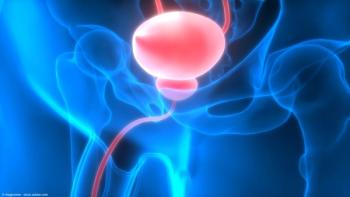
Betty Wang, MD, said she envisions ctDNA integrating into existing surveillance protocols for patients with high-risk NMIBC.
One consideration is the setting in which the procedure is performed.
The research identified several risk factors for high burnout, including younger age, female gender, and longer working hours.

Andrea Pezzella, MD, URPS, FACOG, stressed the need for offering patients comprehensive information on all available therapies.

Howard B. Goldman, MD, who was the first to use the device in a clinical setting, shares his initial thoughts on the technology and its role in real-world practice.
Clean intermittent catheterization emerged as the second most commonly used bladder management method over time in both sexes.

The course addresses "unicorn cases" in the upper tract—unique and challenging situations lacking established guidelines or literature.

Data showed that African American men faced significant delays in treatment initiation.
Vikram M. Narayan, MD, discusses Emory's recent shift to Apple products, aimed at reducing physician burnout and improving patient interactions.

Justin Dubin, MD, discussed how patients' growing trust in digital tools could be leveraged to support lifestyle changes and improve health outcomes.

Wang and Bukavina outline several cases of ctDNA's utility in the space.