

“The difference between this compound and other compounds that were orally administered, is that this seems to go through the lymphatic system rather than going directly to the liver,” says Ronald Swerdloff, MD.
“The difference between this compound and other compounds that were orally administered, is that this seems to go through the lymphatic system rather than going directly to the liver,” says Ronald Swerdloff, MD.

“What we wanted to do was to substantiate any difference between BPH and alopecia with finasteride and also people who are concomitantly taking testosterone for hypogonadism,” says Kevin J. Campbell, MD, MS.

“There's 3 different levels of dosing…so this does provide you with a mechanism for titration if you're going to be using that in your patients,” says Jesse N. Mills, MD.

“The initial levels were inversely related to body mass index, so…men who are the largest…or had the largest BMI have the lowest testosterone levels,” says Martin M. Miner, MD.

Julie N. Graff, MD, highlights the efficacy associated with the use of androgen receptor inhibitors for nonmetastatic castration-resistant prostate cancer.

Judd W. Moul, MD discusses data on real-world effectiveness and treatment adherence of apalutamide in non-metastatic castration-resistant prostate cancer patients that was presented at the American Urological Association 2021 Annual Meeting.

Various factors that medical oncologists consider when selecting to treat metastatic castration-sensitive prostate cancer with either apalutamide or enzalutamide.

“I think this AUA was really exciting for anyone that treats OAB and incontinence because there were a number of really interesting studies,” says Ekene Enemchukwu, MD, MPH.

Nicole L. Miller, MD, FACS, discusses studies involving ultrasonic propulsion to facilitate clearance of fragments, dusting vs basketing, and more.

“The main advantages with regard to the Zenflow Spring System are that there's no piercing, there's no trauma, and there's no heat involved with the treatment,” says Peter Chin, MD.

“Bottom line, there's really no way to separate all of the things that we do, but I think we can all be more conscious on a day-to-day basis in terms of our own environmental footprint and just making better choices,” says Stacy Loeb, MD, PhD, MSc.

By identifying trends in race and ethnicity of academic urologists, this study poses as an opportunity for future intervention.

Alicia Morgans, MD, MPH, discusses a health economics analysis that assessed the clinical and cost impact of cabazitaxel (Jevtana) as a third-line treatment for patients with metastatic castration-resistant prostate cancer.
“This is an opportunity for [patients with NMIBC] to have a treatment that is successful and…promising in terms of its durability of responding to the treatment,” says William C. Huang, MD.

“What we found was [that] every subgroup, whether they were less than or greater than 100 mLs, or whether they had an obstructive median lobe or didn't have a median lobe, [all] showed significant improvements…regardless of their subcategory,” says Dean Elterman, MD, MSc, FRCSC.

Scott T. Tagawa, MD, discusses a study of treatment patterns and overall survival in metastatic castration-sensitive prostate cancer between 2006 and 2019.
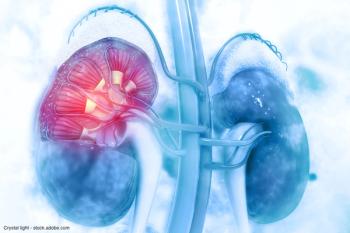
Tian Zhang , MD, discusses the adaptive phase 3 PDIGREE study comparing immunotherapy only versus immunotherapy/TKI regimens in patients with advanced kidney cancer.

Jordan J. Kramer, MD, discusses the background and findings of the study, “Statin use and lower urinary tract symptoms (LUTS) incidence and progression in reduction by dutasteride of prostate cancer events (REDUCE) trial.”

“I think the big findings are that men know about testicular cancer, but they may not know a lot and they feel like they could know more,” says Shawn Dason, MD.

“Ideally…we have a technology that's noninvasive that we can use in the clinic, where they don't require any anesthesia to…break the stones and make them smaller,” says Mathew D. Sorensen, MD, MS, FACS.

“Clearly, we are now in that era of TKIs in addition to checkpoint inhibitors, and so…it makes logical sense from the place we're at [in] the moment in renal cancer treatment with those combinations of treatment,” says Grant Stewart, MD.

Julie N. Graff, MD, of OHSU Knight Cancer Institute, comments on the impact of the availability of newer-generation androgen receptor inhibitors on treatment outcomes for patients with advanced prostate cancer.
The role of urologists in working with medical oncologists to treat patients with advanced prostate cancer, with special considerations for early referral.

“My opinion is that the practices that continue to utilize telemedicine moving forward after the pandemic are going to be the leaders in urology,” says Lisa J. Finkelstein, DO.

“The data…showed us that a lot of young [men]…are coming in for ED, and we can't really think of it as just a disease of older men…It can affect you at any age,” says Denise Asafu-Adjei, MD, MPH.

“What stood out for me in prostate cancer is the new imaging opportunities for patients with advanced prostate cancer or prostate cancer recurrence,” says Kelly L. Stratton, MD, FACS.

“This study was very important in that it showed cost savings with MOSES as well as the ability to reliably achieve same-day discharge,” says Matthew S. Lee, MD.

“I think the surgeon voice is an important voice to be heard because there's not a lot of avenues for surgeons to be able to be honest and share all the things they've learned and all the things they've experienced with their patients,” says Una Lee, MD, FPMRS.

GenesisCare doctors Kishore K. Dass, MD, Anurag Agarwal, MD, and Jerry Singer, MD, share their expert insight on the novel PSMA-PET imaging diagnostic Pylarify .

This video features commentary from Leonard Bitterman, the first patient in the United States to receive Pylarify.