

“I believe that at every stage, it's very important that we focus on healthful lifestyle behaviors because we can improve [urologic patients’] overall survival and their cardiovascular health,” says Stacy Loeb, MD, PhD, MSc.
“I believe that at every stage, it's very important that we focus on healthful lifestyle behaviors because we can improve [urologic patients’] overall survival and their cardiovascular health,” says Stacy Loeb, MD, PhD, MSc.

“I think it's important for people to recognize this revolution that's going on, to see that we're going from what fell to why it fell,” says John O. L. DeLancey, MD.
“Compared to other BPH treatments, this is a very fast, reproducible technology that could democratize how all urologists do BPH surgery,” says Kevin Zorn, MD, FRCSC, FACS.

“It was black, it was overwhelming, it was every day,” says William Lynes, MD.

Dr Raoul S. Concepcion presents the case of a 69-year-old man with metastatic castration-naïve prostate cancer (mCNPC), and the panel shares their personal approaches to treatment.

Raoul S. Concepcion, MD, FACS, poses polling questions for the audience’s medical specialty and the percent of patients they receive with prostate cancer.

“Completing those 4 injection cycles is likely to yield the best clinical outcomes for most of our patients,” says Matthew J. Ziegelmann, MD.

“[Out] of everything going on, this is probably 1 of the most exciting areas in prostate cancer,” says Jason M. Hafron, MD.

“There's a hope that we can modulate PSMA expression with some drugs, increase the amount of PSMA on the tumors, [and] therefore increase the amount of radiation that we can target,” says Michael S. Hofman, MBBS (Hons), FRACP, FAANMS, FICIS.

"It depends on how you're paid and the structure of the compensation model," says Jennifer Miles-Thomas, MD, FPMRS.

“Men do well and they don't have a really high risk of outcomes that we don't want them to have and that patients don't want to have, which is really the need to catheterize,” says David A. Ginsberg, MD.

“Sepsis is real, and it's around 5%. I was surprised too, but this is what the actual data shows, and we should be aware of it,” says Ben H. Chew, MD, MSc.

“It's very clear that PSMA-PET imaging is having…a transformative impact on our ability to image metastatic disease, in that it is much more sensitive than we've had for the last 50 plus years—and also, 98% specific,” says Neil H. Bander, MD.

“I think as our understanding of mutations [and] our understanding the PARP inhibitors [grows], if the data pans out, we'll be using these earlier and earlier in patients, which I think we'll [will allow us to] see probably more benefit,” says Jason M. Hafron, MD.

“The notion that we have to see a patient in front of us every time in order to have a billable encounter is antiquated,” says Gary Kirsh, MD.
“We hope to further investigate next-generation PSMA-targeting molecules, develop new biomarkers to try to predict and monitor response to these novel therapies, optimize combinations with other treatments, and do some discovery research, including artificial intelligence [and] deep learning of our images,” says Michael S. Hofman, MBBS (Hons), FRACP, FAANMS, FICIS.
Jennifer Miles-Thomas, MD, FPMRS, explains why urology practices need to have female urologists and approaches for recruiting them.

“In our practices right now, the biggest challenge we have is being acquired by hospital systems,” says R. Jonathan Henderson, MD.
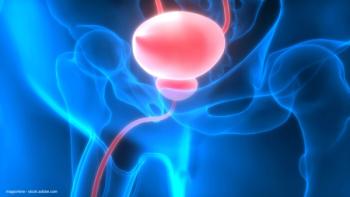
Steven A. Kaplan, MD, highlights the latest developments in BPH and previews what's on the horizon in the space.

“The future in bladder cancer [and] prostate cancer is really exploding. The therapeutics are coming faster than we ever thought,” says Jason M. Hafron, MD.

“Telehealth really helped salvage some of the care that was deferred during the early part of the pandemic, and it’s really here to stay,” says Chad Ellimoottil, MD, MS.

“What's great about [Jelmyto] is you can avoid a pretty morbid operation in a typically unhealthy older population, and treat them with localized therapy,” says Jason M. Hafron, MD.

“We found that we can move many of our staff offsite and go to remote workforce options,” says Scott Sellinger, MD.

“The biggest challenge we have is looming cuts from Medicare and reimbursement,” says Gary Kirsh, MD.

In the first year of the clinic, which was launched by Skyline Urology, 125 patients with cystitis participated in the program, 88% of whom were able to avoid ED visits.

“It's very important that the urologists get involved with germline and somatic testing,” says Jason M. Hafron, MD.

“I'm basically highlighting some of the data that's currently out there, but more importantly, some of the data that [are] just emerging,” says Steven A. Kaplan, MD.
“We expect an outcome from the FDA next year and if that's positive, we expect global, widespread availability of this as a new option for men with metastatic castration-resistant prostate cancer,” says Michael S. Hofman, MBBS (Hons), FRACP, FAANMS, FICIS.

“There really are many considerations regarding germline testing, results interpretation, implications for treatment or screening, and the familial hereditary implications of this whole field. Because of that, understanding the role of genetic counseling is critical, and also understanding the interplay with various somatic testing approaches is also really important,” says Veda N. Giri, MD.

“From our standpoint, bigger prostates bleed more…From that, we started taking a different approach for those larger prostates,” says Andrew Higgins, MD.