
Expert perspective on the treatment landscape of benign prostatic hyperplasia and lower urinary tract symptoms.
Expert perspective on the treatment landscape of benign prostatic hyperplasia and lower urinary tract symptoms.

Elements that are critical to ensuring that patients with bladder cancer are managed appropriately by various healthcare professionals who will likely interact with patients and their family throughout the cancer journey.

Administration of systemic therapy and management of side effects in patients with bladder cancer.

Robert Dreicer, MD, provides an overview of the first-line therapy options available in metastatic castration-resistant prostate cancer and the recent advances in detection, diagnosis, and treatment.

“There is a rather extensive process of how to develop appropriate use criteria. It is primarily based on literature and evidence, systematic reviews, and analysis of those data,” says Hossein Jadvar, MD, PhD.

“Of the 42 patients who achieved a complete response, 41 of those were evaluable for duration of response, which was the focus of the manuscript that was just published last month,” says Seth P. Lerner, MD.

Drs Steven Finkelstein and Louis J. Mazzarelli highlight data revealed in the article “A Prospective Head-to-Head Comparison of 18F-Fluciclovine With 68Ga-PSMA-11 in Biochemical Recurrence of Prostate Cancer in PET/CT,” by Birgit Pernthaler, et al.

"The newest frontier of therapy for stress incontinence is regenerative medicine and stem cell–based therapies," says Melissa R. Kaufman, MD, PhD, FACS.

Eric Jonasch, MD, offers his advice for physicians treating patients with renal cell carcinoma.
Ali Raza Khaki, MD, discusses managing toxicities to ensure patients can continue to receive treatment with the antibody-drug conjugate enfortumab vedotin.
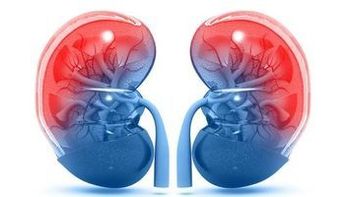
Sarah Elizabeth Yentz, MD, discusses what sequencing research and novel treatment development is needed to advance the metastatic renal cell carcinoma paradigm.

“The geographical discrepancies, the social discrepancies, and the impact of these discrepancies in the possibility for the patient to access any type of cure or surgical intervention is critical,” says Andrea Necchi, MD.

“I really foresee this becoming a very critical society in this area for many, many years to come,” says Philippe E. Spiess, MD, MS, FRCSC, FACS.

The types of healthcare professionals who may play a role in evaluating and diagnosing bladder cancer.
The current incidence of bladder cancer diagnoses and most common symptoms that newly diagnosed patients present with.

In the study, adding maintenance avelumab to best supportive care (BSC) led to a 31% reduction in the risk of death versus BSC alone in patients with unresectable locally advanced or metastatic urothelial cancer.

"This field has exploded!" says Mohit Khera, MD, MBA, MPH.

“Our case discussion for January 18 is going to be focused on a patient who initially has biochemically recurrent prostate cancer [and] progresses to metastatic disease,” says Veda N. Giri, MD.

“We need to understand what the treatment [means] to them as individuals, and how they perceive the benefit of the treatment,” says Cornelia Haag, Molkenteller, MD, PhD.

Phillip Palmbos, MD, PhD, highlights four key questions that need to be answered in the first-line and neoadjuvant bladder cancer settings.

CheckMate-274 supported the FDA approval of nivolumab for the adjuvant treatment of patients with urothelial carcinoma.

“This analysis of this publication confirms the link between efficacy and the patient perception, and that the results are actually meaningful to the patients as well,” says Cornelia Haag-Molkenteller, MD. PhD.

“I think in specialized cases, especially for patients [who] need focal therapy or want focal therapy, or [for whom] you're really trying to minimize any nerve damage or urethral damage…these are excellent therapies,” says Jennifer Linehan, MD.

Phillip Palmbos, MD, PhD, explains the latest research findings on the role of chemoimmunotherapy in patients with bladder cancer.

"The fact that it was a simple blood test, it was absolutely objective, and it was…non-invasive…made it very attractive," says William J. Catalona, MD.
“You can be 2 to 3 mm from another organ and still safely treat the tissue that you want to,” says Jennifer Linehan, MD.

Investigators evaluated data from the Continuous National Health and Nutrition Examination Survey.

“Going into this study, we thought that potentially patients who had a stent placed with the string left in place were at higher risk of having a complication…But we found that they weren't at higher risk of a complication,” says Amy E. Krambeck, MD.
In a cohort of nearly 30,000 patients, more than half had cystoscopy-based stent removal within 6 months post ureteroscopy, investigators reported.

Eric Jonasch, MD, shares insight on the most pivotal developments in renal cell carcinoma over the past few years.