

“In short, there's a ton of missed opportunity to see how smoking affects treatments, especially in trial patients, and even in our patients that are in our clinics,” says Richard Matulewicz, MD, MS.
“In short, there's a ton of missed opportunity to see how smoking affects treatments, especially in trial patients, and even in our patients that are in our clinics,” says Richard Matulewicz, MD, MS.

Among the highlights will be a talk from Senator Bill Cassidy, MD (R-LA).

As a committee, we felt that there was a need to put together a document to help field some of the ethical considerations that we run into in clinical care but have very little guidance on,” says Anne M. Suskind, MD, MS, FACS, FPMRS.

“One of the study findings that really stood out to me was that so many of the surgeons that we spoke to are…such strong advocates for their patients,” says Wai Lee, MD.

“Even factoring in the increased number of emergency room visits, there was still an overall cost savings of $747 in favor of the Moses HoLEP. So, that was surprising to see,” says Matthew S. Lee, MD.
"The focus of this study and the patient cohort that we're looking at are patients with intermediate-risk bladder cancer who [also have] low-grade bladder cancer. These patients [typically have] a lot of recurrences [and] multi-focal disease but are at low risk of progressing on to metastatic disease or developing invasion into their bladder wall,” says William C. Huang, MD.

“The world's a very, very small place and there are a lot of people who are hurting. It's our job as physicians to help relieve that discomfort, wherever it may exist, whether it's here in the United States or elsewhere, and this is the device that allows that to be realized,” says Ralph V. Clayman, MD.
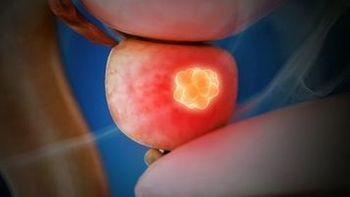
Michel Pavic, MD, discusses how the combination of masitinib with docetaxel could be a new first-line treatment option for patients with metastatic castration-resistant prostate cancer.

“The concept behind the NAXIVA trial was to treat these patients with pre-surgical neoadjuvant targeted therapy with a means of downstaging that venous tumor thrombus, reducing the extent of it to try and make the surgery less morbid to the patient and to potentially improve survival,” says Grant Stewart, MD.

“It is a vaccine that is self-administered by the patient sublingual over 3 months, and that is why it appears to be so safe,” says J. Curtis Nickel, MD.

“This study really demonstrates, for one of the first times certainly in the largest cohort of men ever [studied], that Rezum water vapor thermal therapy is a viable option to treat men with very large prostates bigger than 80 mL,” says Dean Elterman, MD, MSc, FRCSC.

“I think these results are very encouraging [in] that we may be able to bridge the gap in prostate cancer treatment, in which we're selective [and] prostate gland-sparing,” says Behfar Ehdaie, MD, MPH.
“The take-home message is vibegron is a very safe drug and there are no concerns about any kind of cardiovascular adverse effects,” says Michael A. Weber, MD.

“In general, urologists are really happy people. They love their work, but they're not exempt from the challenges that come with any workplace, especially when you have a lot of different roles, you have a fast environment, and the stakes are high,” says Loren Jean Smith.

“I want to reiterate that this study doesn't necessarily say that 1 approach is better than the other, but it definitely does reinforce some advantages of robotic surgery that have been shown not just in this study, but in other studies as well,” says Peter Chang, MD, PhD.

“[We gave the ES kits out] with the idea that instead of having these people…travel…hundreds of miles to a main hospital for their endoscopy, the urologist could travel to a village with just the smartphone and the endoscope set-up and proceed to do a ton of endoscopy there,” says Ralph V. Clayman, MD.

“The majority of treatments out there don't allow the maintenance of ejaculation after surgery, whereas here, we're at 90% for the small glands…[and at] 81% [for] the men who had prostates above 80 grams,” says Naeem Bhojani, MD, FRCSC.

"This work isn't for one; it is certainly for all,” says Efe C. Ghanney Simons, MD.

“Rather than asking the staff to have a stiff upper lip and cope, we instead tried to focus on uncovering systemic processes that were ripe for change,” says Loren Jean Smith.
“The quality of life overall between the 2 approaches was very similar,” says Peter Chang, MD, PhD.

Ernest Sussman, MD, FACS, explains why all urologists must also be risk managers.
“The data is out to about 2 to 3 years now, so…[it’s] a little bit on the immature side, but it's very promising,” says Bilal Chughtai, MD.

“I think the key [is to not] get rid of financial incentives. I don't think that's possible. [Rather, we should] align financial incentives [so] that [we] can promote what is best for patients,” says Lillian Y. Lai, MD.
Kyle Wood, MD, reviews current therapies and strategies for the management of enteric hyperoxaluria.

“This type of collaboration [between SEER and GPS assay] is a really nice illustration of the types of projects that we should be undertaking in the future,” says Scarlett Gomez, MD, PhD.
“[Rezum] does give men another option, and so I think that's…really what we're focusing on here: giving the option to avoid general anesthesia and to avoid a bigger surgery,” says Michael A. Palese, MD.

“The goal of this research endeavor was to really set forth the background information that would guide the creation of targeted interventions,” says Efe C. Ghanney Simons, MD.

Welcome to the first installment of Uranimals, a video series featuring urologists and their pets brought to you by Urology Times. From a dog model to a whole farm of animals, the inaugural episode has an amazing lineup.

“We're getting close, and we hope to have things concluding here soon and then to be able to offer some of these technologies on a on a wider scale,” says Mathew D. Sorensen, MD, MS, FACS.

“This is a successfully completed phase 3 trial in regenerative medicine in our field, and there's demonstrated safety and efficacy for women who have failed previous surgery, a very difficult group of patients for all of us,” says Michael B. Chancellor, MD.