

"I think right now, a lot of the focus is on perioperative management, as well as some of the technical considerations of the surgery itself," says Jay Simhan, MD, FACS.
"I think right now, a lot of the focus is on perioperative management, as well as some of the technical considerations of the surgery itself," says Jay Simhan, MD, FACS.

"We found that approximately 2 out of every 3 patients with node-positive disease go on to some form of secondary treatment within 12 months," says Daniel A. Triner, MD, PhD.

"We're doing a lot of active surveillance, and it's good to know that most of these people are getting the appropriate care that they should receive," says Yuzhi (Katherine) Wang, MD.


“Also, the technique lends itself really nicely to these, what we call posterior ball-valve tumors, which are these tumors that sit behind the renal hilum, behind the blood vessels on the posterior side of the kidney,” says Alexander Kutikov, MD, FACS.
“All this is very detailed immunology, I get that, but it sets the stage for what I consider the next evolution of immunotherapy,” says Patrick Soon-Shiong, MD.

Clinical insights on the role of a multidisciplinary team in the treatment of kidney cancer and how multidisciplinary care has evolved.
Experts on kidney cancer review challenges associated with limitations of conventional imaging for assessing renal masses and how to potentially improve sensitivity and specificity.

"There's definitely more work to do to confirm these results on a multi-institutional aspect," says Ryan L. Steinberg, MD.

In this video, 4 experts discuss the highlights and take-home messages from the 2024 American Urological Association Annual Meeting.
“What we need is continued work on integrating surgery and systemic therapy,” says Patrick Kenney, MD.

"We've developed the Get Moving Trial, which is a randomized controlled phase 1/2 trial to demonstrate the safety, feasibility and efficacy of a home-based pre-op program that is personalized," says Sarah P. Psutka, MD, MSc.

"So, in the MoonRISe-1 study, we're studying the efficacy of TAR-210 to prevent recurrence within the bladder by inserting the TAR-210 in the bladder every 3 months for up to 1 year, compared to intravesical chemotherapy," says Roger Li, MD.
Roger R. Dmochowski, MD, MMHC, highlights the FDA approval of the Revi System, specifically touching on how the device may be used as a potential earlier line of therapy for patients with OAB.

Angela B. Smith, MD, MS, highlights key takeaways from the session, “Time Efficiency and Productivity Hacks for the Busy Urologist,” which was presented at the 2024 AUA Annual Meeting.

"BCG worked well enough that we could give it to patients and it worked pretty well. But having the shortage, I think, has ultimately led to a bottleneck and then an explosion in the technology and the resources and the techniques to treat patients with non–muscle-invasive bladder cancer," says Joshua J. Meeks, MD, PhD.

“We can all learn and collaborate from each other, that way we can continue to provide really great care for our patients,” says Mary W. Dunn, MSN, NP-C, OCN, RN.

Mark D. Tyson, II, MD, MPH, shares interim findings from the BOND-003 trial, evaluating cretostimogene grenadenorepvec in patients with high risk, papillary only, BCG-unresponsive non–muscle-invasive bladder cancer.

Hiten D. Patel, MD, highlights the background and trial design for the study, “A Prospective Diagnostic Cohort Study to Compare the Accuracy of Renal Mass Biopsy, PEER, and 99mTc-sestamibi SPECT/CT for Patients with Clinically Localized Renal Tumors (BIOPSy)."

Neal D. Shore, MD, shares what he's most looking forward to at this year's American Urological Association Annual Meeting.
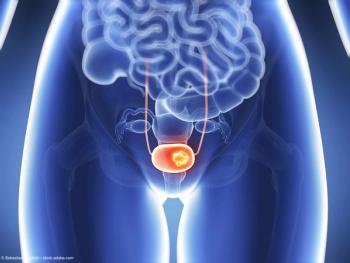
"Ultimately, we found that in this retrospective evaluation, there was no significant difference in recurrence-free survival in those who are treated with gemcitabine and docetaxel as compared to BCG," says Ryan L. Steinberg, MD.
Urologists provide an overview of diagnostic tests for patients with kidney cancer, highlighting lab tests, imaging, and considerations for biopsy.
Neal Shore, MD, FACS, and Brian M. Shuch, MD, introduce themselves and discuss the growing incidence of kidney cancer, the general prognosis, and early signs and symptoms.

Jaideep S. Sohi, MD, shares his vision for the future of PSMA-PET imaging in prostate cancer.

“There is great interest in looking at all these targeted interventions in the earlier stages to lower the burden of care that patients go through and to some degree that urologists and other health care professionals in this in this realm go through,” says Surena F. Matin, MD.

“It's a system that is still not being used to its maximum capability, which is exciting. That means we can continue evolving,” says Jaschar Shakuri-Rad, DO, FACOS.

“What we find here was that of the patients who had FGFR3 alterations, 67% of them had tumors that responded,” says Surena F. Matin, MD.

Kevin M. Wymer, MD, highlights 11 studies in stone disease being presented at the 2024 American Urological Association Annual Meeting.

Dean S. Elterman, MD, MSc, FRCSC, highlights several studies in BPH being presented at the 2024 AUA Annual Meeting.

Our expert panel provide insightful discussion on the power of multidisciplinary expertise in advanced prostate cancer.