

"As most of us know, 1 in 8 couples undergo issues pertaining to fertility, and in about half of those cases, there is a male factor involved, resulting in infertility," says Akash Kapadia, MD.
"As most of us know, 1 in 8 couples undergo issues pertaining to fertility, and in about half of those cases, there is a male factor involved, resulting in infertility," says Akash Kapadia, MD.

"We must do more to help surgeons prepare for the impact of adverse events before they happen," says Kevin Turner MA DM FRCS(Urol).

Comprehensive insights on ARPIs (androgen receptor pathway inhibitors) for the treatment of prostate cancer, highlighting what influences treatment decisions and safety profiles of the available APRIs.
Two prostate cancer experts discuss treatment decision-making practices for patients with newly diagnosed metastatic disease.

"One notable finding was that veterans may not have access to the same quality of prostate cancer care as the US general population," says Olubiyi Aworunse, MD, MPH, PhD.

“I think the long and short of it is we know tibial nerve stimulation works, we're just trying to identify what's the best way by which we can deliver it conveniently and cost effectively to the patient,” says Suzette E. Sutherland, MD, MS, FPMRS.

"I continue to be regularly surprised at just how much surgeons are affected when things go wrong, and how little surgeons engage with existing support mechanisms," says Kevin Turner MA DM FRCS(Urol).

In this discussion, Dr. Kennelly, Dr. Kevin Benson, and Dr. Karyn Eilber share their approaches to post-procedure care and follow-up for overactive bladder (OAB) treatments. They detail the patient experience immediately after the procedure, the role of nursing and support staff, and methods for guiding patients through the recovery process, including managing potential complications and effective communication strategies. Additionally, they address challenges in patient adherence to follow-up visits, share insights on assessing treatment effectiveness during these visits, and discuss their strategies for enhancing patient engagement and satisfaction in their practices.
In this episode, Dr. Kennelly, Dr. Kevin Benson, and Dr. Karyn Eilber discuss their strategies for ensuring patient comfort during overactive bladder (OAB) treatment procedures. They delve into the roles of clinical staff, the setup of the procedure room, and how they address patient needs and concerns to create a reassuring environment. The experts also share their experiences in handling challenges during procedures, illustrating how they've adapted their practices based on patient feedback to maintain a patient-centric focus throughout the treatment process.
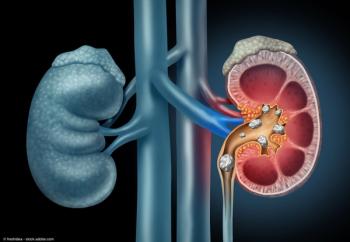
"What we did find was that a preoperative ureteral stent, and when we did semi rigid ureteroscopy initially, seemed to be protective against worse symptoms," says Justin B. Ziemba, MD, MSEd.

"Every time I leave the meeting, I just feel reinvigorated, refreshed, and excited about this field that we're a part of," says Raveen Syan, MD, FPMRS.
In this video, Jaideep S. Sohi, MD, explains how the expanded information provided by PSMA-PET imaging allows physicians to more accurately tailor treatment plans for patients.

“We're always so focused on the prostate. That's the million-dollar question: are we getting to bladders too late?” says Kevin C. Zorn, MD, FRCSC, FACS.

In this video, Jaideep S. Sohi, MD, explains factors to consider regarding the timing of re-imaging with PSMA-PET in patients with prostate cancer.
"PSMA-PET is a radio nucleotide-based imaging modality that really has changed the landscape of how we initially stage and subsequently follow individuals who have a diagnosis of prostate cancer," says Edward M. Schaeffer, MD, PhD.

“It's exciting to see that we now have another offering to men with enlarged prostates that has good outcomes and good durability up to 5 years [based on] the trials,” Kevin C. Zorn, MD, FRCSC, FACS.
Jaideep S. Sohi, MD, discusses the challenges with the use of conventional imaging in prostate cancer and how PSMA-PET alleviates these issues.

"I think it's about engaging with primary care. Primary care physicians need us to provide them with good education and good back-up," says Caroline Dowling, MBBS, MS, FRACS (Urol).
A comprehensive discussion on diagnostic practices in prostate cancer, highlighting imaging practices and the differences between castration-resistant prostate cancer and hormone-sensitive prostate cancer.
Matthew Smith, MD, PhD, and Brian T. Helfand, MD, introduce themselves and provide clinical insights on screening practices for patients with prostate cancer.

“Currently, in the area of tibial nerve stimulation, there are only 2 FDA approved options,” says Suzette E. Sutherland, MD, MS, FPMRS.
"I think it's important that they go visit someone that does them. Go to the operating room, see it in person," says Matthew E. Sterling, MD.

“These are the technologies that we'll see to empower patients and get more information, so that when we see the patient, it's one less thing we as a physician have to gather during that consultation, making the consultation more efficient,” says Kevin C. Zorn, MD, FRCSC, FACS.

"We're very much looking forward to being able to clinically implement these algorithms, both on the OAB side and the antibiotic resistance side," says Glenn T. Werneburg, MD, PhD.
Panelists discuss the importance of patient-centric approaches in the procedural treatment of overactive bladder (OAB). They share their practices in preparing patients for procedures, including patient education, shared decision-making, and tailoring pre-procedure instructions, with a focus on managing patient expectations and addressing fears. The episode emphasizes the role of the clinical team in ensuring patient comfort, highlighting practical considerations, real-world experiences, and best practices for optimizing patient-centered care in OAB management.
Experts share their long-term clinical experiences with intravesical botulinum toxin type A therapy, particularly emphasizing quality of life, patient satisfaction, simplicity, safety, and the comfort patients find in its non-permanent nature.

Experts close their discussion by highlighting the future landscape of PSMA-targeted imaging in the management of prostate cancer.

"We definitely need women to be able to access care quickly and efficiently. But, putting antibiotics at the forefront is not going to be the answer," says Caroline Dowling, MBBS, MS, FRACS (Urol).

"The happier you are in your personal life, I think, the better you are as a doctor, and the better you are as a doctor, the better you can be in your personal life," says Anne M. Suskind, MD, MS, FACS, FPMRS.