
Lee discusses findings from a study presented at the 2024 American Urological Association Annual Meeting.
Lee discusses findings from a study presented at the 2024 American Urological Association Annual Meeting.

“We found that two-thirds or female respondents did not know their dosimeter doses during pregnancy,” says Jessica L. Wenzel, MD, MPH.

"I think pelvic pain is 1 of the areas that really needs more attention," says Gamal M. Ghoniem, MD, FACS, ABU/FPMRS.
Gary D. Steinberg, MD explains the implications of the BOND-003 results for clinical practice in treating non-muscle-invasive bladder cancer (NMIBC), highlighting the potential benefits of novel immunotherapeutic options like cretostimogene grenadenorepvec as a bladder-sparing therapy for BCG-unresponsive high-risk NMIBC, and discusses how this treatment could fit into the NMIBC treatment landscape if approved.

"There is a severe lack of treatment when it comes to women's sexual health," says Shaya Taghechian, MD.

Trinity Bivalacqua, MD, PhD, announces an upcoming UroView series highlighting key information presented at ASCO 2024 surrounding treatment of high-risk BCG-unresponsive NMIBC.

"We provide surgical treatments for kidney stones, and we also help patients manage their stones medically; for example, helping them perhaps with spontaneous passage of their stones," says Katherine Chan, MD, MPH.

“We also saw differences in the average pay per weekday of hospital call; 32% of men reporting receiving over $500 per day [of] weekend hospital call, but only 18% of women reporting the same,” says Andrew M. Harris, MD.

"We aim to provide the best quality care we can at the locations closest to our patients," says Edward M. Schaeffer, MD, PhD.
"Especially for prostate cancer, some of the sexual side effects, it's tough to talk about that when you're talking to your uncle or your brother who has it," says Joseph Song, MD.

"When they said that they value privacy over cost and convenience, I think that is the clearest sign that the stigma for men's health still exists," says Justin M. Dubin, MD.
“It's the next evolution of being able to provide precision care for our patients in the area of prostate cancer,” says Nitin K. Yerram, MD.

"We really need better options with the least side [amount of] effects for these patients," says Zhina Sadeghi, MD.

"My hope is that from the KL2 data that I'll generate, hopefully in the next 6 to 12 months, we can apply for an RO1 to push this one step further so that we can benefit other people with brain tumors, other people with strokes, and other peoples with other neurological disorders with bladder symptoms," says Olivia H. Chang, MD, MPH, FACOG.

The panel discusses how fusion-guided biopsy can inform patient eligibility for focal therapy in prostate cancer.
A panel of experts on prostate cancer discuss the role for fusion-guided biopsies in active surveillance for patients with prostate cancer.

Bladder cancer specialists discuss their strategies for monitoring patients with BCG-unresponsive non–muscle invasive bladder cancer.
A panel of experts provide clinical insights on factors that inform how they select treatments for patients with BCG-unresponsive non–muscle invasive bladder cancer.

A panel of experts on prostate cancer share strategies for monitoring patients and discuss whether to use PSMA to monitor treatment response.
Experts on prostate cancer discuss the ideal timing and frequency of PSMA-PET imaging and the role of different PSMA-PET agents.

“Maybe the most important [finding] is that urinary tumor DNA does seem to be a good tool for detecting residual disease within this patient population,” says Joshua Linscott, MD, PhD.
Expert urologist reviews the BOND-003 study, discussing its design, interim outcomes, safety and efficacy data, and the potential for cretostimogene grenadenorepvec to provide a durable response in patients with high-risk, BCG-unresponsive non-muscle invasive bladder cancer.

“What was also interesting in our study was that when choosing a source of medications, we asked them, what made you decide to go with that option? And 62% of men said that they valued privacy above everything,” says Justin M. Dubin, MD.
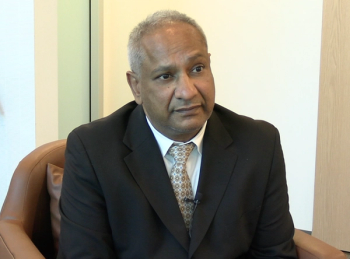
“We've been developing different techniques in HoLEP, but there is a steep learning curve,” says Akhil Das, MD.

Woodson W. Smelser, MD, discusses key bladder cancer data that was presented at the 2024 AUA Annual Meeting.
"In 2015, we had 3 employed urologists in our health network. Now, we have 19 employed urologists in our health network," says Edward M. Schaeffer, MD, PhD.

"I think these findings are critical in helping us craft educational resources that would be easily understood and easily disseminated by trusted health care providers," says Stephanie Gleicher, MD, MPH.

"Our data showed that the patient regret scores were very, very low in looking at the patients that went home the same day," says David I. Lee, MD, FACS.
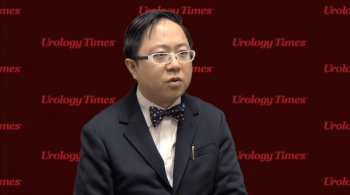
“The negative predictive value we want to be high, and the false positive rate we want to be low. None of those beat the radiologist reads in both of those categories,” says Robert S. Wang, MD.
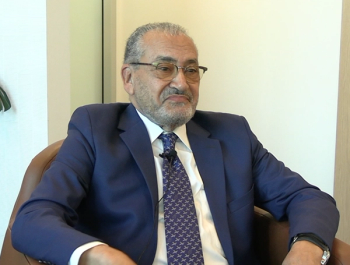
"I think having success with that in humans will make [radiofrequency ablation] very, very valuable for the practicing urologist that can be done in the clinic without much training or anything like that," says Gamal M. Ghoniem, MD, FACS, ABU/FPMRS.