

"I think the biggest take-home message is just the importance of genetic testing," says Adri Durant, MD.
"I think the biggest take-home message is just the importance of genetic testing," says Adri Durant, MD.

“And certainly, while most of these studies are ongoing, the initial data looks promising to say that there may be a role for a PSMA next-generation imaging in the decision for the appropriateness for active surveillance,” says Brian T. Helfand, MD, PhD.
Tony Abraham, DO, MPA, outlines the limitations of PSMA-PET imaging and discusses the importance of multidisciplinary care in overcoming challenges surrounding the interpretation and reporting of imaging results.

“Many of us feel privileged to take care of our patients, and that's why we went into the health care profession. However, at some point, that amount of call and how it affects work/life balance becomes difficult,” says Andrew M. Harris, MD.

“For us, this approach has the potential to transform the prevention and management of urolithiasis, making health care more precise and personalized,” says Juan Fulla, MD, MSc.

"In terms of the psychosocial aspect of things, people with toilet insecurity are more likely to experience greater stress and anxiety, report poorer social support, have a poor overall perception of their health, even after controlling for some confounders," says Elisabeth M. Sebesta, MD.

"Having a better understanding of which PGVs are really putting patients at an increased risk vs others, I think would definitely be something that needs more investigation," says Mouneeb Choudry, MD.

A urologic oncologist discusses how MRI- or fusion-guided biopsies have helped overcome the limitations of traditional prostate biopsies.
Kyrollis Attalla, MD, shares his approach to imaging and biopsy in the diagnosis of prostate cancer and discusses the benefit of a good biopsy followed by appropriate imaging at initial diagnosis.
“Perhaps it's worth giving them questionnaires like the PHQ-9 or GAD-7 to monitor their mental health status and encourage or ask if they even have support around them,” says Olivia Paulsen.

"Anytime we do a PCNL...we always get a CT scan. That's pretty standard," says John Michael DiBianco, MD.

"Our next goal is transitioning to really understand the patient experience and how we can support them to quit smoking cigarettes," says Marc Bjurlin, DO, MSc, FACOS.
"Somebody once gave me a saying: the 3 things that make a person happy every day are somewhere to go, someone to love, and something to look forward to. I have all 3 of them," says Steven A. Kaplan, MD.
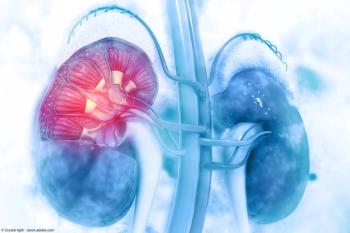
"Certainly, anybody who is a recurrent stone former, or of a young age when they develop their first stone, they automatically get a 24-hour urine test," says Joseph Song, MD.
“Across the whole survey, an average of 66% preferred the professional card. The highest rate of selection of the humorous card in a single question was only 38.4%,” says Max D. Sandler.
"17% answered positively to 1 of our questions indicating they might be at risk for some sort of home toilet or sanitation insecurity, or at least they experienced some sort of worry or stress about having access consistently to a working toilet in their home," says Elisabeth M. Sebesta, MD.

"As I like to say, 'They are little people with small stones that cause big problems,' " says Katherine Chan, MD, MPH.
A nuclear radiologist provides an overview of the gallium- and fluorine-based PSMA-PET tracer options, highlighting factors that influence tracer selection.
Tony Abraham, DO, MPA, discusses how the emergence of PSMA-PET imaging has impacted the staging and management of patients with prostate cancer.
"But both groups reported that Peyronie's disease does impact their mental health, and a large portion of both groups also said that they had had a negative experience with a urologist at some point," says Olivia Paulsen.
"Of patients with bladder cancer, 100% of the pathogenic variants would have been missed based on current guidelines," says Adri Durant, MD.

"How closely should we follow these patients? Is it annually? Is it every other year?" asks Jacqueline Zillioux, MD.

“So, when it comes to fluoroscopy, low-dose pulsed fluoroscopy, whenever you can, is ideal,” says Jessica L. Wenzel, MD, MPH.
"If they have some issues with dexterity, if I feel they're not going to be able to pump the device up adequately, or they don't have a partner that can do it, they're probably not a good candidate for an inflatable device," says Charles Kaplan, MD.

"Even at my stage of career, most people are retiring, and I've never been busier or had more fun," says Steven A. Kaplan, MD.
“I think in terms of symptom elicitation, it's important to be systematic so that we don't shortchange certain populations when we try to figure out what their symptoms are,” says Briony K. Varda, MD, MPH.

"It really opened up an opportunity to provide support for our patients with bladder cancer who smoked in patient after that teachable moment of surgery," says Marc Bjurlin, DO, MSc, FACOS.
“These allow us to treat just those areas of cancer, maintaining much better preservation of sexual function and less incontinence,” says Kevin R. Basralian, MD.