
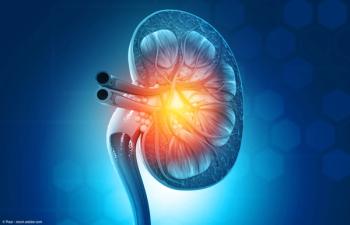
"You definitely need to be very adaptable. You have to have a great team," says John Michael DiBianco, MD.
"You definitely need to be very adaptable. You have to have a great team," says John Michael DiBianco, MD.

"I'm very transparent with my patients by telling them these exist. I don't provide them because we don't have enough level of evidence or body of research supporting them," says Ramy Abou Ghayda, MD, MPH, MBA.
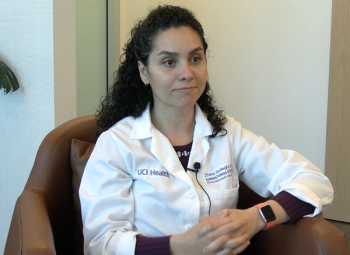
"My goal as a 'plumber'/urologist is to see if we can find better options and also understand the mechanism behind the disease," says Zhina Sadeghi, MD.

“This is a great opportunity for public outreach and re-education on the common misconceptions surrounding vasectomy,” says Catherine S. Nam, MD.

Kyrollis Attalla, MD, remarks on emerging imaging technologies for patients with prostate cancer and the growing pool of candidates for focal therapy.
An expert on prostate cancer discusses how fusion-guided biopsy can help determine patient eligibility for focal therapy.

"For [men] to come to the practice and talk about [a sensitive issue] is a big step," says Adity Dutta, MSN, AGACNP-BC.
"What we found is that across the board, all 16 scores did relatively well with the association between an elevated polygenic risk score and prostate cancer incidence," says Randy A. Vince Jr, MD, MS.
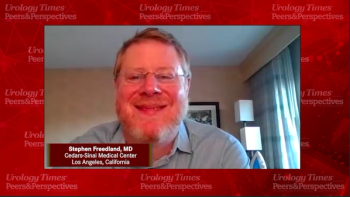
Experts on prostate cancer discuss the heterogeneity of the disease and the rationale for using medications with different mechanisms of action, including androgen deprivation therapy.

Lawrence Karsh, MD, FACS, introduces a discussion on prostate cancer and androgen deprivation therapy with an overview of how the treatment landscape has changed in recent years.

“One thing is we’re trying to create an atmosphere in the center whereby men feel at ease, they're comfortable talking to their provider who is specialized in this field,” says Ramy Abou Ghayda, MD, MPH, MBA.

Trinity Bivalacqua, MD, PhD and Mark Tyson, MD, MPH discuss the current shortage of BCG therapy and how that has impacted clinical practice management.
After briefly introducing themselves, Trinity Bivalacqua, MD, PhD and Mark Tyson, MD, MPH discuss approximately how many newly diagnosed bladder cancer patients have non-muscle invasive bladder cancer, or NMIBC.

"Kidney stone treatment is all about access," says Joseph Song, MD.
"By using our technique, and really preserving that urethral length really well, it seems to help those patients in particular to have better outcomes," David I. Lee, MD, FACS.
“With the support of the pediatric department and the pediatric urologists I work very closely with, we've been very successful in identifying the right patients,” says John Michael DiBianco, MD.
"Compared to the prior years, we found that there was a 150% increase in new vasectomy consults that were completed, and there was a 160% increase in the number of vasectomies that were done," says Catherine S. Nam, MD.

"Understanding that biology of that tumor and/or combining or using multiple radiotracers, either simultaneously or in sequence, may really be exciting to identify where those tumors are located," says Brian T. Helfand, MD, PhD.
“Our goal is to support patients throughout their entire journey with an intelligence chat system that not only evaluates them, but also answers many questions when their treating physician is not available, which is very common,” says Juan Fulla, MD, MSc.
"I think that coping is a key way that we can help intervene here," says Elisabeth M. Sebesta, MD.
Kyrollis Attalla, MD, describes the role of fusion-based biopsies in active surveillance for patients with prostate cancer and how this technology has improved monitoring and treatment strategies.

“Interestingly, the trainees, when you look at residents as a conglomerate, experienced burnout at a higher rate than post-trainee urologists,” says Andrew M. Harris, MD.
A urologic oncologist discusses how MRI- or fusion-guided biopsies have helped overcome the limitations of traditional prostate biopsies.

"There are many opportunities to support our patients with bladder cancer who smoke from their clinic appointments from their intravesical therapy visits to their surveillance cystoscopies," says Marc Bjurlin, DO, MSc, FACOS.
“I think this is really playing a role in the decision for where we're localizing our radiation therapies as well as the addition of ADT plus an androgen receptor pathway inhibitor, ARPI, and the duration of these therapies,” says Brian T. Helfand, MD, PhD.

“Our final goal is to shift from an episodic care to continuous patient follow-up, allowing us to better understand and manage the evolution of patients over the time,” says Juan Fulla, MD, MSc.

"I think the biggest take-home message is just the importance of genetic testing," says Adri Durant, MD.

“And certainly, while most of these studies are ongoing, the initial data looks promising to say that there may be a role for a PSMA next-generation imaging in the decision for the appropriateness for active surveillance,” says Brian T. Helfand, MD, PhD.