
"We're pleased to report that there was a strong prognostic signal we found with the overall cohort," says Charles Parker, MD.
"We're pleased to report that there was a strong prognostic signal we found with the overall cohort," says Charles Parker, MD.

"We need to have some safety data to see if this is actually the right thing to do, because there's been some pushback, at least in some publications of the fact that we're pushing the burden of recovery at home," says Andres F. Correa, MD.

The significance of patient convenience, evolving imaging techniques, and recent breakthroughs in prostate cancer care, with a focus on the role of PSA-PET scanning in directing patient treatment.
David Albala, MD, discusses how starting October 1st, CMS will reimburse imaging centers directly, simplifying the process and removing reimbursement concerns for physicians ordering radiotracer tests.

"If you disrupt a good patient-physician relationship to the point where patients actually don't seek the care they need, that's obviously very problematic," says Raveen Syan, MD, FPMRS.
"The main highlight of this trial was the complete response rate, which was around 22%," says , Guru P. Sonpavde, MD.

"The surprise to me was the grade 3/4 adverse events [were] better with 177Lu-PSMA-617, SAEs [were] better with 177Lu-PSMA-617, and dose adjustments [were] better with 177Lu-PSMA-617," says Oliver Sartor, MD.

"With this specific study, what we wanted to do is find out whether there was more information that we could leverage from preexisting material within the STRATOSPHere Biomarker Development Study; namely, the diagnostic H&E sample," says Charles Parker, MD.
Seth Bechis, MD, emphasizes the potential complications from elevated intra-renal pressure, such as sepsis from bacterial spread, ruptures leading to pain and difficult recovery, impaired renal function, and hemorrhage, highlighting the need for understanding these risks for better postoperative outcomes and hospital efficiency.
Michelle Semins, MD, details the variability in intrarenal pressures, explaining that while a clear safe threshold is unknown, pressures over 30-40 might be dangerous; she lists factors influencing these pressures, like inflow/outflow and scope size, and mentions potential complications from prolonged high pressures, such as urosepsis.

Toni K. Choueiri, MD, highlights data from the phase 2 LITESPARK-003 trial, which were presented at the 2023 ESMO Congress.

"TAR-210 is set to become a potentially new option for this patient population after failure of BCG treatment," says Andrea Necchi, MD.

Benjamin H. Lowentritt, MD, FACS, provides clinical insights on the use of different formulations of abiraterone as treatment for patients with prostate cancer.
“In other words, there's a 72% less chance of recurrence with oral erdafitinib than with standard of care. The problem is tolerability,” says James W.F. Catto, PhD, FRCS.

“The recommended phase 2 dose was dose level 2, so 8 mg/kg of SG with EV 1.25mg/kg,” says Bradley McGregor, MD.

“We have not previously managed to beat first-line chemotherapy in any trial in unselected first-line urothelial cancer, so this is a big step in that direction,” says Thomas B. Powles, MBBS, MRCP, MD.

“These data from the MAGNITUDE study demonstrate the risk-benefit profile for the combination of niraparib plus abiraterone acetate for patients with metastatic CRPC and BRCA mutations and establishes a new standard of care for these patients,” says Kim Nguyen N. Chi, MD, FRCPC.

A brief review of the evolving realm of prostate cancer care centered on the significance of identifying high-risk cases and addressing the complexities of risk stratification and prognosis.
Overview of hurdles and advancements in utilizing advanced imaging techniques for prostate cancer diagnosis, including agent availability, scheduling, facility preferences, and reimbursement.

A discussion surrounding the changing landscape of early-stage prostate cancer screening and rise in metastatic disease cases, focusing on the importance of timely intervention and patient-focused care.
Insight into advancements in prostate cancer imaging using PSMA agents like gallium and F-18, their unique characteristics, and the considerations in choosing the right radiotracer for accurate detection.

“This is the first study in upper tract urothelial carcinoma to show that ctDNA may be used to refine clinical staging and prognosis in these patients prior to surgery,” says Heather L. Huelster, MD.

“In fact, we actually found that there were more lawsuits that were directed at physicians who did not recommend active surveillance when it was an appropriate treatment strategy,” says Timothy J. Daskivich, MD, MSHPM.
Delve into the strategic process of selecting ideal partners in cancer care as key opinion leaders share insights on building trust, effective communication, and optimizing patient outcomes through collaborative decision making.

Explore how David Morris, MD, FACS, and Benjamin Garmezy, MD, join forces to enhance patient outcomes in advanced prostate cancer through their innovative and collaborative precision medicine strategies.
Seth Bechis, MD, discusses the rising use of ureteroscopy in treating urinary stones due to technological advancements, emphasizing its adaptability, improved imaging, and patient outcomes compared to other procedures, and shares an anecdote highlighting its benefits in terms of recovery and adaptability for patients' lifestyles.
In this Urology Times UroView program, Dr Michelle Semins and Dr Seth Bechis discuss the evolving significance of intra-renal pressure monitoring in treating urinary stones, noting the rising prevalence of stones, the various treatment options available, and the increasing preference for ureteroscopy due to technological advancements.

“Concerningly, when we look at our community population, more than a third just didn't know where to go,” says Raveen Syan, MD, FPMRS.
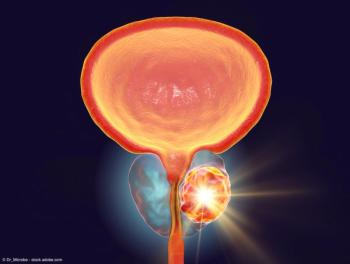
“Where we are with this, I think that our results do not support the theory that agonists have a higher cardiovascular risk than antagonists,” says E. David Crawford, MD.
Amir H. Lebastchi, MD, provides perspectives on the VIOLETTE study and underscores the importance of future head-to-head trials to gain a deeper understanding of various treatment approaches.