

Urologists offer their perspectives on toxicity seen in patients with prostate cancer who are undergoing radiation treatment.
Urologists offer their perspectives on toxicity seen in patients with prostate cancer who are undergoing radiation treatment.
Experts on prostate cancer discuss the risks, complications, and safety considerations for patients with prostate cancer who are considering radiation therapy.

"Specifically when we stratified by tertiles, we saw that at 15 years there was a significant difference in cancer-specific survival for those who had a high MMAI score vs lower MMAI scores," says Eric Li, MD.

"All forms of cancer start out by genetic changes in the DNA that cause cancer, so genetic testing becomes very important," says William J. Catalona, MD.

"We're one of the first to look at hypogonadism, or low testosterone, as a marker for both frailty and also as a biomarker for how these patients do after surgery," says Daniel Greenberg, MD.

"The Inflation Reduction Act has changed the landscape, and we really still don't understand what those implications are going to be," says Mara R. Holton, MD.

"We need improved efficiency. Part of that is being as optimal in our settings and in our techniques that we can," says Smita De, MD, PhD.

"We found that about 25% of these men had either sought treatment for a men's health issue or a sexual issue or had wanted to seek care," says Daniel Greenberg, MD.
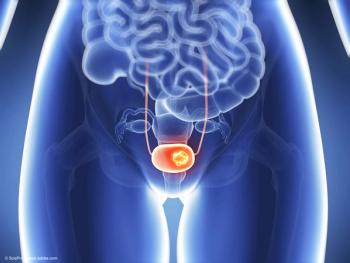
Laura Bukavina, MD, MPH, offers a preview of noteworthy bladder and kidney cancer research to be presented at this year's Society of Urologic Oncology Annual Meeting.
In this installment, expert Paul E. Dato, MD, discusses the value of a multidisciplinary team in managing patients with mCRPC and considers how his institution ensures patients receive best available therapy.
"We knew that the MS or momentary squeeze pump, originally designed at AMS was a fine device, but it did have some issues. We thought we could make it even better," says Ronald A. Morton, MD.
Kelly L. Stratton, MD, FACS, highlights 5 noteworthy prostate cancer abstracts set to be presented at the 24th Annual Meeting of the Society of Urologic Oncology.

"What we found is that overall, it was relatively effective at providing advice to patients on these pretty commonly encountered questions," says Sharath Reddy, MD.
“Health literacy pushed people towards active surveillance, which I thought was an interesting finding,” says Adam B. Murphy, MD, MBA, MSCI.

"I think there have been a lot of what I would consider incremental improvements over the past few years," Smita De, MD, PhD.
“The use of perioperative subcutaneous heparin should be considered in all patients that are undergoing IPP surgery,” says Thairo Pereira, MD.

“We have definitely seen significant trends toward transparency in hospital pricing, and in regulations designed to promote that, as well as PBM reform,” says Mara R. Holton, MD.
"In general, I think there's a tremendous amount of variability in terms of how sexual medicine specialists treat patients who have had intimacy issues relating to robotic prostatectomy," says Stanton Honig, MD.

"We as a specialty have to do a better job of educating our colleagues and referring docs," says Roger R. Dmochowski, MD, MMHC, FACS
"This year, we saw a decrease of a couple percent for physician reimbursement to levels that were even lower than pre-COVID times," says Edward Karpman, MD, FACS.
"What we found is, in a retrospective review of nearly 500 patients over a 3-year span, none of those patients reported erectile dysfunction, none of them reported loss of penile sensation, and none of them required a trip to the operating room for intervention," says Amy Pearlman, MD.

"I think that overall, one should do what one is comfortable with, within the scope of your practice and your resources," says Smita De, MD, PhD.
Dr Daniel Allan Hamstra highlights ongoing and planned trials investigating rectal spacers in patients with prostate cancer undergoing radiation therapy that he hopes will provide more data on toxicity reduction and preservation of sexual function.
Dr Hamstra recommends rectal spacers in certain prostate cancer patients to reduce rectal toxicity, allow dose escalation, and preserve sexual function, but advises judicious use due to potential complications and lack of long-term quality of life data with newer spacers.
"You can really gain so much insight from other people who have done what you're looking to do," says Helen L. Bernie, DO, MPH.
"So far, we have only 2 published, which is the cardiovascular results, which showed no increase in cardiovascular events, and the sexual function results, showing improvements in libido, but not erectile function, in up to 2 years," says Mohit Khera, MD, MBA, MPH.

“How we set up patients for success comes not just in our individual clinical encounters, but also how we approach patient care as an organization,” says Niels V. Johnsen, MD, MPH.
"We've seen that the rate of burnout among women in urology is rising particularly quickly," says Marah C. Hehemann, MD.
“One of our early findings showed that males who have IPPs use less depression medication, have less emergency room visits, and have less clinic visits for psychiatry-related conditions,” says Roei Golan.
“I do think that we have been leveraging opportunities like conferences to have meaningful discussions about these topics and see where we are and how we can get better,” says Denise Asafu-Adjei, MD, MPH.