

"It's very important to build trust early on for a urologist and with a patient so that they're more likely to stay with a screening program," says Daniel E. Spratt, MD.
"It's very important to build trust early on for a urologist and with a patient so that they're more likely to stay with a screening program," says Daniel E. Spratt, MD.
Joshi Alumkal, MD, highlights findings from the phase 3 ARASENS trial that led to the FDA approval of darolutamide for use in combination with docetaxel for the treatment of patients with metastatic hormone-sensitive prostate cancer.

“About 25% of men didn't even want to know that they had cancer,” says Daniel E. Spratt, MD.

"Sometimes, when you just look at people in the eye, you sort of can forget about everything else; you can just focus on that person in front of you," says Diana Londoño, MD.
“What's so great about the ArteraAI platform is the simplicity in which this test is performed,” says Rana R. McKay, MD.
“It’s exciting that now in 2023 we have 3 FDA-approved PARP inhibitors for the treatment of our prostate cancer patients,” says Joshi Alumkal, MD.

“When we are starting to do this in urology across the world, we need to make sure that we have patient representatives involved and they are there from the beginning to make sure that whatever we do in terms of an intervention is successful,” says Nikita R. Bhatt, MBBS, MCh, MMed, FRCS.

Shared insight into FDA-approved PSMA PET imaging tracers, highlighting similarities and differences between gallium 68 and fluorine 18 compounds.
Naveen Kella, MD, and Dr. Shadi Esfahani, MD, MPH, delve into patient selection for PSMA PET CT scans, discussing indications spanning initial diagnosis and recurrence, as well as institution guidelines.

Joshi Alumkal, MD, discusses the phase 3 TALAPRO-2 trial, which supported the FDA approval of the combination of talazoparib and enzalutamide for patients with metastatic castration-resistant prostate cancer whose tumors harbor homologous recombination repair gene defects.

“So far, all the studies have shown quite positive results with this approach. It's something that we can use in urology [for a lot of different issues],” says Nikita R. Bhatt, MBBS, MCh, MMed, FRCS.
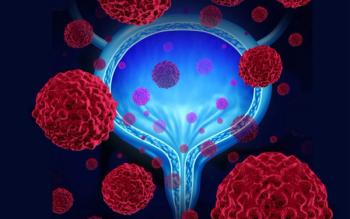
In the setting of refractory urothelial carcinoma, Jue Wang, MD, says it is essential to thoroughly understand a patient's molecular profile, comorbidities, and residual side effects from prior lines of therapy.

“The recommendations are based on the current evidence, but the evidence is overall relatively weak. So, I think there's a lot of room for improvement,” says Neal E. Rowe, MD, FRCSC.

"When a patient or an imaging study identifies an incidental adrenal mass, the first upfront radiographic test is a non-contrast CT scan," says Neal E. Rowe, MD, FRCSC.

"We as a center prioritized using cisplatin and carboplatin for patients who are receiving curative intent chemotherapy," says Tian Zhang, MD.

The phase 3 THOR trial is the supporting trial for a supplemental New Drug Application for erdafitinib in urothelial carcinoma.

“At its core, [the book is] a love letter to my patients. It's all the things that I didn't have time to tell them in a 15-minute office visit,” says Martha Boone, MD.
Experts explore PSMA's significance in prostate cancer imaging, covering its expression, limitations, and transformative role in detecting even low PSA recurrences with PSMA-PET technology.
In this introductory dialogue, Naveen Kella, MD, and Dr. Shadi Esfahani, MD, MPH, discuss PSMA-PET's transformative role alongside conventional techniques in prostate cancer imaging.

"You have to take care of those basic needs, because if not, you're not going to have the space to react differently when you're getting triggered," says Diana Londoño, MD.
“We're going to be able to treat many more patients who suffer from BPH/LUTS with these less invasive options,” says Dean S. Elterman, MD, MSc, FRCSC.

"Mentorship plays a huge role, and as someone who's interested in academics in the future, I think it's important to remember the influence that you can have on shaping young minds," says Niki Parikh, MD, MBA, MSBA.

“The world of surgery makes a person quite disciplined,” says Martha Boone, MD.
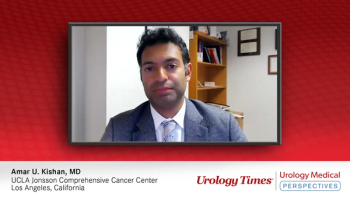
In the third installment of this series, Amar U. Kishan, MD, discusses clinical factors to consider in the use of perirectal spacing for patients receiving hypofractionation or SBRT, and outlines unmet needs.
"I would say the take-home message from this study is that HoLEP uptake has nearly doubled from 2016 to 2019," says Jenny Guo, MD.
“It's a really exciting time for people who are interested in BPH/LUTS,” says Dean S. Elterman, MD, MSc, FRCSC.
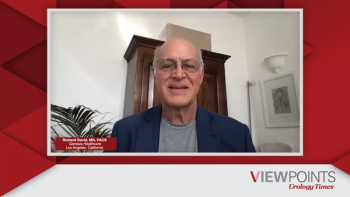
Closing out their discussion on how treatment and management of advanced prostate cancer affects their clinical practice, expert urologists consider how the therapeutic landscape continues to evolve and look toward future evolutions in care.
Expert panelists share their perspectives on recent challenges with staffing and turnover in their urology practice and consider how these particular barriers may be overcome, including recruiting and hiring additional advanced practice providers.
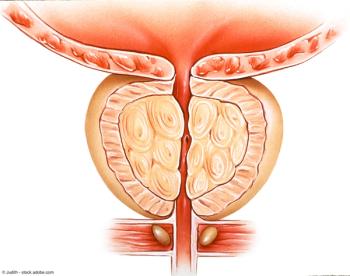
"Interestingly enough, we found that PVP accounted for nearly a third of BPH surgeries back in 2016. This number drastically decreased to just 0.7% of all BPH surgeries in 2019," says Jenny Guo, MD.