

"Only 25% of our respondents felt that sexual health curriculum provided an adequate fund of knowledge to address any of the sexual health concerns of patients," says Niki Parikh, MD, MBA, MSBA.
"Only 25% of our respondents felt that sexual health curriculum provided an adequate fund of knowledge to address any of the sexual health concerns of patients," says Niki Parikh, MD, MBA, MSBA.

"If you've got a difference, pay attention to the size and direction. If you have a massive difference between groups in terms of outcome, but only a small difference in terms of baseline characteristics, that's worth talking about," says Andrew J. Vickers, PhD.

“Our identity is not just about a title; it's not just about that role. We are much bigger than that,” says Diana Londoño, MD.
"We had the idea of doing a scoping review of office-based BPH stents, as this is becoming a new and evolving hot topic in the area of male functional urology," Dean S. Elterman, MD, MSc, FRCSC.

Benjamin H. Lowentritt, MD, FACS, shares background information on micronized abiraterone and discusses its role in the evolving prostate cancer treatment landscape.

"I've always written to just process emotions," says Martha Boone, MD.
“In terms of trying to help patients access the services, the biggest part is just being aware of what's available where you work,” says Sarah P. Psutka, MD, MS.

“I think it's extremely exciting to be part of something that is possibly practice changing, potentially field changing,” says Sandip M. Prasad, MD, MPhil.
“It's really important to pay attention to what's off balance,” says Diana Londoño, MD.

"We're interested in cause; that's why we often are doing observational research. Authors never face that head on, and don't really come to grips with it," says Andrew J. Vickers, PhD.
“I can tell you from a patient standpoint, I think we all agreed across the panel, there's going to be tremendous enthusiasm from patients about a nonsurgical option,” says Sandip M. Prasad, MD, MPhil.
Key opinion leaders briefly review the key challenges in scheduling leuprolide administration for patients with advanced prostate cancer, including treatment delays, disease breakthrough, and insurance reimbursement, and share solutions to overcome these challenges.
Experts outline their clinical approach to identifying treatment failure in patients on initial pharmacologic treatment for OAB and strategies for subsequent treatment selection.
Shared insight on the current state of telehealth and how its use affects treatment selection and followup for patients with advanced prostate cancer.
“Patients just need to be educated that you don't have to live this way,” says J. Welles Henderson, MD, FACOG.
"Given the time constraints and financial constraints of working in the systems that we all work within, trying to make it easier to get patients to these adjuvant services that do exist and making sure we capitalize and utilize those is critical," says Sarah P. Psutka, MD, MS.
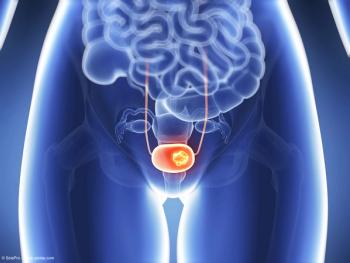
“I think it's a very novel finding, and something completely new to urologic oncology, that a nonsurgical ablative option inside the body can actually make tumors go away,” says Sandip M. Prasad, MD, MPhil.

“I didn't want to only get coached; I thought, "Well, if I become a coach, maybe I can share this with others,” says Diana Londoño, MD.

"The one other thing that we think might be helpful is that for labs that are reporting free PSA results, the most value seems to be if you report from a PSA of 2 to 10," says Mark A. Preston, MD, MPH.
“For ATLAS, it was a different protocol. This was looking at giving the chemotherapy agent upfront,” says Sandip M. Prasad, MD, MPhil.
“[As] urologists and physicians, we should all appreciate AI's potential, but also understand its current limitations,” says Roei Golan.
"The goal here is obviously to identify men who need investigation and diagnosis of prostate cancer and who we don't need to biopsy at all," says Mark A. Preston, MD, MPH.

"It's the first randomized trial that I'm aware of in urine markers looking at standard of care versus a marker-based approach," says Yair Lotan, MD.

"One of the things that we want to look at long-term is how the kidney being exposed to limited durations of warm ischemia compared to no ischemia at all affects longitudinal atrophy," says Carlos Muñoz-Lopez.
A comprehensive discussion on clinical factors that impact pharmacologic treatment selection in patients with OAB.
Experts in urology share a brief conversation on recent and future legislation for insurance coverage and reimbursement, considering how it may impact their management of prostate cancer.

Panelists introduce the available treatment modalities for OAB, including behavioral modification, pharmacologic treatment, neuromodulation, and surgical approaches.
A more focused discussion on the specific challenges physicians or patients may face when seeking coverage or reimbursement for GnRH agonists/antagonists in prostate cancer.

“Listen to your body; these are the signals telling you something is out of balance,” says Diana Londoño, MD.

"Having a framework in place anticipating somebody may want to have a child in the program helps a lot," says Christine Van Horn, MD.