

"We found that free PSA, when added to total PSA, improved prediction of clinically significant prostate cancer and fatal prostate cancer," says Mark A. Preston, MD, MPH.
"We found that free PSA, when added to total PSA, improved prediction of clinically significant prostate cancer and fatal prostate cancer," says Mark A. Preston, MD, MPH.

Some patients with bladder cancer have been traveling to other regions for treatment if their location has no available cisplatin, explains Scott Tagawa MD.

“The primary thing we found was that the average kidney–and we study the ipsilateral kidney, or the kidney that was operated on–fell at the natural aging process,” says Carlos Muñoz-Lopez.
“It’s an exciting world in which we have all of these complications about what to do because it means we have a lot more choices for our patients,” said Scott Tagawa, MD.
"Some women are perceived as being less serious because they chose to build a family in training," says Christine Van Horn, MD.

“ChatGPT isn't yet ready to determine the quality of online text, but I think it's going to change in the future,” says Roei Golan.

Anna L. Myers, APRN-CNP, WHNP-BC, FNP-BC, IF, and Jean Marino, ARPN-CNP, NCMP, IF, preview an upcoming University Hospitals-led symposium titled, “What’s your pelvic floor plan? 2nd Annual Female Sexual Health Symposium.”
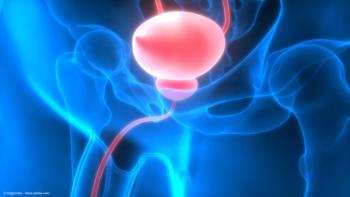
Yair Lotan, MD, explains how urine biomarker research needs to focus on how these markers can optimally fit into clinical algorithms for bladder cancer.

“I think this is a multidisciplinary approach,” says Monika Joshi, MD, MRCP.
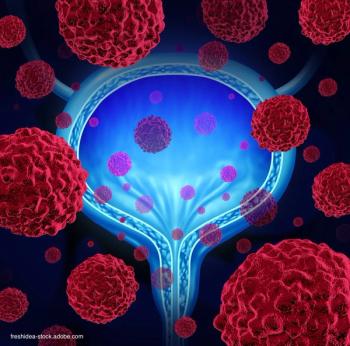
“In many ways the field of urine markers is evolving but it has also hit some obstacles,” says Yair Lotan, MD.

"[These findings] will encourage us to continue to offer bladder neck incision to these patients if their bladder neck appears narrow after laser enucleation," says Nicholas S. Dean, MD.

“The more and more people we can get excited about this and collaborate with, the better results we're going to get and the more we're going to learn,” says Sunil H. Patel, MD, MA.

Centering discussion on insurance and reimbursement, key opinion leaders in prostate cancer management consider the current state of coverage for GnRH agonists/antagonists.

A brief review of the role that testosterone measurements play, amidst other monitoring strategies, in assessing for treatment failure in advanced prostate cancer.

"Some of the issues have to do with the stressors of the physicality of being a surgical trainee," says Christine Van Horn, MD.

“I think we're thinking about bladder cancer in a different mindset,” says Sunil H. Patel, MD, MA.
“I think radiation therapy in bladder cancer could be divided into organ preservation, which is more for localized bladder cancer, as well as palliative approaches, which is very well known,” says Monika Joshi, MD, MRCP.
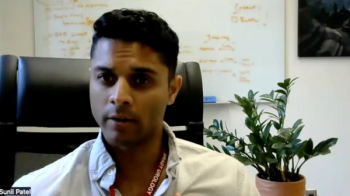
"We've made a lot of big strides in smoking incidence, however, we're still seeing the bladder cancer rates, even though a slight decrease, we're still seeing it holding on," says Sunil H. Patel, MD, MA.

"Our session this year is focusing on radiation across all the spectrums, so something more than our comfort zone or what the standard of care is," says Monika Joshi, MD, MRCP.

"Of the patients who underwent a prophylactic bladder neck incision... none of those patients developed a bladder neck contracture at 14 months of median follow-up," says Nicholas S. Dean, MD.
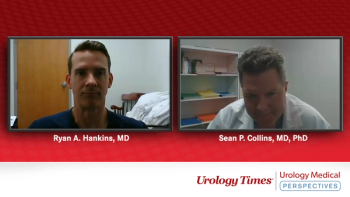
In the second installment of this series, Ryan A. Hankins, MD, and Sean P. Collins, MD, PhD, provide insights on the multidisciplinary approach to treating patients with prostate cancer and discuss the roles of urologists and radiation oncologists.

“The real immediate use case is that this biomarker can be an adjunct, or it can be something to assist in making the shared decision making with patients [with prostate cancer],” says Daniel E. Spratt, MD.

“Burnout is the end stage of unmanaged stress in the workplace,” says Diana Londoño, MD.
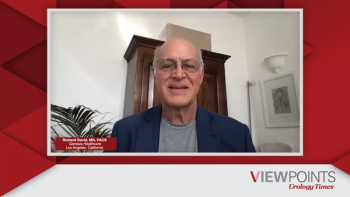
Digging into the logistics of advanced prostate cancer management, keynote speakers consider challenges faced with the electronic systems used to request or order therapy.

Switching their focus to the treatment armamentarium, expert panelists reflect on selection and sequencing of therapy for patients with advanced prostate cancer.

"We've been focused on improving the quality of care around ureteroscopy for kidney stones, especially around a post operative emergency department visits," says Khurshid R. Ghani, MD.

"It's been pretty consistent that our second-year urology residents are really suffering," says Amanda C. North, MD.

"It could identify about 2/3 of men that normally we'd be recommending hormone therapy would appear to have no benefit from hormone therapy," says Daniel E. Spratt, MD.
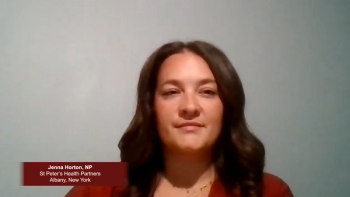
A brief overview of how and when providers incorporate urodynamic testing as part of the diagnostic workup for OAB.
Panelists further expand on the typical clinical characteristics of patients with OAB who they see in their practice, common signs and symptoms, and potential differential diagnoses.