

"Somebody once gave me a saying: the 3 things that make a person happy every day are somewhere to go, someone to love, and something to look forward to. I have all 3 of them," says Steven A. Kaplan, MD.
"Somebody once gave me a saying: the 3 things that make a person happy every day are somewhere to go, someone to love, and something to look forward to. I have all 3 of them," says Steven A. Kaplan, MD.
"Certainly, anybody who is a recurrent stone former, or of a young age when they develop their first stone, they automatically get a 24-hour urine test," says Joseph Song, MD.

“Across the whole survey, an average of 66% preferred the professional card. The highest rate of selection of the humorous card in a single question was only 38.4%,” says Max D. Sandler.

"17% answered positively to 1 of our questions indicating they might be at risk for some sort of home toilet or sanitation insecurity, or at least they experienced some sort of worry or stress about having access consistently to a working toilet in their home," says Elisabeth M. Sebesta, MD.

"As I like to say, 'They are little people with small stones that cause big problems,' " says Katherine Chan, MD, MPH.

A nuclear radiologist provides an overview of the gallium- and fluorine-based PSMA-PET tracer options, highlighting factors that influence tracer selection.
Tony Abraham, DO, MPA, discusses how the emergence of PSMA-PET imaging has impacted the staging and management of patients with prostate cancer.

"But both groups reported that Peyronie's disease does impact their mental health, and a large portion of both groups also said that they had had a negative experience with a urologist at some point," says Olivia Paulsen.

"Of patients with bladder cancer, 100% of the pathogenic variants would have been missed based on current guidelines," says Adri Durant, MD.

"How closely should we follow these patients? Is it annually? Is it every other year?" asks Jacqueline Zillioux, MD.

“So, when it comes to fluoroscopy, low-dose pulsed fluoroscopy, whenever you can, is ideal,” says Jessica L. Wenzel, MD, MPH.

"If they have some issues with dexterity, if I feel they're not going to be able to pump the device up adequately, or they don't have a partner that can do it, they're probably not a good candidate for an inflatable device," says Charles Kaplan, MD.

"Even at my stage of career, most people are retiring, and I've never been busier or had more fun," says Steven A. Kaplan, MD.
“I think in terms of symptom elicitation, it's important to be systematic so that we don't shortchange certain populations when we try to figure out what their symptoms are,” says Briony K. Varda, MD, MPH.

"It really opened up an opportunity to provide support for our patients with bladder cancer who smoked in patient after that teachable moment of surgery," says Marc Bjurlin, DO, MSc, FACOS.

“These allow us to treat just those areas of cancer, maintaining much better preservation of sexual function and less incontinence,” says Kevin R. Basralian, MD.
"The primary aim is looking at the dose-limiting toxicity of this drug combination," says Kelly L. Stratton, MD, FACS.

"It's my opinion that no patient population benefits more from a miniaturized technique than a pediatric patient," says John Michael DiBianco, MD.

"The success rate is amazing," says Shaya Taghechian, MD, of Bulkamid.

“What we've shown with our data and through our experience, is that by using this technology, we're able to preserve more normal kidney and disrupt less of the normal kidney,” says Michael D. Stifelman, MD.

"One of the biggest considerations we have in imaging pediatric patients is radiation exposure," says Katherine Chan, MD, MPH.

Looking to the future treatment landscape in prostate cancer, the panel provides closing thoughts on the trajectory of the utilization of PSMA-PET imaging and the unmet needs it might address.

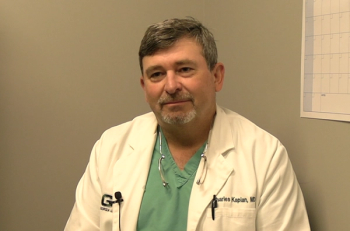
"I feel like there's still a lot of lack of knowledge about the more advanced treatments for men's health; specifically, penile implants," says Charles Kaplan, MD.

Gary D. Steinberg, MD, summarizes his major takeaway from the AUA 2024 conference and shares his insights on the potentially practice-changing developments he anticipates in the near future for the management of non-muscle-invasive bladder cancer (NMIBC).

"We found that over time, when you are controlling for possible competing risk of death because of age, that there was an estimated 44% incidence of cognitive impairment diagnosis at 15 years and 17% for manual dexterity diagnosis at 15 years," says Jacqueline Zillioux, MD.

“This study really bridges the gap between STAMPEDE and PROTEUS and provides the opportunity for patients to get either surgery or radiation therapy,” says Kelly L. Stratton, MD, FACS.

"Kidney stones in children are quite a bit different than in adults," says Katherine Chan, MD, MPH.
“There was a consistent request for more access to knowledge [and] access to guidelines,” says Jessica L. Wenzel, MD, MPH.