
“What we found was that pyuria, or the incidence of white blood cells in the urinalysis, was a big driver for treating patients with antibiotics,” says Briony K. Varda, MD, MPH.
“What we found was that pyuria, or the incidence of white blood cells in the urinalysis, was a big driver for treating patients with antibiotics,” says Briony K. Varda, MD, MPH.

"The first part is how much [are patients] bothered by the symptoms?" says Akhil Das, MD, FACS.

"You have to have a passion for it. If you have a passion for it, it's easy to do," says Shaya Taghechian, MD.

"We found a 25% incidence of cognitive impairment just based on this telephone test," says Jacqueline Zillioux, MD.

"I think that having some clinical guidelines would be very much beneficial for us in midlevel practice," says Adity Dutta, MSN, AGACNP-BC.

The panel concludes by offering key takeaways on the evolving treatment landscape for BCG-unresponsive non–muscle invasive bladder cancer.
Experts on non–muscle invasive bladder cancer discuss promising developments in the overall treatment landscape, highlighting potentially practice-changing clinical research.

"Unique to this study is that we'll be using Orgovyx," says Kelly L. Stratton, MD, FACS.

"I'd be curious to see a validated study on whether prostate sizes have increased over time. I suspect the answer will be yes," says Joseph Song, MD.

"Pediatric patients do have a somewhat heterogeneous or variable presentation of their stone disease. A lot of that is dependent upon their age," says Katherine Chan, MD, MPH.

Experts on prostate cancer discuss the benefits to multidisciplinary care as it pertains to PSMA-PET imaging.
Prostate cancer specialists discuss challenges associated with imaging in clinical practice.

The panel offers key takeaways on the evolving landscape for imaging and biopsy in prostate cancer, highlighting the role for fusion-guided biopsy in the diagnosis and management of prostate cancer.
Prostate cancer specialists provide insights on the integration of fusion biopsy into clinical practice and how it has impacted treatment paradigms.

Ben H. Chew, MD, MSc, FRCSC, and Naeem Bhojani, MD, FRCSC, on Urology Times' recent survey of reusable vs disposable cystoscopes.

"I can say that I do see a vast number of different types of patient populations," says Adity Dutta, MSN, AGACNP-BC.
Lee discusses findings from a study presented at the 2024 American Urological Association Annual Meeting.

“We found that two-thirds or female respondents did not know their dosimeter doses during pregnancy,” says Jessica L. Wenzel, MD, MPH.

"I think pelvic pain is 1 of the areas that really needs more attention," says Gamal M. Ghoniem, MD, FACS, ABU/FPMRS.
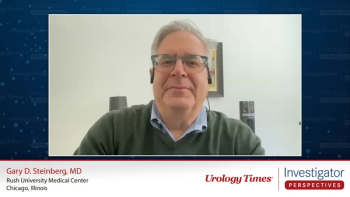
Gary D. Steinberg, MD explains the implications of the BOND-003 results for clinical practice in treating non-muscle-invasive bladder cancer (NMIBC), highlighting the potential benefits of novel immunotherapeutic options like cretostimogene grenadenorepvec as a bladder-sparing therapy for BCG-unresponsive high-risk NMIBC, and discusses how this treatment could fit into the NMIBC treatment landscape if approved.

"There is a severe lack of treatment when it comes to women's sexual health," says Shaya Taghechian, MD.

Trinity Bivalacqua, MD, PhD, announces an upcoming UroView series highlighting key information presented at ASCO 2024 surrounding treatment of high-risk BCG-unresponsive NMIBC.

"We provide surgical treatments for kidney stones, and we also help patients manage their stones medically; for example, helping them perhaps with spontaneous passage of their stones," says Katherine Chan, MD, MPH.

“We also saw differences in the average pay per weekday of hospital call; 32% of men reporting receiving over $500 per day [of] weekend hospital call, but only 18% of women reporting the same,” says Andrew M. Harris, MD.

"We aim to provide the best quality care we can at the locations closest to our patients," says Edward M. Schaeffer, MD, PhD.
"Especially for prostate cancer, some of the sexual side effects, it's tough to talk about that when you're talking to your uncle or your brother who has it," says Joseph Song, MD.

"When they said that they value privacy over cost and convenience, I think that is the clearest sign that the stigma for men's health still exists," says Justin M. Dubin, MD.

“It's the next evolution of being able to provide precision care for our patients in the area of prostate cancer,” says Nitin K. Yerram, MD.

"We really need better options with the least side [amount of] effects for these patients," says Zhina Sadeghi, MD.

"My hope is that from the KL2 data that I'll generate, hopefully in the next 6 to 12 months, we can apply for an RO1 to push this one step further so that we can benefit other people with brain tumors, other people with strokes, and other peoples with other neurological disorders with bladder symptoms," says Olivia H. Chang, MD, MPH, FACOG.