

The panel discusses the role of PSMA-PET imaging in prostate cancer and highlights different PSMA agents.
The panel discusses the role of PSMA-PET imaging in prostate cancer and highlights different PSMA agents.

Bladder cancer experts discuss the evolving treatment landscape in BCG-unresponsive NMIBC and give an overview of TAR-200, an emerging therapy.

A panel of experts on prostate cancer introduce themselves and begin the discussion with clinical insights on diagnostic practices and the importance of biopsy and imaging in guiding treatment decisions.
A panel of experts on prostate cancer provide an overview of conventional imaging modalities that have been used in the initial staging and management of prostate cancer and discuss the role of PSMA-PET imaging.
A panel of experts on non–muscle invasive bladder cancer (NMIBC) discuss challenges associated with BCG shortages and the impact on treatment options and patients’ quality of life.

In this video, Kevin C. Zorn, MD, FRCSC, FACS, discusses key BPH data from the 2024 American Urological Association Annual Meeting.
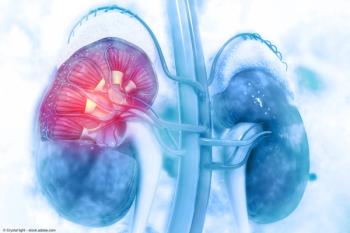
"Our study looked at data from 5 trials of the combination therapy with an immune checkpoint inhibitor and the VEGF TKI evaluating if there's still any potential role for cytoreductive nephrectomy that is worth being investigated in prospective studies," says Jaleh Fallah, MD.

"When we reviewed the data, we noticed a large difference in outcomes based on ethnicity," says Devon M. Langston, MD.

"Holistic review is a way to assess an applicant's candidacy for residency by looking at lived experiences and personal attributes in addition to traditional metrics, like Step 1 scores, AOA, and number of research publications," says Alexandra Tabakin, MD.
Gary D. Steinberg, MD, discusses the unmet needs and current standard of care for patients with intermediate and high-risk non-muscle-invasive bladder cancer (NMIBC).

“Variation is the enemy of quality. The more streamlined we can do these things and include APPs in the teachings of procedures and understanding different subspecialties of prostate cancer, I think it would be helpful,” says Joy Maulik, CRNP

“Overall, I think this study will allow clinicians to better advise patients in the slightly complex landscape of OAB therapies,” says Leo Dreyfuss, MD.

"I think [these are] important data to [give to] your patients," says Laura Bukavina, MD, MPH.

Michael S. Cookson, MD, MMHC, FACS, recaps several presentations on prostate cancer from the 2024 American Urological Association Annual Meeting in San Antonio, Texas.

"Anecdotally, I would say that many providers actually prefer the functionality of the single-use cystoscopes," says David Barquin, MD.

“One of the biggest things that this brings us to for an update of upper tract disease is biopsy alone of an upper tract tumor is not good enough anymore--we must risk stratify these patients,” says Katie S. Murray, DO.
“The way to move the organization forward is to listen to learn, not to win,” says J. Stuart Wolf, Jr., MD, FACS.

"It's really critical to recruit and retain diverse talent in urology to improve patient care and our health care system overall," says Alexandra Tabakin, MD.

“I think ultimately, when we think about when do we deliver MDRT and to whom, it comes down to a goals of care discussion,” says Angela Jia, MD, PhD.

"We identified 12 discrete workflow steps for outpatient flexible cystoscopy, with 5 of those being able to be eliminated by the transition to the single-use scope," says David Barquin, MD.

"Our first question is, in patients who were on the GLP1R agonists for a prolonged period of time, were those patients at increased or decreased risk of developing the most common GU malignancies?" says Laura Bukavina, MD, MPH.

"I would say the take-home message is that usage of this mobile health platform could potentially improve patient quality of life and compliance with recommendations," says Jenny Guo, MD.

“Cancer is a journey which is very emotional as much as it is physical. And not only for the patients, but it is also for their caregivers, whoever that person is,” say Joy Maulik, CRNP.

Neal Shore, MD, FACS, and Brian Shuch, MD, provide closing thoughts on the potential of PET/CT imaging to improve patient care in kidney cancer.
Urologists review clinical trials investigating new imaging options in kidney cancer, including the ZIRCON study looking at girentuximab.

"The other was that we found that about half of the patients in the CIS cohort and two-thirds of those in the Ta/T1 or papillary cohort had bladder preservation, meaning they were able to avoid cystectomy," says Vikram M. Narayan, MD.
"What we saw among over 400 patients [was] that indeed, subcutaneous heparin did not increase the hematoma chance, but it reduced the chance to have venous thrombotic events," says Thairo Pereira, MD.

"I think these findings suggest that for clinicians who treat a lot of older adults with neuromodulation, caution should be exhibited when recommending the single-stage approach," says Leo Dreyfuss, MD.
“When we looked at the risk of bleeding and takeback for fulguration, the reported rate was 0.46%. Less than 1% of patients had any significant bleeding,” says Dean S. Elterman, MD, MSc, FRCSC.

"We saw that Black men within this cohort had lower Decipher scores across all ages and Gleason scores different than what had been reported in other data sets, which was interesting," says Samuel L. Washington III, MD, MAS.