
News|Videos|January 12, 2026
Economic and Educational Barriers to Estradiol Therapy in Prostate Cancer
Fact checked by: Benjamin P. Saylor, Strategic Content Lead
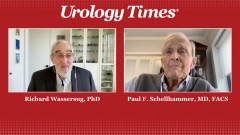
In part 2 of a 5-part series, Richard Wassersug, PhD, and Paul F. Schellhammer, MD, FACS, explore the historical, clinical, and systemic barriers to using transdermal estradiol as a treatment for prostate cancer, while highlighting its potential benefits.
Advertisement
Episodes in this series
Transdermal estradiol is emerging as a promising, patient-centered therapy for prostate cancer, yet its adoption is hindered by historical perceptions, clinical workflow norms, and systemic barriers. In part 2 of a 5-part series, Richard Wassersug, PhD, and Paul F. Schellhammer, MD, FACS, explore the historical, clinical, and systemic barriers to using transdermal estradiol as a treatment for prostate cancer, while highlighting its potential benefits. Schellhammer begins by outlining the historical context: VA studies from the 1950s and 1960s demonstrated that oral estrogen could effectively control prostate cancer but carried significant cardiovascular and thromboembolic risks. These findings largely discredited estrogen therapy, a perception that persists today, in part because the biology of enterohepatic circulation and differences between oral and transdermal estrogen are not well appreciated.
They note that modern urology practices are structured around standardized, high-throughput care models, often relying on long-acting LHRH injections. Introducing transdermal estradiol would disrupt these established workflows and require change—something clinicians naturally resist. Education is another major obstacle: Both physicians and patients need better information, yet educational support is typically funded by pharmaceutical companies promoting patented drugs. Estradiol, lacking commercial backing under the current economic model, does not benefit from the same level of continuing medical education or patient education resources.
Wassersug reframes these challenges more positively, emphasizing that transdermal estradiol enables personalized care. Although it requires closer monitoring during initiation, patients often value this individualized approach. Survey data from the Estradiol Initiative involving over 800 North American patients with prostate cancer show a strong preference for transdermal estradiol once patients understand its adverse event profile.
Wassersug and Schellhammer emphasize significant quality-of-life advantages: reduced risks of osteoporosis, hot flashes, depression, fatigue, and thromboembolic events compared to conventional androgen deprivation therapy. Improved sleep and fewer adverse events may also enhance treatment adherence. Finally, they argue that resistance to off-label prescribing creates inefficiencies, as motivated patients may seek multiple physicians to access estradiol—placing an unnecessary burden on the health care system. Overall, they conclude that although adoption is complex, transdermal estradiol represents better, more patient-centered care.
Advertisement
Related to this article
Jack R. Andrews, MD, discusses BED-PSMA-411 findings comparing PSMA-PET detection rates and urinary excretion in prostate cancer biochemical recurrence.

Abraham Morgentaler, MD, reviews evidence showing no association between testosterone therapy and prostate cancer risk and explains the saturation model of androgen action.

An analysis of NRG/RTOG 0815 found Decipher predicted distant metastasis risk and identified patients with greater benefit from short-term ADT.

Brian Mazzarella, MD, discusses the landscape for intermediate-risk prostate cancer and early VAPOR 2 findings on water vapor ablation.

Sandip M. Prasad, MD, MPhil, discusses the safety profile of mitomycin intravesical solution, including common adverse events and patient counseling during chemoablation for NMIBC.
Sandip M. Prasad, MD, MPhil, discusses 3-year ENVISION trial data showing durable responses with mitomycin intravesical solution for recurrent LG-IR-NMIBC.
Armine K. Smith, MD, discusses sexual health counseling, sex-specific considerations, and organ-preserving approaches for patients undergoing radical cystectomy.

Melissa Hadley Barrett discusses real-world outcomes and tolerability of intranasal vardenafil for men with persistent erectile dysfunction despite prior standard therapy.
Advertisement
Advertisement
Trending on Urology Times
1
Matching mCSPC treatment to the patient, not just the trial data
2
Anktiva plus BCG shows durable responses in BCG-unresponsive NMIBC
3
Urocross Expander System enters US commercial use for symptomatic BPH
4
Study assesses real-world outcomes with intranasal vardenafil for ED
5