Now Playing
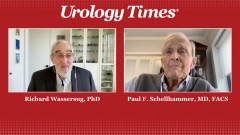
In this opening segment, Richard Wassersug, PhD, and Paul F. Schellhammer, MD, FACS, discuss the origins, goals, and challenges of the Estradiol Initiative.
In this Rx Review video series from Urology Times, Richard Wassersug, PhD, and Paul F. Schellhammer, MD, FACS, discuss the Estradiol Initiative, a movement advocating for transdermal estradiol as a standard-of-care option for androgen deprivation therapy (ADT) in men with advanced prostate cancer. Drawing on extensive research, clinical experience, and their own long-term personal use, they argue that transdermal estradiol provides testosterone suppression and disease control equivalent to conventional LHRH-based ADT while offering markedly better quality of life, including fewer hot flashes, less fatigue, improved mood and sleep, and preservation of bone health. They emphasize that historical concerns about estrogen-related cardiovascular risk stem from oral delivery methods and are not seen with transdermal administration, a distinction supported by data from the PATCH trials. The speakers also highlight the therapy’s low cost, compatibility with modern combination regimens, and potential to reduce financial and skeletal complications associated with standard ADT. Despite barriers such as off-label status, lack of industry sponsorship, and lingering clinician skepticism, they contend that education and guideline inclusion are essential to ensure patients have informed access to this effective and patient-centered therapy option.
In this opening segment, Wassersug and Schellhammer discuss the origins, goals, and challenges of the Estradiol Initiative. They explain that the initiative emerged from their shared observation that patients using transdermal estradiol often experience better quality of life than those receiving standard ADT agents such as LHRH agonists or antagonists. Despite these benefits, transdermal estradiol is not currently an approved or standard-of-care treatment, and no products are specifically licensed for this indication.
Both speakers emphasize their unique credibility, as they have extensive personal and professional experience with estradiol. Each has lived with advanced prostate cancer and undergone both conventional ADT and transdermal estradiol therapy. Wassersug notes he has been on transdermal estradiol for over 22 years with effective PSA and testosterone control, while Schellhammer reports 18 years of use after his disease became castration resistant. Schellhammer describes a marked slowing of disease progression and a dramatic improvement in his overall well-being and performance after switching therapies. Their shared experience motivates them to disseminate information and advocate for broader awareness among physicians and patients.
A major barrier they identify is lingering clinician concern about estrogen-related blood clots, rooted in historical use of oral diethylstilbestrol. They explain that modern evidence shows the risk was due to oral administration, which increases liver clotting factors, and that transdermal delivery avoids this problem. Another significant challenge is regulatory and economic: Estradiol is inexpensive—potentially up to 100 times cheaper than standard ADT drugs—making it unattractive for pharmaceutical companies to pursue licensing. As a result, they argue, transdermal estradiol remains off label despite its potential benefits, underscoring the need for regulatory pathways independent of commercial incentives.