
News|Videos|January 12, 2026
Why Guideline Support Is Key to Estradiol Adoption in Prostate Cancer
Fact checked by: Benjamin P. Saylor, Strategic Content Lead
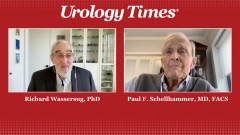
In the final installment in a 5-part series, Richard Wassersug, PhD, and Paul F. Schellhammer, MD, FACS, discuss strategies for establishing transdermal estradiol as a recognized therapy for men undergoing androgen deprivation therapy for prostate cancer.
Advertisement
Episodes in this series
For men on long-term prostate cancer therapy, quality of life matters. In the final installment in a 5-part series, Richard Wassersug, PhD, and Paul F. Schellhammer, MD, FACS, discuss strategies for establishing transdermal estradiol as a recognized therapy for men undergoing androgen deprivation therapy (ADT) for prostate cancer. They emphasize the need to present compelling evidence to patients, physicians, payers, and licensing authorities, highlighting that no pharmaceutical companies currently produce estradiol products specifically licensed for men. Schellhammer shares his personal experience with intermittent estradiol therapy during clinical trials, noting its positive impact on quality of life compared with traditional LHRH analogues.
Both experts stress that physician adoption depends heavily on guideline recognition. They identify major oncology and urology organizations—including the National Comprehensive Cancer Network, American Society of Clinical Oncology, the American Urological Association, and the Society of Urologic Oncology—as key targets for guideline inclusion, which would legitimize transdermal estradiol as a viable therapeutic option and facilitate shared decision-making between patients and physicians. Publication of high-quality, evidence-based research is viewed as essential for this effort.
Wassersug reflects on their shared history, noting that both he and Schellhammer explored transdermal estradiol prior to definitive trial results. He describes preclinical work demonstrating estradiol’s benefits in castrated male rats, including improved REM sleep, reduced fatigue, and partial preservation of sexual interest—findings with potential relevance to patients’ well-being.
The conversation highlights the transformative potential of transdermal estradiol in prostate cancer therapy, contrasting it with existing ADT approaches and recent add-on treatments such as chemotherapy, immunotherapy, and receptor blockers. They note that estradiol could improve quality of life, maintain bone health, and reduce costs, representing a major shift in long-term prostate cancer management. Both conclude with a shared mission: to gain acceptance of transdermal estradiol as a standard-of-care option, emphasizing that their advocacy is motivated solely by patient benefit rather than financial interest.
Advertisement
Related to this article

Jack R. Andrews, MD, discusses BED-PSMA-411 findings comparing PSMA-PET detection rates and urinary excretion in prostate cancer biochemical recurrence.

Abraham Morgentaler, MD, reviews evidence showing no association between testosterone therapy and prostate cancer risk and explains the saturation model of androgen action.

An analysis of NRG/RTOG 0815 found Decipher predicted distant metastasis risk and identified patients with greater benefit from short-term ADT.

Brian Mazzarella, MD, discusses the landscape for intermediate-risk prostate cancer and early VAPOR 2 findings on water vapor ablation.

Sandip M. Prasad, MD, MPhil, discusses the safety profile of mitomycin intravesical solution, including common adverse events and patient counseling during chemoablation for NMIBC.
Sandip M. Prasad, MD, MPhil, discusses 3-year ENVISION trial data showing durable responses with mitomycin intravesical solution for recurrent LG-IR-NMIBC.

Armine K. Smith, MD, discusses sexual health counseling, sex-specific considerations, and organ-preserving approaches for patients undergoing radical cystectomy.

Melissa Hadley Barrett discusses real-world outcomes and tolerability of intranasal vardenafil for men with persistent erectile dysfunction despite prior standard therapy.
Advertisement
Advertisement
Trending on Urology Times
1
Matching mCSPC treatment to the patient, not just the trial data
2
Anktiva plus BCG shows durable responses in BCG-unresponsive NMIBC
3
Urocross Expander System enters US commercial use for symptomatic BPH
4
Study assesses real-world outcomes with intranasal vardenafil for ED
5