Melissa Hadley Barrett discusses real-world outcomes and tolerability of intranasal vardenafil for men with persistent erectile dysfunction despite prior standard therapy.
Ryan K. Flannigan, MD, FRCSC, highlights a phase 2 study of the sustained-release lidocaine formulation ST-01 as a potential nonsurgical treatment for chronic scrotal content pain.
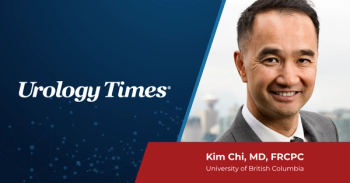
In this video, Ryan K. Flannigan, MD, FRCSC, highlights a phase 2 study (NCT05707208) evaluating ST-01, a sustained-release lidocaine formulation, as a potential nonsurgical treatment option for men with chronic scrotal content pain (CSCP). Data from the study were presented at the
Flannigan is an assistant professor in the department of urologic sciences at the University of British Columbia and a senior research scientist at the Vancouver Prostate Centre.
Flannigan explained that CSCP is a common yet difficult condition to manage because many patients lack an identifiable or reversible cause of pain. As a result, treatment often focuses on symptom management, but nonsurgical options are limited. ST-01 was developed to provide a longer-lasting therapeutic alternative by delivering lidocaine in a sustained-release polymer formulation, with the goal of offering more durable pain relief than conventional spermatic cord blocks.
The prospective, randomized, multicenter, single-blind phase 2 trial enrolled 63 men with CSCP across 8 Canadian sites, with efficacy results reported for the first 54 evaluable participants. Patients were randomly assigned to receive standard-of-care lidocaine injections alone or ST-01 at either 70 mg/mL or 140 mg/mL, with repeat dosing approximately every 28 days. Patients in the control arm had the option to cross over to ST-01 after 2 treatment cycles and reaching 28 days after the second injection. Flannigan noted that the study built upon previously published phase 1 safety data and was designed to evaluate both repeated-dose safety and efficacy.
The 70 mg/mL ST-01 dose demonstrated significantly higher response rates than standard of care, with 71% of patients achieving at least a 2-point reduction in pain compared with 32% in the control arm (P = .044). The response rate was 33% in the 140 mg/mL arm (140 mg/mL vs control, P = 1). Clinical response rates based on cycle-average pain scores were also significantly higher with the 70 mg/mL dose (88% vs 37%; P = .002), and crossover responses further supported a treatment effect.
Regarding safety, Flannigan said most participants (47 of 54) experienced at least 1 adverse event (AE), although these were predominantly mild or moderate injection-related events, including bruising, swelling, and pain at the injection site. Three serious AEs occurred, including 2 hospitalizations for management of suspected infection and 1 hospitalization for pain management, but all resolved without persistent complications by the end of the study. He noted that transient injection-site AEs are expected with spermatic cord injections.
REFERENCE
1. Brink SM, Giddens J, Patel P, et al. PD26-15: A RANDOMIZED PHASE II STUDY OF REPEAT DOSE ST-01 (LIDOCAINE POLYMER SOLUTION) VS LIDOCAINE FOR SPERMATIC CORD BLOCK IN MEN WITH CHRONIC SCROTAL CONTENT PAIN. J Urol. 2026;215(5S):e1460. doi:10.1097/01.JU.0001191720.97092.ae.15