
Opinion|Videos|July 18, 2024
The Impact of MRI-Guided Biopsy in Diagnosis and Treatment Decisions
Author(s)Kyrollis Attalla, MD
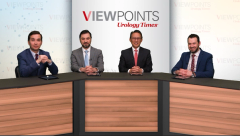
Kyrollis Attalla, MD, shares his approach to imaging and biopsy in the diagnosis of prostate cancer and discusses the benefit of a good biopsy followed by appropriate imaging at initial diagnosis.
Advertisement
Episodes in this series

Video content above is prompted by the following questions:
- Can you please share your approach to imaging and biopsy in the diagnosis of prostate cancer?
- What is the role of a good biopsy followed by the right imaging when a patient is first diagnosed with prostate cancer?
- How can these aid in guiding treatment decisions and ensuring best outcomes for patients?
Advertisement
Related to this article
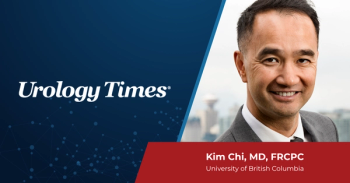
Kim Chi, MD, FRCPC, discusses the rationale and design of the phase 3 KLK2-comPAS trial evaluating pasritamig alone and in combination with JNJ-9401 in patients with mCRPC.

Longer-term findings from the phase 2 ARACOG study suggest differences in objectively measured cognitive function between ARPIs.

Chad R. Ritch, MD, MBA, FACS, discusses how PSMA-PET informs staging, treatment planning, recurrence workup, and the interpretation of equivocal findings.

Jeffrey M. Spier, MD, discusses how fatigue may impact patient quality-of-life and when dose reduction may be an appropriate treatment strategy.

Jeffrey M. Spier, MD, reviews evidence on ARPI dose reduction in prostate cancer and discusses monitoring treatment response, tolerability, and dose reescalation.
Jeffrey M. Spier, MD, discusses managing ARPI-related fatigue through dose adjustments, patient monitoring, and strategies to maintain treatment adherence.

Moderators and participants reviewed ARANOTE, ARACOG, and ARASEC data and how they inform individualized treatment for mCSPC.

Jack R. Andrews, MD, discusses BED-PSMA-411 findings comparing PSMA-PET detection rates and urinary excretion in prostate cancer biochemical recurrence.
Advertisement
Advertisement
Trending on Urology Times
1
How PSMA-PET shapes staging and recurrence workup in prostate cancer
2
ESMO 2026: Key presentations across genitourinary oncology
3
Engy Habashy, MD, on the role of androgens in GSM management
4
European Commission approves perioperative pembrolizumab plus enfortumab vedotin for MIBC
5