

“It works on the bladder [and] it relieves the symptoms of people who have overactive bladder, but it doesn't do any adverse things to blood pressure or heart rate.” says Michael A. Weber, MD.
“It works on the bladder [and] it relieves the symptoms of people who have overactive bladder, but it doesn't do any adverse things to blood pressure or heart rate.” says Michael A. Weber, MD.

“I’m looking forward to comparisons of minimally invasive surgery versus medical therapy, that is, at this point, untapped. It's something which we think we have insight into, but we really don't have good data,” says Kevin T. McVary, MD.

“Our study strongly suggests that telemedicine can become the mainstay of treatment within FPMRS even after the COVID-19 pandemic has ended,” says Christina Shin, BA.

“The activity that we saw with the combination was very promising and…it justifies additional clinical trials to determine whether or not this could have a place in terms of our standard treatment options for patients,” says Michael Schweizer, MD.

“Our data shows that in newly diagnosed men with prostate cancer, yoga improved quality of life [as well as] some immune markers, and [lowered] inflammation,” says Dharam Kaushik, MD.

“We're increasingly seeing the addition of molecular and genetic tests to guide us in terms of the cancer treatment that we provide our patients,” says Scarlett Gomez, MD, PhD.

“We were able to show that there was a very…clinically significant decrease in the rate of UTIs in the vaccinated group, preventing UTIs in almost 60% of vaccinated patients,” says J. Curtis Nickel, MD.

“Some potential…combination therapy may be valuable, such as combining with a checkpoint inhibitor or some target senescence because this resistance involves those kinds of mechanisms,” says Allen C. Gao, MD, PhD.
“Opioids are opioids…they can lead to long-term usage regardless of their FDA class. We really need to be good stewards for our patients,” says Sarah F. Faris, MD.

“Figuring out a good, comfortable way to bring that [ED] conversation up…will really pay dividends in other parts of the health care system. It will also allow more people to appropriately get funneled to urology to better address it,” says Denise Asafu-Adjei, MD, MPH.
“[BPH treatment] has to be individualized to the motivations of the patient, and also what I call his "phenotype.” How big is his prostate? How bad is this problem? And what is his tolerance for side effects?” says Kevin T. McVary, MD.
"These data are growing rapidly, and awareness of where we stand right now and the potential that could change as well in the future with new data is important for the practicing urologist,” says Peter N. Schlegel, MD, FACS.
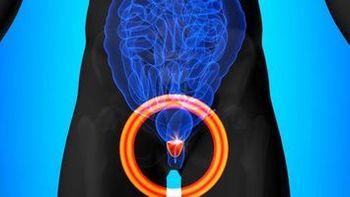
“What we found was the [progression-free survival] value was improved in the subgroup of patients with low [alkaline phosphatase levels],” says Michel Pavic, MD.

“We think given the accuracy that this is potentially a game changer,” says Laurence Klotz, MD, FRCSC.
“More research needs to be done, but I think this is something that gets the conversation started,” says Tony Chen, MD.
“The take-home message for all practicing urologists should be that if you have an nmCRPC patient, don't wait for them to develop mCRPC based on conventional imaging…We have 3 really efficacious level 1 evidence studies that have demonstrated the value for starting any of these 3 drugs,” says Neal D. Shore, MD.

“In those resistance cells, there is a lot of senescence occurring there, so that provides some potential target…which can be used to improve those PARP inhibitor therapies,” says Allen C. Gao, MD, PhD.

"In the clinic, I think the biggest benefit, at least immediately, is that by asking and trying to figure out what a patient's tobacco use history is, you can help with quitting,” says Richard Matulewicz, MD, MS.
"This particular study comes from our human randomized trial that we hope will be the final step before FDA approval for the technology,” says Mathew D. Sorensen, MD, MS, FACS.

“We have the rising spectra of national and international antibiotic resistance, which is becoming a huge international medical issue,” says J. Curtis Nickel, MD.

“We need to do a better job sampling the prostate,” says Matthew J. Allaway, MD.
“Although [whole-gland] treatments are very successful, from the oncologic perspective, our goal was to develop and test a new treatment modality in which we treat only the area with the significant cancer using focused ultrasound in the MRI gantry,” says Behfar Ehdaie, MD, MPH.
“BCG-unresponsive non–muscle-invasive bladder cancer is really [an] evolving space with a lot of uncertainty,” says Kelly L. Stratton, MD.

“Patients want to see an improvement. They want a drug that obviously is efficacious and safe, where the side effects are low,” says David Staskin, MD.

“What was very impressive from the study was by sequentially using Cxbladder Triage, Detect, and Resolve, we could not only segregate those who had cancer versus not, but also those who had low-risk tumors versus high-risk tumors,” says Jay Raman, MD, FACS.

“[These patients] have very limited treatment options and the adult muscle derived cells for sphincter regeneration represent a non-surgical means to provide very durable and effective support for these women who have suffered mightily from stress incontinence, oftentimes for long periods of time,” says Melissa R. Kaufman, MD, PhD, FACS.
“We believed that the drug would work as well in OAB wet as [it did] in OAB dry, so we're pleased to see that it was statistically significantly better than placebo at the 12 week point for looking at response to those metrics,” says David Staskin, MD.

“The Zenflow device is certainly something that…appears to be able to be placed quite easily, seems to be minimally invasive [and] so far seems to be durable,” says Peter Chin, MD.

“I think the real driving factor in all of this is that collecting smoking status and tobacco use is hard. It's difficult to get this information out. It requires a lot of time; it requires energy; it requires infrastructure in the data and the electronic medical record,” says Richard Matulewicz, MD, MS.
“The reason that [long-term follow up is] important is because if you look at the best of hands, the incidence of recurrence of upper tract urothelial carcinoma, even for low and intermediate risk, is still very high,” says Karim Chamie, MD.