

Rohit Jain, MD, Moffitt Cancer Center, discusses risk status and other factors he considers in treatment selection for patients with advanced renal cell carcinoma.
Rohit Jain, MD, Moffitt Cancer Center, discusses risk status and other factors he considers in treatment selection for patients with advanced renal cell carcinoma.

Susan F. Slovin, MD, PhD, discusses the plethora of available treatment options and factors affecting treatment selection for patients with metastatic castration-sensitive prostate cancer.

Ninety-one percent of patients “felt very comfortable sharing sensitive information with the healthcare provider via the telehealth platform,” says Kara L. Watts, MD.

“It was quite a large subject to tackle,” Madeline Zech Ruiz says of her book, “I Married a Urologist.”

“Targeted ligand therapy is extremely exciting,” says Ketan K. Badani, MD.

Susan F. Slovin, MD, PhD, summarizes the key points urologists need to know about how PARP inhibitors are currently used in the prostate cancer paradigm.

Madeline Zech Ruiz discusses why she included chapters on premature ejaculation and genitourinary symptoms of menopause in her book “I Married a Urologist.”

The FDA has approved pembrolizumab plus lenvatinib for the first-line treatment of adult patients with advanced renal cell carcinoma.
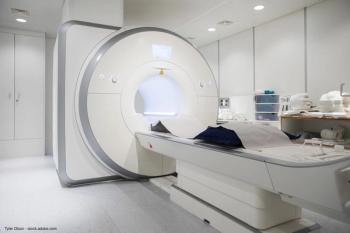
“I would say, over the last several years, [MRI has] really become a popular thing to do prebiopsy,” says Ketan K. Badani, MD.

The SAP program cultivates a community of advocacy groups, medical associations, and medical institutions to foster collaboration and an open exchange of information among trusted peers for the ultimate benefit of patients and their families.

“One of the toughest parts about having a discussion with a patient about low-risk or early-stage prostate cancer…is actually deciding what might be best for that individual patient,” says Ketan K. Badani, MD.
The application for adjuvant pembrolizumab in renal cell carcinoma is supported by data from the phase 3 KEYNOTE-564 trial, which were presented at the 2021 ASCO Annual Meeting.

The targeted radioligand therapy achieved several other key end points beyond overall survival and radiographic progression-free survival.

“The…state of genomic testing continues to evolve,” says Ketan K. Badani, MD.

“What was surprising to us was that in both arms, about a third of the women really didn't have a urinary tract infection,” says Elizabeth R. Mueller, MD, MSME.

“I think as technology evolves, we as urologists need to continue to evolve and make changes to our practice,” says Kevin T. Keating, DO.

"I learned...over the first 10 years [of being married to a urologist] that everybody has a urology issue," says Madeline Zech Ruiz.

Pieczonka also discusses toxicity differences between VERU-111 and docetaxel.

“I think as these [advanced imaging] agents come out, we're going to see more and more data on this topic,” says Ketan K. Badani, MD.

The PSMA-PET imaging agents Piflufolastat F 18 and Gallium 68 PSMA-11 are approved by the FDA for managing patients with prostate cancer.

“We found in general that there was really no difference in their symptom improvement,” said Elizabeth R. Mueller, MD, MSME, of a study comparing women from whom standard vs expanded cultures were obtained.

The PARP inhibitors olaparib and rucaparib are approved by the FDA for the treatment of patients with metastatic castration-resistant prostate cancer.

Christopher Pieczonka, MD, discusses where the novel agent sabizabulin (VERU-111) would fit in the metastatic castration-resistant prostate cancer paradigm if it succeeds in an ongoing phase 3 trial.

"There is clearly a lot of interest in the urologic oncology world toward bladder preservation for both muscle-invasive bladder cancer as well as early-stage non-muscle-invasive bladder cancer," says Arjun V. Balar, MD.

Brian T. Helfand, MD, PhD, NorthShore University HealthSystem, discusses the value of using multiparametric MRI and genomic testing together when making treatment decisions in prostate cancer.

Michael J. Morris, MD, discusses the rise of radiopharmaceuticals in prostate cancer and, in particular, the success of 177Lu-PSMA-617.
Wassim Abida, MD, PhD, discusses whether he would recommend PARP inhibitors in patients with metastatic castration-resistant prostate cancer harboring alterations in homologous recombination repair genes other than BRCA1/2.

“While many patients may think of imaging tests, as many other tests, as [having] a binary outcome, it may be important to have a discussion about how the scoring and MRI works, [and] what the patient can expect to see on their report,” says Stella K. Kang, MD.

Arjun V. Balar, MD, discusses notable findings from 2 separate studies of pembrolizumab (Keytruda).

“I think it's the responsibility of the physician to really take on educating and counseling and setting clear expectations and that way, when complications do arise, patients are better equipped, and they have a more favorable outcome,” says Ariana Matz, MD.