




Practice Management
Latest News
Advertisement
Latest Videos






Shorts

1:07
How APPs can expand access to clinical trials
6 days ago
by
Mary Dunn, MSN, RN, NP-C, OCN

0:43
Why independent urology practices face growing pressure
20 days ago
by
Celeste Kirschner, CAE, MHSA
0:35
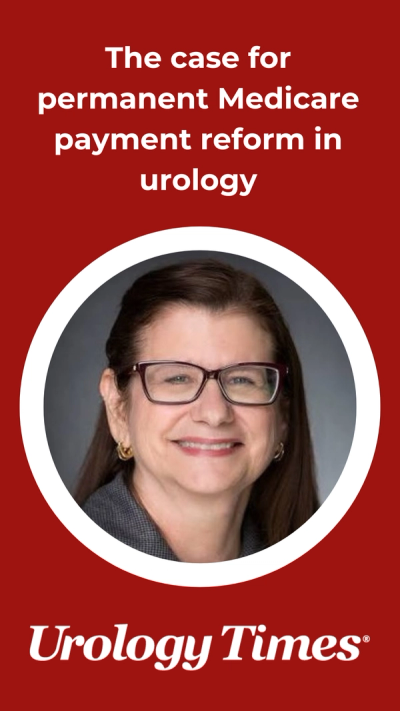
The case for permanent Medicare payment reform in urology
a month ago
by
Celeste Kirschner, CAE, MHSA

1:27
The Expert APProach: Leveraging coding to demonstrate APP productivity and value
2 months ago
by
Joy Maulik, CRNP(+1 more)

0:47
Hans Arora, MD, PhD, discusses the role of APPs and nurses in surgical care
2 months ago
by
Hans Arora, MD, PhD

1:09
Adam B. Murphy, MD, MBA, MSCI, urges thoughtful AI integration to prevent clinician burnout
2 months ago
by
Adam B. Murphy, MD, MBA, MSCI

1:33
The UroOnc Minute: Using physician data to improve patient outcomes
2 months ago
by
Adam B. Weiner, MD(+1 more)

0:44
Joy Maulik, CRNP, highlights LUGPA Advanced Practice Provider Forum
4 months ago
by
Joy Maulik, CRNP

0:55
Archan Khandekar, MD, on the future for AI in urology
4 months ago
by
Archan Khandekar, MD

1:13
Jennifer Miles-Thomas, MD, discusses areas of opportunity for urology APPs
6 months ago
by
Jennifer Miles-Thomas, MD, URPS, MBA
Podcasts






CME Content


Advertisement
More News

The AACU reflects on the diverse array of operational models across urology practices.

In this video, Jennifer Miles-Thomas, MD, recaps a SUFU 2026 discussion on leveraging surgeon–APP collaborations in urology.

Michelle Van Kuiken, MD, highlights a SWIU 2026 panel discussion on setting boundaries.

The code, J9183, may be used by physicians and treatment centers for billing and reimbursement beginning April 1, 2026.

Giulia Almiron da R. Soares discusses survey findings examining the factors influencing women’s decisions to pursue careers in urology.

Kiera Liblik, MD, MSc, shares the background and key findings from the study, “Sex and Gender in Urological Research.”

Amy Luckenbaugh, MD, FACS, outlines the ways that SWIU supports women across all stages of their urologic careers and the ways women can become involved with the organization.

Kristen R. Scarpato, MD, MPH, recaps a panel discussion at SWIU 2026 focused on imposter syndrome.

Angela B. Smith, MD, MS, discusses the guiding priorities behind shaping this year’s Society of Women in Urology annual meeting.

Kate Kraft, MD, MHPE, FACS, FAAP, discusses her SWIU 2026 session on helping early-career urologists find their “leadership flow.”

Amanda C. North, MD, reflects on key takeaways from a panel discussion on imposter syndrome.

Farah Rahman, MD, MPH, highlights a pilot study on the use of wearable biofeedback technology to better understand and address burnout among urology residents.

Sudha Jayaraman, MD, MSc, FACS, recaps a session from the 2026 Urology on the Beach meeting focused on AI in health care.

The session emphasized how rapidly evolving AI technologies are addressing long-standing inefficiencies in urologic care.

A key finding was that among the qualities applicants highlighted, only “learning and growth” correlated with interview selection.

Jennifer Miles-Thomas, MD, URPS, MBA, emphasizes that teleurology and team-based care models offer significant promise

"Although social media may not be for every health care worker, I hope that moving forward, more medical content creators will collaborate with the academic medical community to shape the world for the better," writes Maheetha Bharadwaj, MD.

As the year comes to a close, we revisit some of this year’s top content on urology coding and reimbursement.

"The overall 0% impact to urology does not help urology practices deal with increasing costs incurred for staff, rent, supplies, and other overhead," write Jonathan Rubenstein, MD, and Mark Painter.

"Once money is in a Roth IRA, the withdrawal rules depend on whether the funds are contributions, conversions, or earnings," writes Julie Khazan, CFP.

"Based on the code description, we recommend basing the code selection on the documentation and the effort required to complete the service, and not the number of foreign bodies removed from the bladder," write Jonathan Rubenstein, MD, and Mark Painter.

"Site neutrality is a pivotal issue for all independent practices, and really, it's a pivotal issue for all Americans because it affects both the global cost of care as well as the acceleration and the cost of care," says Mara R. Holton, MD.

Jonathan Henderson, MD, recaps his LUGPA 2025 session, “Lessons Learned: Avoiding Pitfalls in Urology Practice Management.”

Sisters Amy Pearlman, MD, and Michelle Pearlman, MD, provide an overview of their shared practice, Prime Institute.

"I think the most important thing, or take-home message that we try to share, is gathering data, understanding what those metrics are from the very beginning," says Brooke B. Edwards, MD.
Advertisement
Advertisement
Trending on Urology Times
1
Avoiding False Positives on Prostate Cancer PSMA PET Scans
2
Experts review evidence on testosterone and prostate cancer
3
Carotuximab plus apalutamide shows interim PFS benefit in mCRPC
4
Aglatimagene besadenovec shows sustained immune remodeling in localized prostate cancer
5