





Benign Prostatic Hyperplasia
Latest News
Advertisement
Latest Videos




CME Content


Advertisement
More News

"The results showed the contemporary Aquablation procedural safety in Japanese men is exceptional in a broad range of prostate sizes along with significant symptom reduction," says Nobuyuki Hinata, MD.

"Within this paper, we discussed the importance of conservative management and lifestyle modifications as initial steps in managing BPH," says Eiftu S. Haile, MD.

In this final iteration of a 3-part series, Shawn H. Marhamati, MD, MS, shares initial insights into benefits of Aquablation in an ASC environment.

"Alpha-blockers are often, for patients, the first line of treatment because they help quickly relax the smooth muscles in the bladder and the prostate," says Eiftu S. Haile, MD.

"For those who do enucleations, I think I would encourage people to highly consider adopting an apical release technique if they haven't," says Daniel J. Heidenberg, MD.

In this second iteration of a 3-part series, Shawn H. Marhamati, MD, MS, highlights the experiences and data that supported the trial of Aquablation in an ASC setting.
In this first video of a 3-part series, Shawn H. Marhamati, MD, MS discusses a pilot trial of Aquablation in an ASC setting and highlights the benefits of the therapy.
iTind is a temporary nitinol device used to treat lower urinary tract symptoms caused by benign prostatic hyperplasia.

"I don't think anybody, at least in our Mayo Clinic practices, is ever doing anything other than apical release HoLEPs these days," says Daniel J. Heidenberg, MD.

"But I think that this really showed us that the outcomes were substantially better than I think any of us were thinking," says Daniel J. Heidenberg, MD.

Dr. Heidenberg discusses the recent Urology paper, “The Impact of Standard vs Early Apical Release HoLEP Technique on Postoperative Incontinence and Quality of Life.”

“The UroLift 2 ATC is designed to deliver the same proven effectiveness of the UroLift System, with significant enhancements on a unified UroLift 2 platform,” says Brian Wilkins.
"We really aimed to affect 3 different contraindications and instead achieved retirement of the entire policy, which, we think, really opens up this wonderful technology to literally hundreds of thousands more patients across the country," says Arpeet Shah, MD.

“We're always so focused on the prostate. That's the million-dollar question: are we getting to bladders too late?” says Kevin C. Zorn, MD, FRCSC, FACS.
“It's exciting to see that we now have another offering to men with enlarged prostates that has good outcomes and good durability up to 5 years [based on] the trials,” Kevin C. Zorn, MD, FRCSC, FACS.
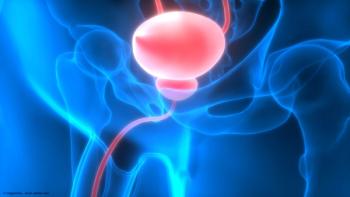
"The ProVee System has the potential to be a first-line interventional therapy for BPH that can be safely and reliably performed in the office setting," says Steven A. Kaplan, MD.
"I think it's important that they go visit someone that does them. Go to the operating room, see it in person," says Matthew E. Sterling, MD.

“These are the technologies that we'll see to empower patients and get more information, so that when we see the patient, it's one less thing we as a physician have to gather during that consultation, making the consultation more efficient,” says Kevin C. Zorn, MD, FRCSC, FACS.

"Some of it actually is self-selecting because people are hearing about it more and come in asking about it first," says Brian Friel, MD.

"The learning curve is fairly quick; you can pick this up pretty easily vs some of the other prostate procedures that can take a little bit more time to learn how to use," says Matthew E. Sterling, MD.
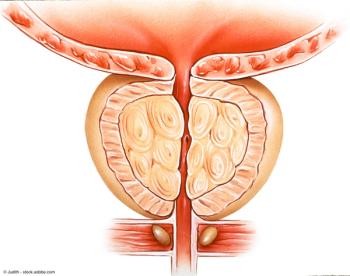
"The limitation of [TURP] is you're shaving out prostate tissue in a layer at a time, and you stop when you think you're deep enough, whereas with an Aquablation, you map all that out ahead of time," says Brian Friel, MD.

Kevin M. Wymer, MD, shares the take-home messages from the recent Urology paper, “Evaluation of Private Payer and Patient Out of Pocket Costs Associated with the Surgical Management of Benign Prostatic Hyperplasia.”

"I think, importantly, when we look at comparing BPH surgical intervention options, we should not only factor in clinical outcomes and clinical differences, but also in the setting of our current health system, cost is becoming increasingly important," says Kevin M. Wymer, MD.

“Overall, I'd say these shorter-term outcomes at 6 months look to be very similar to those outcomes measured with the smaller glands. In a sense, at least within this range, volume may not be a deal breaker,” says Kevin T. McVary, MD.

As the year comes to a close, we revisit some of this year’s top content on benign prostatic hyperplasia in urology.
Advertisement
Advertisement
Trending on Urology Times
1
Aglatimagene besadenovec shows sustained immune remodeling in localized prostate cancer
2
John Sfakianos, MD, on integrating ctDNA into bladder cancer trials
3
The UroOnc Minute: Key Updates to the AUA NMIBC Guideline, With Peter E. Clark, MD
4
Enzalutamide plus salvage radiotherapy associated with improved PFS in high-risk BCR
5