

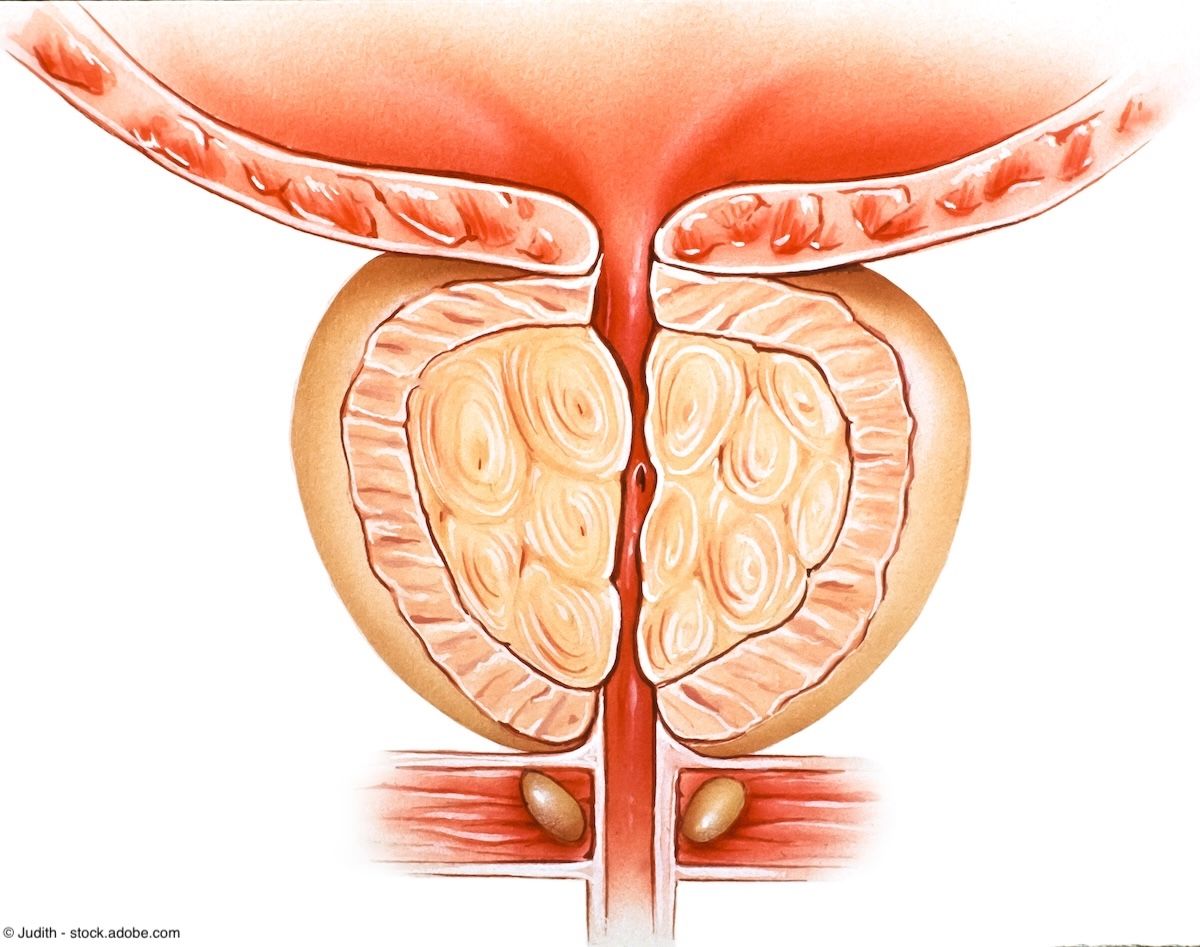



Benign Prostatic Hyperplasia
Latest News
Advertisement
Latest Videos






CME Content


Advertisement
More News

Data showed a significant association between the C allele of the SNP-765G>C of the PTGS2 gene and BPH.

Christian Gratzke, MD, explains why an app shows promise for patients with lower urinary tract symptoms.

A panelist discusses how benign prostatic hyperplasia (BPH) treatment has evolved to include a spectrum of minimally invasive and surgical interventions, ranging from emerging technologies like prostatic urethral lift (PUL) and water vapor thermal therapy (WVTT) to more established resective surgical techniques such as transurethral resection of the prostate (TURP), holmium laser enucleation (HoLEP), Aquablation, and Greenlight XPS, providing urologists with a diverse array of options tailored to individual patient characteristics, prostate size, and specific clinical needs.
“I think it will help patients decide what prostate surgery they want,” says Naeem Bhojani, MD, FRCSC.

An approach to WVTT involving 1 treatment per prostate lobe was associated with decreased post-operative complications.
"This study was an investigator initiated study, and what they wanted to do was a randomized trial for large prostates, so 80 to 180 grams, between Aquablation and prostate enucleation," says Naeem Bhojani, MD, FRCSC.

“The differences in patient experience between UroLift System and Rezūm, particularly in terms of early recovery, sexual function, and overall satisfaction, are key considerations for both clinicians and patients selecting a treatment path," says Mark Rochester, MD, FRCS.
A panelist discusses how benign prostatic hyperplasia (BPH) management involves a comprehensive patient journey that encompasses initial diagnostic evaluation, tailored pharmacological interventions including α-blockers and 5-α reductase inhibitors, and a progressive treatment approach ranging from conservative drug therapy to potential surgical options based on symptom severity and patient response.

The mean change in IPSS from baseline to 3 months was 12.9 in the Aquablation arm vs 13.1 in the LEP arm.

"I would also like us to be able to reliably use even smaller scopes, but keep them efficient," says Amy E. Krambeck, MD.
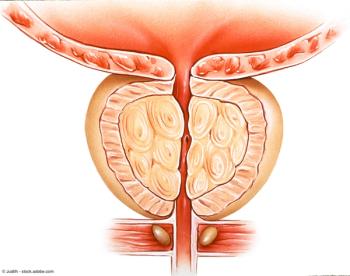
"[Urologists] really need to understand how big the prostate is and how big of a surgery that they're looking at," says Amy E. Krambeck, MD.

"I'm always trying new things. I feel like, once you decide that this is the way you have to do it and stick with that forever, that's when you immediately become irrelevant," says Amy E. Krambeck, MD.

"You want something that's going to be easy to have done to you, and also have an easy recovery," says Dean S. Elterman, MD, MSc, FRCSC.

"We really try to limit the amount of tissue we resect and what we do in patients who've had radiation," says Amy E. Krambeck, MD.

"Sometimes, there is more than a single answer to a question; this certainly applies to patients with benign prostatic disease," writes Gopal H. Badlani, MD.

"What we're really trying to see now is this integration of imaging and using it with respect to AI and planning," says Dean S. Elterman, MD, MSc, FRCSC.

"A lot of shared decision-making has to do with, what is important to the individual man?" says Dean S. Elterman, MD, MSc, FRCSC.

"Despite the fact that multiple new procedures have come to light, nothing has the same excellent outcomes as HoLEP," says Amy E. Krambeck, MD.

"I would say the fact that we performed 754 HoLEP procedures in 2024 is a reflection of the efficiency and the high quality of care that you receive at Northwestern," says Amy E. Krambeck, MD.
“The patients I find that have the most pronounced benefit are the patients with the very large prostates, or the patients who are catheter dependent with concern for neurogenic or myogenic bladder failure,” says Brendan M. Browne, MD.
The Expander-2 trial is intended to provide data that will support submission of the device for regulatory approval.
"If we synergize our efforts and our energy, as the level of the sea rises, all ships on the sea will rise with it," says Wayne Kuang, MD.
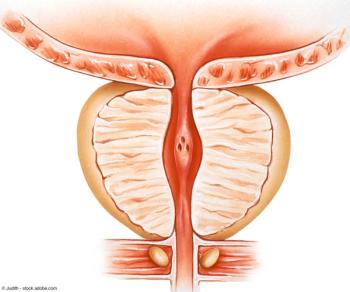
"We also need to understand and remember that drugs are temporizing measures," says Wayne Kuang, MD.

"We are now in the golden era of BPH/BPO for both diagnostics and therapeutics," says Wayne Kuang, MD.

Catch up on all the notable drug and device approvals in urology over the past year.
Advertisement
Advertisement
Trending on Urology Times
1
Aglatimagene besadenovec shows sustained immune remodeling in localized prostate cancer
2
John Sfakianos, MD, on integrating ctDNA into bladder cancer trials
3
The UroOnc Minute: Key Updates to the AUA NMIBC Guideline, With Peter E. Clark, MD
4
Enzalutamide plus salvage radiotherapy associated with improved PFS in high-risk BCR
5