




Benign Prostatic Hyperplasia
Latest News
Advertisement
Latest Videos






CME Content


Advertisement
More News
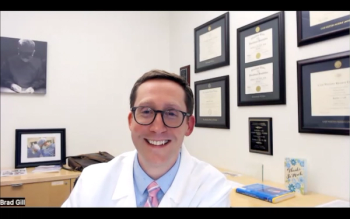
In this installment of Urology Times’ 50th Anniversary Innovation Celebration, Bradley Gill, MD, MS, discusses the impact that the new wave of minimally invasive BPH treatments has had for both patients and urologists.
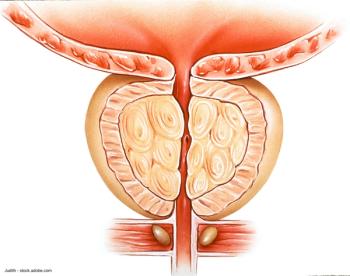
“For practicing urologists, I think it's important for us to recognize that when it comes to these techniques, even with Rezum, there's a variety of ways of doing them," says Bilal Chughtai, MD.
“It’s pretty clear that over the past 50 years we've seen innovations in BPH treatment both from the utilization of technology and also from the patient outcome and experience standpoint,” says Bradley Gill, MD, MS.
“We found that the adverse event rates have dropped dramatically, to about a third of what it was reported in the pivotal trial, but at the same time still had the same net benefits in terms of efficacy when it comes to Q max, symptomatic improvement, as well as PVR," said Bilal Chughtai, MD.

Press Release
Watch Amy E. Krambeck, MD, perform holmium laser enucleation of the prostate (HoLEP) for the treatment of lower urinary tract symptoms related to benign prostatic hyperplasia.
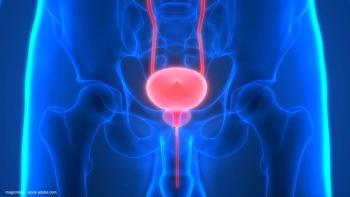
Benign prostatic hyperplasia (BPH) was defined as prostate size ≥ 40 g, an International Prostate Symptom Index Score ≥ 8, or using BPH medications.

"Aquablation therapy is as effective as other minimally invasive treatments [for these men] but with fewer side effects, including only a 10% to 15% risk of retrograde ejaculation," said Ravi Munver, MD.
“We’re in the process of following patients who have taken saw palmetto extract and tracking their clinical diagnosis,” says Bilal Chughtai, MD.
Press Release
"It’s the most satisfying of all the things I do as a surgeon. The benefits are so dramatic and often immediate," said Daniel Kellner, MD.

Chughtai was part of an international panel of leading urologists from North America and Europe who published the consensus paper, “Rethinking the Role of Saw Palmetto Extract for Men with Lower Urinary Tract Symptoms in North America."
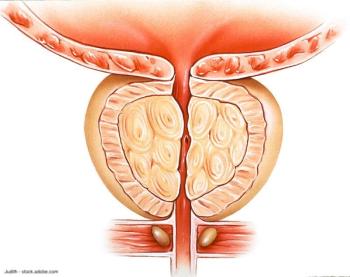
Minimally invasive BPH procedures relieve symptoms and can be done in outpatient settings.

"Too often, men will stay silent about the symptoms they are experiencing from an enlarged prostate that hamper their day-to-day lives," said Dean Elterman, MD.

"The ProVee System has the potential to be an effective treatment for BPH that can be safely and reliably performed in the office setting," according to Steve Kaplan, MD.

“We're doing probably one of the highest volume of HoLEP cases…in the United States,” says Nicole L. Miller, MD, FACS.

“I think that there's certainly recognition that HoLEP is a procedure that can be self-taught and learned. But I think the learning curve is significantly shortened if you're mentored and certainly if you're fellowship trained,” says Nicole L. Miller, MD, FACS.

In this installment, Howard B. Goldman, MD, FACS, discusses the development of multichannel urodynamics testing.

“What made [multichannel urodynamics] so important is you're able to diagnose things much better; you're able to have a much better understanding of what's actually going on,” says Howard B. Goldman, MD, FACS.
“For clinicians, the analyses show that moderate and severe male LUTS in general are good indicators of poor health," the authors wrote.
The study evaluated holmium laser enucleation of the prostate, open simple prostatectomy, and robotic simple prostatectomy.

It was previously reported that UroLift received reimbursement approval from the Central Social Insurance Medical Council of Japan (Chuikyo).

“Patients need to understand that even if you tell them that you may be doing this as an ambulatory procedure, they may actually have to stay afterwards, depending on what you find in the operating room or what happens in the postoperative period,” says Michael A. Palese, MD.

"Although it might be easier to enumerate the cancer conditions, in the benign world, struggles continue to overcome patients challenged with these conditions," writes Gopal H. Badlani, MD.

"We shouldn't outright provide a negative attitude to our patients who are looking for alternatives that [serve as] complementary medicine, [like] herbal or phytotherapeutic agents," says J. Curtis Nickel, MD, FRCSC.

"Overall, these findings tell us that not everyone can undergo a same-day surgery for BPH," says Michael A. Palese, MD.
5-year results from the pivotal WATER trial showed IPSS improvement was greater with Aquablation compared with TURP.
Advertisement
Advertisement
Trending on Urology Times
1
Aglatimagene besadenovec shows sustained immune remodeling in localized prostate cancer
2
John Sfakianos, MD, on integrating ctDNA into bladder cancer trials
3
The UroOnc Minute: Key Updates to the AUA NMIBC Guideline, With Peter E. Clark, MD
4
Enzalutamide plus salvage radiotherapy associated with improved PFS in high-risk BCR
5