




Bladder Cancer
Latest News
Advertisement
Latest Videos







CME Content


Advertisement
More News

The Oncologic Drugs Advisory Committee meeting is scheduled for May 21, 2025.

"It’s a very good time to be taking care of patients with bladder cancer," says Joshua J. Meeks, MD, PhD.

“In this well-selected patient population, it is possible to treat with systemic therapy alone," says John L. Gore, MD, MS.
“[These are] very good numbers for these patients who otherwise would undergo a radical cystectomy," says Félix Guerrero-Ramos, MD, PhD, FEBU.
The sBLA for NAI was submitted to the FDA in March 2025.
A recap of the FDA submissions and regulatory decisions in urology from April 2025.

“It's going to be an important time for US urologists to identify that this is becoming the standard of care," says Joshua J. Meeks, MD, PhD.

The study population was able to avoid 952 cystoscopies and 70 CT scans, according to the investigators.

In cohort A, the cystectomy-free rate at 36 months was 84%.

"I would argue that UGN-102 may very well represent a well-tolerated alternative to TURBT as primary treatment for patients with low-grade disease,” says Sandip M. Prasad, MD, MPhil.
Joseph Jacob, MD, outlines key findings on TAR-200 monotherapy from cohort 2 of the SunRISe-1 study.

The investigators reported that the median Kaplan-Meier estimate of DOR was 24.2 months.

"97% [of patients] remain progression free, and 84.5% avoided cystectomy, highlighting cretostimogene’s bladder-sparing potential,” said Mark D. Tyson II, MD, MPH.

“In the patients with CIS, the probability of a continued complete response at 36 months was 92% vs 67.7%," said Neal D. Shore, MD, FACS.
Treatment with TARA-002 was associated with a 100% high-grade CR at any time in BCG-unresponsive participants.

Matthew D. Galsky, MD, discusses how urologists should approach patient selection for perioperative durvalumab plus chemotherapy based on eligibility criteria for the NIAGARA trial.
Treatment with nadofaragene led to a complete response rate of 75% at 3 months.

We preview several noteworthy P2 presentations in the urologic oncology space.

Merrill discusses the evolving non–muscle invasive bladder cancer treatment space.
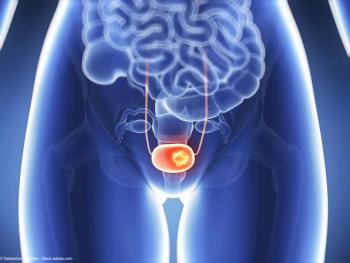
Two recent Clinical Forum discussions sought to examine how emerging therapeutic options and evolving treatment standards in non–muscle invasive bladder cancer affect clinical practices and patient outcomes.

Three recent expert-led Clinical Forums explored current challenges and advancements in the management of non–muscle invasive bladder cancer.
"There really wasn't a difference in in surgical outcomes. The patients tolerated it very well,” says Joshua J. Meeks, MD, PhD.
The sBLA is supported by data from cohort B of the pivotal QUILT-3.032 trial.
Sima P. Porten, MD, MPH, discusses the need to better understand how genetic makeup influences how individuals process environmental toxins.
Advertisement
Advertisement
Trending on Urology Times
1
AI-generated profiles impersonate female urologists to market ED products online
2
Alternative BCG strains may help address ongoing supply challenges in NMIBC
3
Pearls & Perspectives: Sexual Health and Intimacy in Midlife, With Karen Bigman, MBA
4
Doublet or triplet? Urologists weighs in on mCSPC options
5