




Bladder Cancer
Latest News
Advertisement
Latest Videos







CME Content


Advertisement
More News

“I think as urologists, we need to become more comfortable with the female pelvic floor,” says Ava Saidian, MD.
At the time of data cutoff, 71% of patients achieved a complete response following treatment.
"We only have so much time with our patients, but we want to show them that we support them," says Ava Saidian, MD.
"Together, the data point to the exciting potential for this combination regimen to be used to treat patients with muscle invasive bladder cancer," says Roger Li, MD.
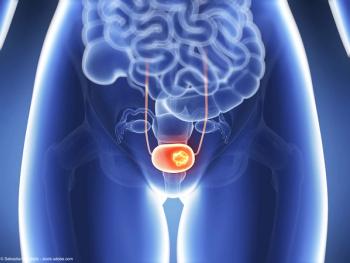
At the end of the induction phase, 86% of patients had achieved a complete response.

Two case-based roundtable discussions recently covered the advancing of care for patients with low-grade upper tract urothelial carcinoma.
The observational LOBSTER study has already enrolled 303 patients and collected 479 samples.

“There are a lot of other ways to look at bel-sar with other immunotherapy agents, other combinations, to truly help prevent patients needing to go to the operating room,” says Gary D. Steinberg, MD.

“Now for muscle-invasive [disease], how I counsel patients on surgery when they're a man vs a woman is almost completely different, because their anatomy is very different,” says Ava Saidian, MD.

Anti-tumor activity was observed across all patients with FGFR3-altered metastatic urothelial carcinoma who were treated at the dose levels of 90 mg and higher.

“The other thing that we believe will be important to see is it not only effective where we inject a tumor and turn the light on in the tumor, but will there be abscopal effects throughout the bladder?” says Gary D. Steinberg, MD.

“I think one of the biggest challenges women have in general in terms of diagnosis of bladder cancer is that it tends to be delayed,” says Ava Saidian, MD.
The phase 3 ENVISION trial met its primary end point by demonstrating a 79.6% complete response rate at 3 months following the first instillation of the therapy.

“The preliminary findings were quite favorable in that we saw, especially in the low-grade population, complete elimination of tumor cells on the biopsies, on the transurethral resection of bladder tumors,” says Gary D. Steinberg, MD.

“After doing a literature review about cystectomy patients and how devastating it is for female sexual function after having a cystectomy, [my main takeaway from this study is that] it seems that women tolerate the intravesical treatments well,” says Talia A. Helman, MD.

The cystoscopy solution was granted a CE mark for regulatory clearance in Europe in October 2023.
The decision to withdraw sacituzumab govitecan from the market was made in consultation with the US FDA following negative data from the phase 3 TROPiCS-04 trial.

"You've got a double pronged attack to kill cancer cells, which is in line with our concepts of immunologic care and immunologic treatment in a variety of cancers, especially cancers such as bladder cancer," says Gary D. Steinberg, MD.
Overall, 4 of 5 patients with low-grade disease who received bel-sar with light activation achieved a complete clinical response.

“Particularly [in] bladder cancer, there's 2 new drugs on the market that are exceptionally expensive, but they do provide benefit to patients,” says Geoffrey N. Sklar, MD, FACS.
The target action date for the application is June 13, 2025.

"On-going innovation will continue to drive UTUC management forward, and with it will come on-going challenges of how to best study a relatively rare disease," write the authors.
"The biomarker is better at predicting presence of disease than absence, and the reason that that's important is that's how we can think about the biomarker aiding in careful clinical assessment of patients," says Elizabeth R. Plimack, MD, MS, FASCO.

"Overall, TAR-200 is being tested with the aim of changing the therapeutic paradigm of patients with an early bladder cancer diagnosis, including non–muscle-invasive disease and muscle-invasive disease," says Andrea Necchi, MD.

Data from the phase 3 BART trial shows adjuvant radiotherapy is notably safe for patients with MIBC following radical cystectomy and chemotherapy.
Advertisement
Advertisement
Trending on Urology Times
1
AI-generated profiles impersonate female urologists to market ED products online
2
Alternative BCG strains may help address ongoing supply challenges in NMIBC
3
Doublet or triplet? Urologists weighs in on mCSPC options
4
Pearls & Perspectives: Sexual Health and Intimacy in Midlife, With Karen Bigman, MBA
5