


Bladder Cancer
Latest News
Advertisement
Latest Videos





CME Content


Advertisement
More News
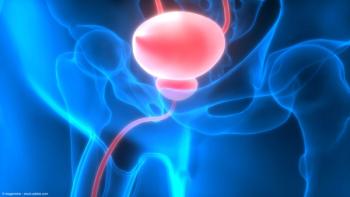
The CHMP’s positive recommendation is based on findings from the first interim analysis of the phase 3 EV-302 trial.

"There are many opportunities to support our patients with bladder cancer who smoke from their clinic appointments from their intravesical therapy visits to their surveillance cystoscopies," says Marc Bjurlin, DO, MSc, FACOS.
"In the last decade, we've observed a high number of new alternatives within clinical trials, especially with intravesical delivery," says Félix Guerrero-Ramos, MD, PhD, FEBU.

"Our next goal is transitioning to really understand the patient experience and how we can support them to quit smoking cigarettes," says Marc Bjurlin, DO, MSc, FACOS.

"It really opened up an opportunity to provide support for our patients with bladder cancer who smoked in patient after that teachable moment of surgery," says Marc Bjurlin, DO, MSc, FACOS.
There was an overall response rate of 39% among the 18 evaluable patients, including 1 complete response and 6 partial responses.
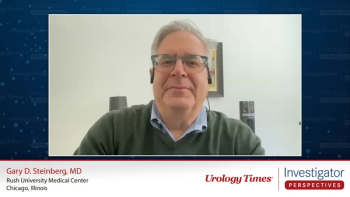
Gary D. Steinberg, MD, summarizes his major takeaway from the AUA 2024 conference and shares his insights on the potentially practice-changing developments he anticipates in the near future for the management of non-muscle-invasive bladder cancer (NMIBC).

The panel concludes by offering key takeaways on the evolving treatment landscape for BCG-unresponsive non–muscle invasive bladder cancer.
Experts on non–muscle invasive bladder cancer discuss promising developments in the overall treatment landscape, highlighting potentially practice-changing clinical research.
Gary D. Steinberg, MD explains the implications of the BOND-003 results for clinical practice in treating non-muscle-invasive bladder cancer (NMIBC), highlighting the potential benefits of novel immunotherapeutic options like cretostimogene grenadenorepvec as a bladder-sparing therapy for BCG-unresponsive high-risk NMIBC, and discusses how this treatment could fit into the NMIBC treatment landscape if approved.
“The MAT2A-Trop2 ADC combination targets 2 distinct, yet complementary nodes in patients with MTAP-deleted urothelial cancer and has first-in-class potential to improve clinical outcomes for bladder cancer patients with poor prognosis associated with MTAP-deletion," says Darrin M. Beaupre, MD, PhD.
“These NIAGARA data show for the first time that adding durvalumab to chemotherapy before surgery followed by durvalumab extends patients’ lives," says Thomas Powles, MD.
Bladder cancer specialists discuss their strategies for monitoring patients with BCG-unresponsive non–muscle invasive bladder cancer.
A panel of experts provide clinical insights on factors that inform how they select treatments for patients with BCG-unresponsive non–muscle invasive bladder cancer.
Expert urologist reviews the BOND-003 study, discussing its design, interim outcomes, safety and efficacy data, and the potential for cretostimogene grenadenorepvec to provide a durable response in patients with high-risk, BCG-unresponsive non-muscle invasive bladder cancer.

Subcutaneous nivolumab is also under review in the United States based on findings from the phase 3 CheckMate-67T trial.
N-803 was approved by the FDA in April 2024 for the treatment of patients with BCG-unresponsive NMIBC carcinoma in situ with or without papillary tumors.
Cretostimogene grenadenorepvec is an intravesical oncolytic immunotherapy currently under investigation in phase 3 trials.
Experts on bladder cancer discusses strategies to minimize adverse effects and the role of immunotherapy in BCG-unresponsive NMIBC treatment paradigms.
Bladder cancer experts discuss quality of life and progression considerations and their impact on treatment decisions for patients with BCG-unresponsive NMIBC.
The 12-month duration of response was 82.3% among patients with LG-IR-NMIBC who achieved a complete response at 3 months following the first UGN-102 instillation.
Gary D. Steinberg, MD, analyzes data from the BOND-003 study presented at AUA 2024, which investigated the use of intravesical cretostimogene grenadenorepvec for treating high-risk, BCG-unresponsive non-muscle invasive bladder cancer with carcinoma in situ, and discusses the mechanism of action of this novel oncolytic viral therapy.
Jason Hafron, MD, CMO, provides an overview of the QUILT trial investigating N-803 in patients with BCG-unresponsive high-grade non–muscle invasive bladder cancer.
The panel reviews data from the SunRISe-1 trial investigating TAR-200 and offers its impressions on the efficacy and safety findings.

"We found that, in our study, approximately 25% of patients who have had opioids prior to their cystectomy will continue to use opioids 3 to 6 months after their surgery," says Christopher J. Staniorski, MD.
Advertisement
Advertisement
Trending on Urology Times
1
AI-generated profiles impersonate female urologists to market ED products online
2
Alternative BCG strains may help address ongoing supply challenges in NMIBC
3
Doublet or triplet? Urologists weighs in on mCSPC options
4
Pearls & Perspectives: Sexual Health and Intimacy in Midlife, With Karen Bigman, MBA
5