




OAB and Incontinence
Latest News
Advertisement
Latest Videos







Advertisement
More News

In this episode, Dr. Kennelly, Dr. Kevin Benson, and Dr. Karyn Eilber discuss their strategies for ensuring patient comfort during overactive bladder (OAB) treatment procedures. They delve into the roles of clinical staff, the setup of the procedure room, and how they address patient needs and concerns to create a reassuring environment. The experts also share their experiences in handling challenges during procedures, illustrating how they've adapted their practices based on patient feedback to maintain a patient-centric focus throughout the treatment process.

According to Axonics, commercial sales of the R20 system in Europe are expected to begin in mid-April.

“Currently, in the area of tibial nerve stimulation, there are only 2 FDA approved options,” says Suzette E. Sutherland, MD, MS, FPMRS.

"We're very much looking forward to being able to clinically implement these algorithms, both on the OAB side and the antibiotic resistance side," says Glenn T. Werneburg, MD, PhD.
Panelists discuss the importance of patient-centric approaches in the procedural treatment of overactive bladder (OAB). They share their practices in preparing patients for procedures, including patient education, shared decision-making, and tailoring pre-procedure instructions, with a focus on managing patient expectations and addressing fears. The episode emphasizes the role of the clinical team in ensuring patient comfort, highlighting practical considerations, real-world experiences, and best practices for optimizing patient-centered care in OAB management.
Experts share their long-term clinical experiences with intravesical botulinum toxin type A therapy, particularly emphasizing quality of life, patient satisfaction, simplicity, safety, and the comfort patients find in its non-permanent nature.
Press Release
The therapy, known as Autologous Muscle Derived Cells for Urinary Sphincter Repair (iltamiocel), involves a medical procedure in which a participant’s own muscle cells are collected, processed, and then injected into the tissues of the urinary passage.

The odds of SUI recurrence following MUS were 17% to 24% among patients with childbirth vs 15% to 22% among patients without childbirth

"We're really enthusiastic on the overactive bladder end and on the antibiotic resistance end, but much more broadly, [AI is] set up to help us counsel our patients better and help us to improve outcomes for our patients as well," says Glenn T. Werneburg, MD, PhD.

Artus is an artificial urinary sphincter for the treatment of patients with moderate to severe urinary incontinence.
In this insightful episode, Dr. Kennelly engages with Dr. Eilber and Dr. Benson in a comprehensive discussion of sacral neuromodulation and transcutaneous and posterior tibial nerve stimulation therapies used in the treatment of OAB, including their mechanisms, patient reception of FDA-approved devices, overall evolution and current practices implementation in clinical settings.
Dr. Kennelly, Dr. Kevin Benson, and Dr. Karyn Eilber share their experiences in the use of intravesical botulinum toxin type A as a treatment option for overactive bladder (OAB) into treatment plans. They provide insight into identifying optimal candidates, the outcomes they have observed, and benefits and risks, including strategies for managing these risks. They explore the decision-making process in guiding patients through various treatment options, considering individual lifestyles and preferences.
"Our outcomes showed 71% of patients achieved dry or near dry results in 6 to 12 weeks," says Nissrine Nakib, MD.

"What we found was that we were able to identify patients who responded vs didn't respond to the treatment with a high degree of accuracy," says Glenn T. Werneburg, MD, PhD.
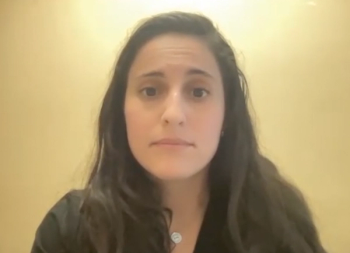
"I would say that the biggest take-home is that many of our patients are using social media for their health care information, and this may influence their preferences [and] their decision-making," says Alexandra Tabakin, MD.
In this episode, Dr. Kennelly, alongside Dr. Eilber and Dr. Benson, explores the advancements of transcutaneous and posterior tibial nerve stimulation (TTNS and PTNS) and sacral neuromodulation (SNM). The episode sheds light on how these therapies fit into current medical practices, their effectiveness, and the convenience they offer to patients. The specialists consider patient preferences and compliance challenges in choosing the right therapy. The episode provides a comprehensive understanding of how these therapies fit into patient-centric management plans, offering valuable insights for both patients and healthcare professionals.
In this insightful episode, Dr. Kennelly, along with Dr. Eilber and Dr. Benson, discuss the transition from pharmacologic treatments to third-line therapies for overactive bladder, focusing on the mechanism of action of various neuromodulation methods and benefits they offer to patients seeking sustainable solutions for OAB management.

The post-market RESTORE trial plans to enroll 150 patients with urge urinary incontinence across 20 clinical trial sites in the US.

"Probably the most surprising finding was actually that there were several videos created by health care professionals that contain misinformation," says Alexandra Tabakin, MD.

Interim data from the study showed that at 6 months following implantation, 80% (4 of 5) of evaluable women with mixed UI experienced a complete resolution of incontinence episodes.

Overall, the patient met the study’s primary outcome measures of successful device activation and the rate of explants and revisions at 6 months.
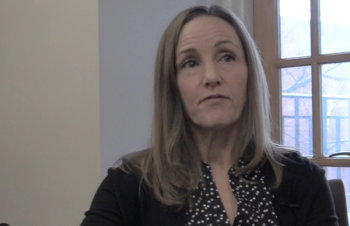
"I think people don't understand how exhausting it is for people to manage these symptoms day in and day out," says Leslie Rickey, MD, MPH.
Dr. Kennelly, Dr. Kevin Benson, and Dr. Karyn Eilber discuss the goals and assessment methods for overactive bladder (OAB) pharmacological treatments, including how they monitor and address refractory or nonresponsive cases. They explore the real-world rates of medication failure, particularly with anticholinergics, and delve into the decision-making process behind considering alternative therapies, focusing on factors that prompt a change in treatment, especially for specific patient populations. The discussion includes insights on when and why to shift from standard OAB medications to other therapeutic options.
In this episode, experts review safety concerns, drug interactions, and common adverse effects (AEs) associated with overactive bladder (OAB) medications. They discuss the impact of AEs like constipation, hypertension, and dry mouth on patient quality of life, strategies for managing these effects, and circumstances warranting a change in treatment. The experts also examine recent clinical evidence linking anti-cholinergic treatments to an increased risk of dementia in older patients, discussing its implications for clinical practice and strategies for urologists to remain vigilant about such safety concerns.
Experts explore the clinical benefits and limitations of standard pharmacological options, like anti-muscarinic agents and beta-3 adrenergic agonists, and share their preferences and experiences in selecting and managing treatments for OAB, focusing on the effectiveness and patient-specific considerations in their clinical practice. In this episode, Dr. Kennelly, alongside Drs. Eilber and Benson, discusses the transition to second-line therapies for overactive bladder, focusing on medication classes like anticholinergics and beta-3 agonists. They explore patient-centered considerations such as medication compliance, cost, insurance coverage, and the chronic nature of overactive bladder management, emphasizing individualized treatment based on patient needs and health profiles.
Advertisement
Advertisement
Trending on Urology Times
1
Managing BPH Before Prostate Radiotherapy: Options Compared
2
FAQs: The 2026 AUA Guideline on Medical Management of Kidney Stones
3
FDA grants RMAT designation to EG110A for neurogenic detrusor overactivity
4
PSMA-PET in clinical practice: Juan Gómez Rivas, MD, on barriers to access
5