



Prostate Cancer
Latest News
Advertisement
Latest Videos





CME Content








Advertisement
More News

“Our findings suggest an impact of living in disadvantaged neighborhoods—which more commonly affects African Americans—on stress-related genetic pathways in the body. We believe this may increase an individual’s risk of aggressive prostate cancer and contribute to prostate cancer disparities by race,” says Kathryn Hughes Barry, PhD, MPH.
All 3 codes for the procedure will become effective on January 1, 2025.

“These allow us to treat just those areas of cancer, maintaining much better preservation of sexual function and less incontinence,” says Kevin R. Basralian, MD.
"The primary aim is looking at the dose-limiting toxicity of this drug combination," says Kelly L. Stratton, MD, FACS.

Looking to the future treatment landscape in prostate cancer, the panel provides closing thoughts on the trajectory of the utilization of PSMA-PET imaging and the unmet needs it might address.

"We found that over time, when you are controlling for possible competing risk of death because of age, that there was an estimated 44% incidence of cognitive impairment diagnosis at 15 years and 17% for manual dexterity diagnosis at 15 years," says Jacqueline Zillioux, MD.

“This study really bridges the gap between STAMPEDE and PROTEUS and provides the opportunity for patients to get either surgery or radiation therapy,” says Kelly L. Stratton, MD, FACS.
MK-5684/ODM-208 is a selective CYP11A1 inhibitor currently under investigation in the phase 3 OMAHA1 and OMAHA2a trials.

In May 2024, the FDA cleared an investigational new drug application for 225Ac-FL-020.

"We found a 25% incidence of cognitive impairment just based on this telephone test," says Jacqueline Zillioux, MD.

"Unique to this study is that we'll be using Orgovyx," says Kelly L. Stratton, MD, FACS.
Earlier this year, the FDA cleared an investigational new drug application for SYNC-T SV-1022.
Experts on prostate cancer discuss the benefits to multidisciplinary care as it pertains to PSMA-PET imaging.
Prostate cancer specialists discuss challenges associated with imaging in clinical practice.

The panel offers key takeaways on the evolving landscape for imaging and biopsy in prostate cancer, highlighting the role for fusion-guided biopsy in the diagnosis and management of prostate cancer.
Prostate cancer specialists provide insights on the integration of fusion biopsy into clinical practice and how it has impacted treatment paradigms.

Lee discusses findings from a study presented at the 2024 American Urological Association Annual Meeting.
Overall, the investigators found a median PSA level of 0.02 ng/mL among transgender women with no diagnosis of prostate cancer.
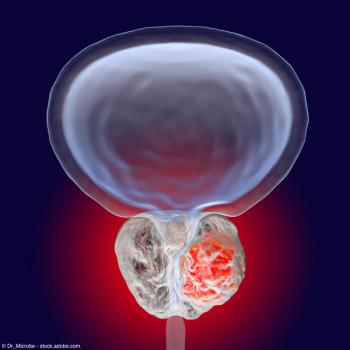
"Using this as an adjunctive test after PSA screening will give physicians more information to help decide if their patient should undergo a prostate biopsy or not,” says M. Eric Hyndman, MD, PhD, FRCSC.

"Especially for prostate cancer, some of the sexual side effects, it's tough to talk about that when you're talking to your uncle or your brother who has it," says Joseph Song, MD.

“It's the next evolution of being able to provide precision care for our patients in the area of prostate cancer,” says Nitin K. Yerram, MD.
The panel discusses how fusion-guided biopsy can inform patient eligibility for focal therapy in prostate cancer.
A panel of experts on prostate cancer discuss the role for fusion-guided biopsies in active surveillance for patients with prostate cancer.
The fast track designation for BNT324/DB-1311 is supported by safety and efficacy data from an ongoing phase 1/2 trial of the ADC in patients with advanced/metastatic solid tumors.
A panel of experts on prostate cancer share strategies for monitoring patients and discuss whether to use PSMA to monitor treatment response.
Advertisement
Advertisement
Trending on Urology Times
1
Experts discuss the challenge of detecting CIS in bladder cancer
2
Study shows durable 3-year outcomes with first-line gemcitabine/docetaxel in NMIBC
3
Phase 3 trial launches of CAIX-targeted radiopharmaceutical for ccRCC
4
Kathryn Gessner, MD, PhD, on the challenges of selecting patients for bladder preservation
5