




Prostate Cancer
Latest News
Advertisement
Latest Videos

CME Content








Advertisement
More News

"When it came down to linking the clinical information with both biopsy reports as well as the prostatectomy pathology reports, we didn't have much of a challenge with that," says Randy A. Vince Jr, MD, MS.
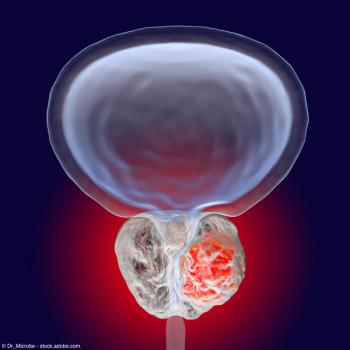
The prognostic test has now been validated in patients who have undergone active surveillance, radiation therapy, or had a radical prostatectomy.

“So, rather than waiting for men to proactively seek out mental health supports once they’ve been diagnosed with prostate cancer, we should be offering supports at the time of diagnosis and throughout treatment," says Kerri Beckmann, PhD.
“We will do exactly what we have done in terms of prototype of our processes, our tools, our design, and how we follow these patients up, and expand this from 10,000 men in less than 2 years to 1 million men in next 10 years,” says Ashutosh K. Tewari, MD.

Kyrollis Attalla, MD, remarks on emerging imaging technologies for patients with prostate cancer and the growing pool of candidates for focal therapy.
An expert on prostate cancer discusses how fusion-guided biopsy can help determine patient eligibility for focal therapy.

The grants will support research evaluating ATAD2 in advanced prostate cancer and 6MP in hereditary leiomyomatosis and renal cell cancer.

The CPT code 76377 may be used for ProstatID when the software is used in conjunction with a suitable CT, MRI, or a transrectal ultrasound.

Experts on prostate cancer discuss the heterogeneity of the disease and the rationale for using medications with different mechanisms of action, including androgen deprivation therapy.

Lawrence Karsh, MD, FACS, introduces a discussion on prostate cancer and androgen deprivation therapy with an overview of how the treatment landscape has changed in recent years.

"This study demonstrates that for up to 10 years after diagnosis, approximately 50% of men with low-risk prostate cancer can safely remain on AS, without cancer progression or treatment, since less than 1% died of prostate cancer," writes Badar M. Mian, MD.

"This study was looking at the incidence of cognitive impairment and/or manual dexterity disorder diagnoses in men who underwent an artificial urinary sphincter after treatment for prostate cancer," says Jacqueline Zillioux, MD.

"By using our technique, and really preserving that urethral length really well, it seems to help those patients in particular to have better outcomes," David I. Lee, MD, FACS.
“This highlights a need for physicians to better integrate patient preferences into their treatment recommendations," says Jonathan Bergman, MD, MPH.
Kyrollis Attalla, MD, describes the role of fusion-based biopsies in active surveillance for patients with prostate cancer and how this technology has improved monitoring and treatment strategies.
A urologic oncologist discusses how MRI- or fusion-guided biopsies have helped overcome the limitations of traditional prostate biopsies.

"Receiving the new CPT code and national payment rate for Unfold AI is an important development in making advanced personalized prostate cancer care accessible to more patients," said Brit Berry-Pusey, PhD.

"Going forward after this study, we hope to be able to expand and potentially look at patients undergoing either surgery or radiation therapy, and really try to determine the potential benefit," says Kelly L. Stratton, MD, FACS.

Tony Abraham, DO, MPA, outlines the limitations of PSMA-PET imaging and discusses the importance of multidisciplinary care in overcoming challenges surrounding the interpretation and reporting of imaging results.
"We will be looking not only at how well this software performs in a busy clinical setting and whether diagnostic accuracy and efficiency improves, but also assessing the experience of clinicians and patients, and looking at the impact on workflow," says Clare Verrill, BM, FRCPath, MMedEd.
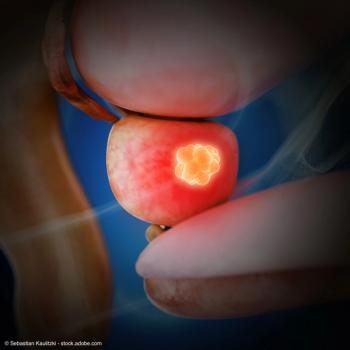
"The incorporation of NGI into the BCR disease state definition necessitates a consensus within the medical community," write Spyridon P. Basourakos, MD, and Jack R. Andrews, MD.
A urologic oncologist discusses how MRI- or fusion-guided biopsies have helped overcome the limitations of traditional prostate biopsies.
Kyrollis Attalla, MD, shares his approach to imaging and biopsy in the diagnosis of prostate cancer and discusses the benefit of a good biopsy followed by appropriate imaging at initial diagnosis.
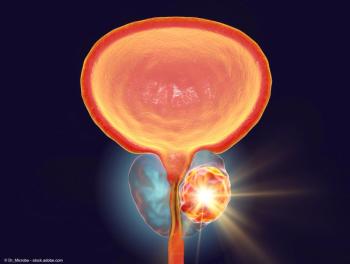
ORIC-944 was initially being evaluated as a monotherapy in the phase 1b trial.
Advertisement
Advertisement
Trending on Urology Times
1
Experts discuss the challenge of detecting CIS in bladder cancer
2
Study shows durable 3-year outcomes with first-line gemcitabine/docetaxel in NMIBC
3
Phase 3 trial launches of CAIX-targeted radiopharmaceutical for ccRCC
4
Kathryn Gessner, MD, PhD, on the challenges of selecting patients for bladder preservation
5