




Urologic Surgery
Latest News

Advertisement
Latest Videos







CME Content


Advertisement
More News
Minimally invasive surgery was associated with similar overall survival and disease-specific survival outcomes compared with open surgery in patients with early-stage kidney cancer.

A 4-step quality improvement intervention increased compliance with American Urological Association guidelines for periprocedural antibacterial prophylaxis for high-risk patients receiving cystoscopy.

The guidelines are an evidence-based clinical reference for the treatment of patients with lower urinary tract symptoms secondary to BPH.

A real-world analysis found that nerve sparing robot-assisted radical prostatectomy increased the risk of ipsilateral positive surgical margins.

Outpatient artificial urinary sphincter insertion is likely a viable option based on an analysis of immediate postoperative complications and pain control.

Clinicians from the Society of Urodynamics, Female Pelvic Medicine & Urogenital Reconstruction, AUA, and American Urogynecologic Society discuss the FDA ban on mesh for pelvic organ prolapse.

"Fake news rules the world today. It certainly applies to the use of mesh in female pelvic health," writes Gopal H. Badlani, MD.

Although mesh has been banned for prolapse repair, midurethral slings remain a crucial treatment option for stress urinary incontinence.

"All we can do as physicians is reach out to patients with dignity and respect for who they recognize themselves to be," says one urologist.

This article highlights some of the emerging endoscopic robotic systems in urology.

In this article, we provide an overview of the key concepts a clinician must take into consideration when consulting with men interested in undergoing a cosmetic surgical procedure.

Evidence suggests fallopian tube removal will lead to reduced ovarian cancer incidence.

In this Urology Times Q&A, Jessica Nelson, MPAS, PA-C, past president of the Urological Association of Physician Assistants, offers a physician assistant’s perspective on PAs performing urologic procedures, PA training, and more.

Also read about expansions to an intermittent catheter line, a new radiofrequency treatment for improving local vaginal circulation, an app for men navigating fertility challenges, and more.
Research on a cranberry supplement for decreasing UTI incidence as well as a finding that ketorolac was more effective than narcotics in controlling renal colic were among the AUA 2018 take-homes in quality improvement and patient safety.
“A decade ago it was rare to have advanced practice providers as part of routine urologic care. Now they’re integral and a necessary part of any active urologic practice,” says Bradley A. Erickson, MD, MS.
Reconstructive surgery for complications from female-to-male genitourinary reconstruction surgery and complex reoperative hypospadias repair were among noteworthy trauma/reconstruction topics at AUA 2018.
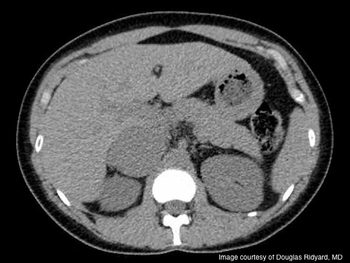
An 18-year-old previously healthy collegiate athlete presented to the emergency room with a rapid weight gain of 20 pounds during the previous 2 months. She complained of significant fatigue and irregular menstrual periods.
Research examining transcutaneous electrical nerve stimulation for nocturnal enuresis as well as pediatric sacral nerve stimulator explantation rate due to complications were among the noteworthy pediatric urology studies from AUA 2018.
Other take-home messages on transplantation from AUA 2018 included the finding that kidney paired donations have more than doubled since their inception in 2009 as well as early robotic kidney transplantation studies.

These videos demonstrate significant advances in percutaneous nephrolithotomy technique that can serve to optimize outcomes, reduce OR time, and help achieve optimal results.
Noteworthy minimally invasive surgery research from AUA 2018 also included topics such as robot-assisted versus open radical cystectomy as well as minimally invasive retroperitoneal lymph node dissection in men with testis cancer.

A mobile app for stone metaphylaxis and an algorithm defining specific indications for stent omissions were among the other highlights in endourology/stones at AUA 2018.
Recent studies point to the significant potential activity trackers hold in urology.
Advertisement
Advertisement