
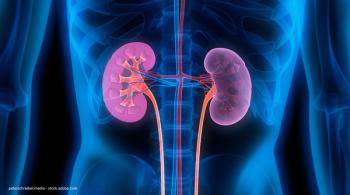
Two pharmaceuticals in late-stage development may offer new therapeutic options for patients with rare forms of hyperoxaluria.
Two pharmaceuticals in late-stage development may offer new therapeutic options for patients with rare forms of hyperoxaluria.

Researchers studying a novel multimodal analgesia protocol at multiple institutions in the U.S. for patients having penile implant surgery found narcotic prescriptions before, during, and in the post-surgery recovery period fell from as high as 50 to 60 narcotic pills to 10 to 15 pills.
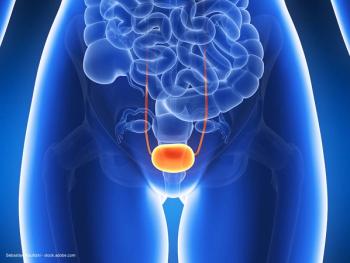
The FDA has approved the anti-PD-1 therapy pembrolizumab (KEYTRUDA) as monotherapy for the treatment of patients with Bacillus Calmette-Guerin-unresponsive, high-risk, nonmuscle-invasive bladder cancer with carcinoma in situ with or without papillary tumors who are ineligible for or have elected not to undergo cystectomy.

The FDA has granted accelerated approval to enfortumab vedotin-ejfv (PADCEV) for the treatment of adults with locally advanced or metastatic urothelial cancer who have previously received a PD-1/L1 inhibitor and a platinum-containing chemotherapy before or after surgery or in a locally advanced or metastatic setting.

"Even in this selected cohort of men with very low-risk features, stable MRI score was not protective against disease progression during surveillance," writes Badar M. Mian, MD.

“Although the raw number of augmentations and diversions have been relatively unchanged, the proportion of patients undergoing both surgeries declined while the proportion of patients undergoing Botox injections doubled over the past 5 years,” said Rita P. Jen, MD, MPH.

"This work is important to our field, because it represents an effort to personalize treatment approaches to particular patients’ needs," writes Brian R. Matlaga, MD, MPH.

An expert multidisciplinary panel using robust methodology has developed recommendations for guiding urinary catheter management after transurethral surgery for BPH.

Patients with kidney stones who rank their pain at the maximum level on a 100-point scale or whose number-one goal for treatment is to relieve pain are less likely to reach their treatment goals than other patients undergoing kidney stone treatment, a recent study found.

In this interview, physician executive J. Christian Winters, MD, outlines his multiple professional roles, explains how he divides his time between clinical and administrative responsibilities, and offers advice to young urologists seeking a career in leadership.

"By creating time-based codes, one can most accurately describe and be reimbursed for the amount of time and effort spent face to face with an individual patient," writes Jonathan Rubenstein, MD, and Mark Painter.

"The expert testified that the standard of care after penile prosthesis surgery is to leave the implant in a semi-inflated state for 4 to 6 weeks, when in fact the standard is to keep the implant in a deflated state," writes Brianne Goodwin, JD, RN.

"If you are self-employed, a solo 401(k) is an excellent option for saving for retirement," writes Jeff Witz, CFP.

“It’s actually an exciting time for patients who have metastatic urothelial cancers and prostate cancers or advanced prostate cancers because there are a lot more products on the way, like the newer hormone agents for prostate cancer and the new immunologic agents like PARP inhibitors for different types of cancers," says one urologist.