
Independent urology faces stagnant Medicare pay, rising costs, prior auth burden, and consolidation pressure, Celeste Kirschner, CAE, MHSA, says.
Independent urology faces stagnant Medicare pay, rising costs, prior auth burden, and consolidation pressure, Celeste Kirschner, CAE, MHSA, says.
LUGPA CEO Celeste Kirschner, CAE, MHSA, outlines the association's top 2027 priorities: fee schedule reform, site-neutral payments, prior authorization, and practice consolidation.
Matthew A. Love, MD, discusses key efficiency and safety considerations for the SURE procedure.
Celeste Kirschner, CAE, MHSA, outlines the most pressing challenges facing independent urology practices today.
Ravi D. Chauhan, MD, FACS, outlines the practical considerations for administering nadofaragene in clinical practice.
"I think MRI has really been perhaps the most transformative development in the realm of prostate cancer screening since I came into the field," says Stacy Loeb, MD, MSc, PhD (Hon.

"It's been a very exciting time for the radioligand space," says J. Travis Mendel, MD.
Jonathan Henderson, MD, recaps his LUGPA 2025 session, “Lessons Learned: Avoiding Pitfalls in Urology Practice Management.”

Mobley also shares her treatment approach to BPH and explains the challenges of treating OAB.
Ronney Abaza, MD, predicts the transformative impact that AI will have in robotic surgery.

"I'm very excited to bring this therapy to our patients in the Philadelphia area and to be able to offer it at MidLantic," says David Cahn, DO, MBS, FACOS.

In determining the best treatment, urologist Arpeet Shah, MD, stresses the importance of thorough diagnostics.

Brooke Edwards, MD, highlights key takeaways from her LUGPA 2025 session, "Transforming your ASC."
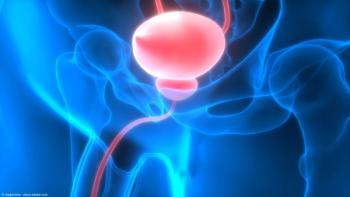
"For me and the patients, [nadofaragene firadenovec is] a very convenient dosing schedule, and it's a very efficacious treatment," says Ravi D. Chauhan, MD, FACS.
Looking forward, Meeks said he sees nadofaragene firadenovec as a promising addition to the NMIBC treatment landscape.
Martin M. Miner, MD, highlights key findings from TRAVERSE and the T4DM study.

Miner emphasized that TRAVERSE has reshaped the safety narrative around testosterone replacement therapy, easing concerns about cardiovascular and prostate risks.

"I think the most important thing, or take-home message that we try to share, is gathering data, understanding what those metrics are from the very beginning," says Brooke B. Edwards, MD.
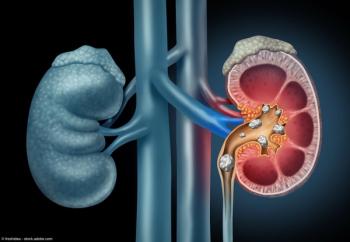
"The more I use [SURE], the more applications I see with it," says Matthew A. Love, MD.

"The main issue in DC now is the Medicare Physician Fee Schedule," says Scott Sellinger, MD, FACS.
Suzanne Merrill, MD, outlines recent progress with immunotherapy across NMIBC and MIBC.

LUGPA president Scott B. Sellinger, MD, FACS, highlights the key priorities and sessions at this year's LUGPA Annual Meeting.
"There's a ton of activity in this space, and I think every 6 to 12 months, we're going to keep getting these boluses of information that's going to help us," says Gautam Jayram, MD.

The PRESERVE trial is evaluating the safety and effectiveness of Irreversible electroporation for prostate tissue ablation.

"Things that were typically used to recruit younger physicians need to change because those aren't their priorities anymore," says Kari Bailey, MD.
"I joke that on face value, the APPs work for me, but I feel like I'm really working for them, because they basically do everything except for the surgery," says Andrew Y. Sun, MD.

Specifically, Jayram highlights pembrolizumab, nadofaragene firadenovec-vncg, and N-803 (Anktiva).

“The 1 main assumption that we've been very wrong on although we've had the data for a long period of time, [is that] although we assume that the stone fragments are small enough to pass, oftentimes they don't,” says Thomas Mueller, MD.

"It's actually a very exciting time to be a robotic surgeon," says Ronney Abaza, MD, FACS.

“It's really a reapplication of the existing technology for BPH that is familiar to many of us already and we use in our clinical practices,” says Arvin K. George, MD.