
"The positive trends emerging from the ongoing phase 1 trial of BMC128, particularly in combination with nivolumab, underscore the transformative potential of microbiome-based therapeutics in oncology,” says Gal Markel, MD, PhD, MBA.
"The positive trends emerging from the ongoing phase 1 trial of BMC128, particularly in combination with nivolumab, underscore the transformative potential of microbiome-based therapeutics in oncology,” says Gal Markel, MD, PhD, MBA.

The first commercial doses of the diagnostic have now been administered in both Austria and France.

"What we believe is happening is women are seeking the help of female urologists, and therefore, because of the nature of the condition, the female urologists are absorbing the burden of the care of these patients, particularly the non-billable burden," says Debra L. Fromer, MD.
Disitamab vedotin is a novel humanized anti-HER2 antibody-drug conjugate that previously demonstrated encouraging anti-tumor activity in combination with toripalimab in patients with metastatic urothelial carcinoma.

"There's obviously a huge interest in focal therapy for prostate cancer, largely because we want to try to prevent the overtreatment of prostate cancer and also develop better approaches to deliver high-quality treatment options for patients," says Timothy D. McClure, MD.

"[The care plan] incorporates patient-specific data to reinforce dietary management, fluid intake, and medication adherence based on the patient's 24-hour urine collection results," says Jenny Guo, MD.

The 12-month duration of response was 82.3% among patients with LG-IR-NMIBC who achieved a complete response at 3 months following the first UGN-102 instillation.
“Our trial’s preliminary major finding is that PSCA-directed CAR T cells may be effective against mCRPC," says Saul J. Priceman, PhD.

"Overall, I think this study will allow clinicians to better advise patients in the slightly complex landscape of OAB therapies," says Leo Dreyfuss, MD.
The median progression-free survival with the combination was 19.83 months.
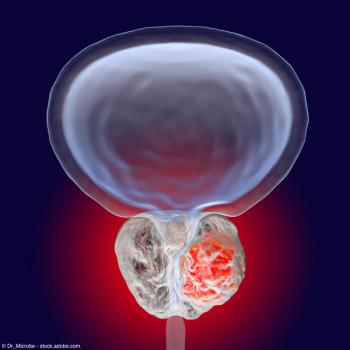
The negative margin rate was 72.8% with UnfoldAI vs 1.6% with SOC, translating to a 45-fold increase in accurately identifying cancer extent with the AI tool.

"To me, the most compelling outcome is really the quality-of-life outcomes. General quality of life as well as emotional quality of life improved in the intervention group significantly," says Jill M. Hamilton Reeves, PhD, RD, CSO.
The median OS was 14.5 months among those with high B2 expression, compared with 24.0 months among those with low B2 expression.
“The ability to gather actionable information from PSMA PET scans is important for physicians to make informed decisions about patient management for men with prostate cancer,” says Eugene Teoh, MBBS, MRCP, FRCR, DPhil.
"We really found from the study, clinicians who had wanted to potentially offer the safer alternative of a single-incision sling, we determined that in this circumstance, it was noninferior," says Catherine A. Matthews, MD, FACS, FACOG.
"We concluded that to improve cost-effectiveness, prostate cancer screening strategies should focus on reducing false positives and overdiagnosis," says Roman Gulati, MS.
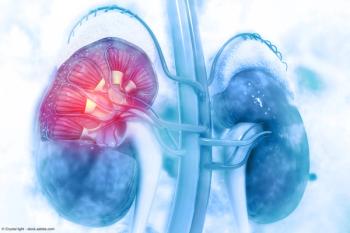
Benjamin L. Maughan, MD, PharmD, highlights key studies presented at the 2024 ASCO Annual Meeting regarding biomarkers and the evolution of first-line treatments in renal cell carcinoma.
The BLA submission is supported by findings from the phase 3 ZIRCON trial, which demonstrated high specificity and sensitivity of TLX250-CDx for PET/CT imaging of ccRCC.

"Ultimately, it is best to report CPT 50548 (only) for the performance of a typical laparoscopic nephroureterectomy," write Jonathan Rubenstein, MD, and Mark Painter.
“Over the 4-year period since first-line protocol therapy initiation, [patients treated with] nivolumab plus cabozantinib achieved a 1.5-times longer mean TFS vs sunitinib," says Charlene Mantia, MD.
Data from a phase 1 study of KPG-121 were also recently presented at the 2024 ASCO Annual Meeting.
“Overall, our results continue to support the use of lenvatinib and pembrolizumab as a current standard treatment option in the first-line treatment of [patients with] kidney cancer," says Viktor Grünwald, MD, PhD.
"The main finding from this network meta-analysis is the ranking of the 4 treatment approaches that we considered," says Scott Morgan, MD, MSc, FRCPC.
The study reported a median rPFS of 8.8 months among 23 adult patients with previously treated, progressive mCRPC.

"Ensuring equal access to genomic tumor testing and precision medicine treatments may be a viable strategy to help close the well-described gaps in prostate cancer outcomes between Black and White men," says Luca F. Valle, MD.

"From a learning curve standpoint, there's not much to learn. It tends to be fairly quick in terms of your ability to do the procedure," says Matthew E. Sterling, MD.
“CORE-001’s excellent efficacy, long-term durability of response, and favorable benefit-to-risk-ratio profile seen with combination cretostimogene and pembrolizumab suggest the potential for a novel bladder-sparing therapy in the BCG-unresponsive NMIBC setting,” said Roger Li, MD.

The change was made following the submission of a real-world evidence study showing that 5- to 10-year overall survival following robot-assisted radical prostatectomy was comparable to that of non-robotic radical prostatectomy.
"We hope this study encourages a national acceptance of active surveillance as an effective management strategy for prostate cancer,” says Daniel Lin, MD.
No statistically significant difference was seen in progression-free survival among those who received metformin vs those who received placebo.