

"One day, we're going to have to move away from fee for service, so we'd be wise to try to navigate those waters ahead of time, so we're not left dealing with the aftermath when someone else has implemented it for us," says Ruchika Talwar, MD.
"One day, we're going to have to move away from fee for service, so we'd be wise to try to navigate those waters ahead of time, so we're not left dealing with the aftermath when someone else has implemented it for us," says Ruchika Talwar, MD.

"While our results may imply that a strict all-business professionalism is superior, I think it's important to acknowledge that humor is really subjective," says Max D. Sandler.

The study has enrolled 8 patients to assess the safety and efficacy of the device in sealed vasectomy procedures.
"While the addition of an ICI to low dose FOTIVDA did not improve PFS outcomes after prior ICI, we consider the control arm data an important, evidence-based and clinically meaningful contribution to the oncology community treating relapsed or refractory advanced RCC following front-line ICI combinations," says Michael P. Bailey.
here was a higher concordance of somatic alterations between tissue and ctDNA testing in patients with metastases vs those without.
"In the last decade, we've observed a high number of new alternatives within clinical trials, especially with intravesical delivery," says Félix Guerrero-Ramos, MD, PhD, FEBU.
ORIC-944 was initially being evaluated as a monotherapy in the phase 1b trial.
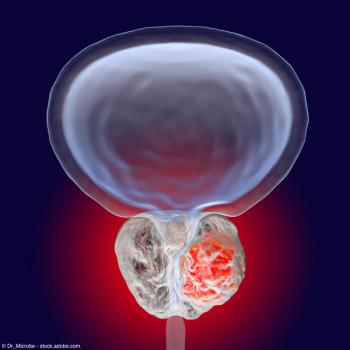
Topline results from the phase 3 ARANOTE trial showed a statistically and clinically significant improvement in rPFS with the addition of darolutamide to ADT vs ADT alone.
"I think the micronized formulation is something to think about," says Gautam Jayram, MD.

Data showed a 90.6% rate of correct consumer self-selection among those who used the Web App Technology with the DFL vs 57.3% among those that used the DFL alone.

"We've been working with families and other providers to learn the diagnostic criteria for what makes a urinary tract infection and to avoid treating when it's unnecessary," says Briony K. Varda, MD, MPH.
“These findings provide a plausible mechanism for the enhanced clinical outcome with CBM588 now seen across 2 small, randomized trials,” write the authors.
All patients have now been enrolled in cohort 6 of the trial, and dosing with ONCT-534 has begun at the dose level of 1200 mg.
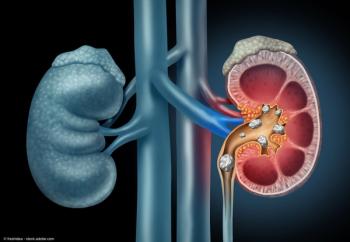
"We found that as we got better and better at doing it, the majority of patients now can go home in this fashion. They can go home the day of the procedure with nothing in them," says Mantu Gupta, MD.

“Our findings suggest an impact of living in disadvantaged neighborhoods—which more commonly affects African Americans—on stress-related genetic pathways in the body. We believe this may increase an individual’s risk of aggressive prostate cancer and contribute to prostate cancer disparities by race,” says Kathryn Hughes Barry, PhD, MPH.

At 12-week follow-up, TAS-303 demonstrated a least squares mean percent change in SUI episode frequency per 24 hours of -57.7% vs -46.9% with placebo.
“By understanding the mirSNP genetic markers that predispose patients to adverse side effects from cancer therapy we can tailor these therapies to minimize harm and maximize efficacy," says Joanne B. Weidhaas, MD, PhD, MS.
All 3 codes for the procedure will become effective on January 1, 2025.

"The objective of this study was to assess baseline knowledge about urinary tract infections, interest in health resources, and platform preferences for health information acquisition and dissemination," says Stephanie Gleicher, MD.
The guideline includes 38 recommendations on managing incontinence following treatment for localized prostate cancer or benign prostatic hyperplasia.

"We believe the collective findings are unique in urogynecology and offer strong evidence that first-line incontinence treatment is effective, and women can access it using the Leva System,” says Evelyn Hall, MD.
The cisplatin drug shortage was first announced on February 10, 2023.

The phase 1b trial enrolled 51 female patients with OAB to assess the safety, tolerability, and preliminary efficacy of V117957.
There was an overall response rate of 39% among the 18 evaluable patients, including 1 complete response and 6 partial responses.

This announcement comes on the heels of an FDA acceptance of an investigational new drug application for ADI-270 in June.

"Based on your question, C9761 would not be appropriate for using the access sheath," write Jonathan Rubenstein, MD, and Mark Painter.

"I think all the major implant companies are constantly improving the devices," says Hossein Sadeghi-Nejad, MD, FACS.
MK-5684/ODM-208 is a selective CYP11A1 inhibitor currently under investigation in the phase 3 OMAHA1 and OMAHA2a trials.

“We think artificial intelligence has a wide variety of applications that will benefit urologists both in and out of training,” says Mubashir S. Billah, MD.
In May 2024, the FDA cleared an investigational new drug application for 225Ac-FL-020.