

In total, the prospective SOPHIA study enrolled 6 men with stress urinary incontinence who have reduced outlet resistance due to intrinsic sphincter deficiency.
In total, the prospective SOPHIA study enrolled 6 men with stress urinary incontinence who have reduced outlet resistance due to intrinsic sphincter deficiency.

Both the LUTS/BPH and testicular cancer guidelines were updated based on the availability of new literature, as identified through an AUA Update Literature Review process.

An exclusive Urology Times survey measured US-based urologists’ uptake, access to, and indications for utilizing prostate-specific membrane antigen-targeting agents.

"A lot of urologic associations have committed a lot of work to diversity, equity, and inclusion, and this just seems like a step backward compared with the policies that they've been working toward in diversifying the urologic work force," says Diana Magee, MD, MPH, MSc, FRCSC.

"The findings suggest that we may need to view urinary symptoms differently, possibly with an emphasis on earlier treatment,” says Blayne Welk, MD, FRCSC, MSc.
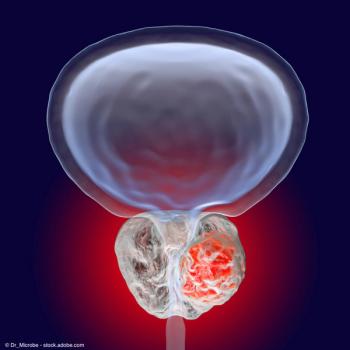
The incorporation of PSMA PET–imaging into a multivariate model enhanced the predictive accuracy for clinically significant prostate cancer in patients in the "PSA gray zone" of 4 to 10 ng/mL.
Patients with MIBC were randomly assigned to receive APL-1202 in combination tislelizumab or to tislelizumab alone.
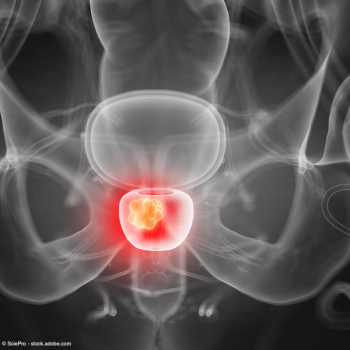
“We are pleased with the results we have generated in the BOP trial, which have shown that 64Cu SAR-Bombesin can detect lesions in men with biochemically recurrent prostate cancer that are negative or equivocal on PSMA PET,” said Louise Emmett, MBChB, FRACP, MD.

"The ABU continues to reevaluate all policies related to diplomates. As medical practice continues to evolve in United States, and these changes affect the practitioners of medicine, likely further changes will be necessary in board certification procedures," writes Roger Dmochowski, MD, MA (Conflict Management and Resolution), MMHC, FACS.
"Our study is the first report of bladder auto-transplantation in heart-beating, brain-dead human research donors as a necessary preparatory step toward clinical bladder transplantation in living patients," says Inderbir S. Gill, MD.

Participants who completed a survey following the intervention indicated that the program was most helpful for networking with other applicants, finding a mentor, and serving as an introduction to urology.

The Focal One high intensity focused ultrasound system uses precision sound waves to destroy prostate tumor tissue and spare healthy tissue, reducing the risk of side effects that would lower a patient's quality of life.

The first patient with NMIBC has been dosed with nadofaragene firadenovec-vncg as part of the Adstiladrin Early Experience Program.
"FPSA is an important, inexpensive, and readily available test in our risk-stratification toolbox," writes Badar M. Mian, MD.
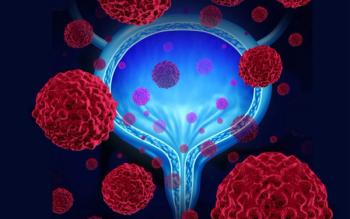
BT8009 targets the tumor antigen Nectin-4, which has elevated expression levels in urothelial cancer.
The phase 3 URO-901-3005 study met its 2 co-primary end points with vibegron demonstrating a reduction in micturition episodes and urgency episodes from baseline to 12 weeks.
The EU application for erdafitinib in urothelial carcinoma is supported by data from cohort 1 of the phase 3 THOR trial.

Even before the pandemic, violence against health care workers was escalating.

Questions spanned urologic conditions such as benign prostatic hyperplasia, overactive bladder, erectile dysfunction, kidney stones, Peyronie disease, and recurrent urinary tract infections.

National MENtion It® campaign explores the impact stress has on men’s sexual and mental well-being.

"Am I close to an answer? Yes, my inner being tells me it is time to initiate letting go," says Gopal H. Badlani, MD.

"This could make a huge impact for patients with limited resources,” says Benjamin Pockros, MD, MBA.

"Encouraging our patients to adopt a healthy, plant-based diet is a great way to simultaneously promote both prostate and overall health," writes Stacy Loeb, MD, MSc.

In this installment, Kevin Zorn, MD, FRCSC, FACS, highlights his disease-specific practice, BPH Canada, which he designates as a “one-stop shop” for patients with benign prostatic hyperplasia.

The Society of Nuclear Medicine and Molecular Imaging announced a consensus statement on patient selection and appropriate use of the radionuclide therapy 177Lu-PSMA-617 in patients with prostate cancer.
Men who had a dorsal testosterone/peripheral testosterone ratio greater than 2 were found to have higher rates of PSA persistence compared with patients who had a similar ratio.

Proposed rule includes incorporation of controversial E/M code.
Adding perioperative durvalumab to standard care for patients with resectable muscle-invasive urothelial carcinoma demonstrated promising event-free and overall survival rates in a phase 2 trial.
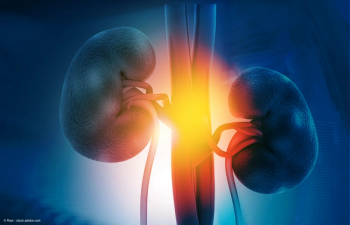
The phase 1/2 Oncorella-1 trial is expected to enroll up to 40 patients with advanced kidney cancer who are on dialysis due to renal failure.

Congress has taken actions aimed at protecting arrangements in which hospitals and other entities provide bona fide mental health improvement, behavioral health improvement, or maintenance programs to physicians and other clinicians.