
Concepcion is editor-in-chief of Urology Times' sister publication, Urologists in Cancer Care.
Concepcion is editor-in-chief of Urology Times' sister publication, Urologists in Cancer Care.

Lantheus, the developer of piflufolastat F 18, selected oncology provider GenesisCare to administer the first commercially available dose of the agent.


The new treatment is a ready-to-use 6-month subcutaneous depot formulation of leuprolide mesylate.
The FDA has approved the PSMA PET imaging agent 18F-DCFPyL for use in prostate cancer.
The Uro-G single-use device arrives at a time when the FDA is actively investigating reports of infections associated with reusable cystoscopes.

The device can now be marketed throughout the EU, as well as in Iceland, Liechtenstein, and Norway.
Tadfin is a once-daily capsule that combines 5 mg of tadalafil (Cialis) with 5 mg of finasteride (Proscar).
The targeted focal laser ablation system is intended to be an office-based treatment for localized prostate cancer delivered under local anesthesia.

The SECURE trial is exploring the PSMA PET imaging product 64Cu-SAR-bisPSMA and the PSMA targeted therapy 67Cu-SAR-bisPSMA.

Final FDA decision on approvals is still pending.
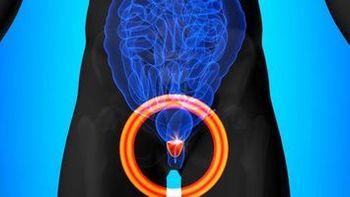
The approval was based on data from the phase 3 ARCHES trial.

Around the Practice: High-Risk Renal Cell Carcinoma

Both medical professionals bring experience and expertise that will elevate the future work of the publication.


Ad Test

"I prefer doing transvaginal prolapse surgery with native tissue and always have. So I was not affected when mesh was restricted," says one urologist.

In this video, Gary Lemack, MD, offers a brief overview of overactive bladder treatments in development and explains their significance for providers and patients.

The benefits of holmium laser enucleation of the prostate with MOSES-enabled pulsed laser modulation justify its consideration as the gold standard surgical treatment for lower urinary tract symptoms related to benign prostatic hyperplasia, according to Amy E. Krambeck, MD.

Patients using anticholinergic medications for the management of overactive bladder (OAB) are at increased risk of new-onset dementia compared with individuals treated with the beta-3 agonist mirabegron (Myrbetriq), according to findings of a new population-based, retrospective study published online March 13, 2020, in BJU International.

"New treatments (pharmacological and device based) are currently in development to expand our OAB armamentarium," write Nathan Chertack, MD, and Gary Lemack, MD.

Unhealthy eating, like that associated with the Western diet, is associated with notably worse semen quality and less favorable testicular function than healthier eating patterns, according to a study of nearly 3,000 young Danish men published in JAMA Network Open (2020; 3:e1921610).
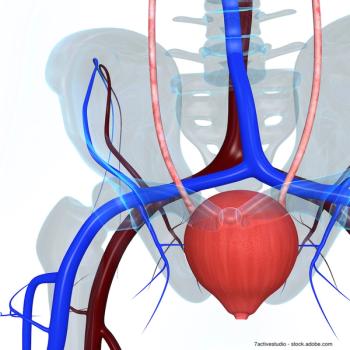
The FDA has accepted for review Urovant Sciences’ New Drug Application for once-daily 75 mg vibegron for the treatment of patients with overactive bladder with symptoms of urge urinary incontinence, urgency, and urinary frequency.