

"We did not find that there were any clotting or thrombotic complications in those who did stop their aspirin," says Smita De, MD, PhD.
"We did not find that there were any clotting or thrombotic complications in those who did stop their aspirin," says Smita De, MD, PhD.
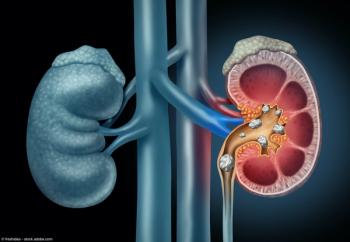
Cleveland Clinic is the first to investigate photonic nanoparticles as a potential kidney stone treatment.

These findings may help guide decision-making in the initial testing phase of the [sacral neuromodulation] device prior to permanent implant or explant, according to Bradley Gill, MD, of the Cleveland Clinic.

If replicated with further study, the finding potentially expands noninvasive fertility treatment options and may minimize the need for expensive reproductive technology, according to lead author Scott D. Lundy, MD, PhD, of Cleveland Clinic’s Department of Urology.

National MENtion It® campaign explores the impact stress has on men’s sexual and mental well-being.
Men who had a dorsal testosterone/peripheral testosterone ratio greater than 2 were found to have higher rates of PSA persistence compared with patients who had a similar ratio.
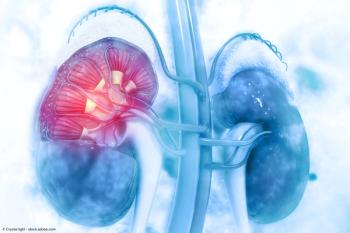
A Cleveland Clinic study found that TKIs in the neoadjuvant setting are associated with greater use of partial nephrectomy when treating patients diagnosed with renal masses in a solitary kidney.
The published findings show the viability of using a transperineal ultrasound system as a means to monitor intra-fractional prostate motion for prostate stereotactic body radiotherapy.
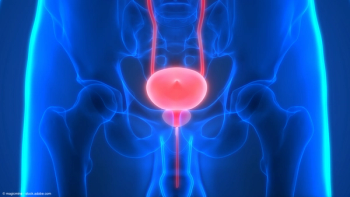
Aquablation is a “minimally invasive procedure [that] is safe with long-term durability and a low-side effect profile,” said urologist Dennis Bentley, MD.

"One of the things that we want to look at long-term is how the kidney being exposed to limited durations of warm ischemia compared to no ischemia at all affects longitudinal atrophy," says Carlos Muñoz-Lopez.

The studies explored the use of opioids following surgery as well as the risk of incisional hernia.

“The primary thing we found was that the average kidney–and we study the ipsilateral kidney, or the kidney that was operated on–fell at the natural aging process,” says Carlos Muñoz-Lopez.

In total, 77.8% of Black respondents, 72.7% of Asian respondents, 57.1% of Latino respondents, and 46.5% of White respondents indicated that the racial and ethnic diversity of residents at a program influenced their decision to preference signal or sub-internship with that program.
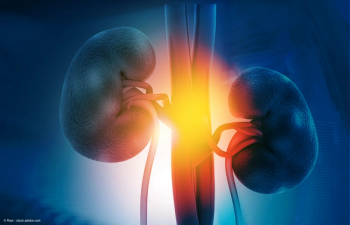
Smaller incision may lead to reduced postoperative pain for some patients.

“Our findings show that race-modified equations account for some but not all of the disparity in partial nephrectomy use. We need to keep searching for answers to ensure people of all races receive appropriate care," said Christopher Weight, MD.

“This study truly changes the paradigm of infections and suggests we need to work smarter, not harder, to prevent infections,” said urologist Scott Lundy, MD, PhD.

UroMonitor was developed in response to conventional urodynamics, which have several limitations.

Researchers still urge caution when considering testosterone therapy.
“It’s very important to really talk to the patients and understand any toxicities because the side effects are well managed if they’re caught early,” says Shilpa Gupta, MD.
Shilpa Gupta, MD, discusses long-term outcomes of the EV-103 trial, which explored the first-line combination of enfortumab vedotin and pembrolizumab in cisplatin-ineligible patients with locally advanced or metastatic urothelial carcinoma.
"I think there's a lot of interest now on intraoperative navigation," says Jihad Kaouk, MD.
Bradley Gill, MD, MS, recaps several presentations on benign prostatic hyperplasia from the 2023 American Urological Association Annual Meeting in Chicago, Illinois.
"What we found is that AI+ score using continuous variables had the highest predictive ability of all oncologic outcomes that were measured," says Nour Abdallah, MD.
"We found that on average, [a] patient went into surgery with a GFR of about 55, and came out with a GFR of about 44," says Steven Campbell, MD, PhD.

"This is something [that is] a lot easier for the patient, it's a lot less costly to the health care system to stay out of the operating room, and it's a lot quicker for me," says Howard B. Goldman, MD.

Study finds a 35% increase in vasectomy consultation requests.

The findings suggest creatinine-based eGFR equations alone may be inaccurate, and cystatin C or combined eGFR equations may be a more accurate assessment of kidney function in this population.

Cleveland Clinic surgeons describe a new technique for harvesting a rectal mucosa graft.

"These studies, taken together, offer important insight into the direction we should be heading in prostate cancer diagnosis: toward a targeted-only TP biopsy," write Tarik Benidir, MD, and Zeyad Schwen, MD.