
On this episode of Cleveland Clinic’s Cancer Advances podcast, Byron Lee, MD, PhD, discusses optimizing surgical options for patients with bladder cancer.
On this episode of Cleveland Clinic’s Cancer Advances podcast, Byron Lee, MD, PhD, discusses optimizing surgical options for patients with bladder cancer.

A 54-year-old transgender woman presented at Cleveland Clinic with vaginal stenosis. She was seeking surgical revision after complications from gender affirmation surgeries performed at other care centers failed to establish a functional neovagina.

Cleveland clinic physicians Rahul Tendulkar, MD, and Steve Huang, MD, provide expert insight on PSMA-PET imaging and explain how it has changed clinical management of patients with prostate cancer.

In this installment, Howard B. Goldman, MD, FACS, discusses the development of multichannel urodynamics testing.

“What made [multichannel urodynamics] so important is you're able to diagnose things much better; you're able to have a much better understanding of what's actually going on,” says Howard B. Goldman, MD, FACS.
“Using the single-port robot with the transvesical approach allows us to go directly into the bladder, this means that we avoid the intraperitoneal cavity, which is not feasible with the multiport approach. This has led to less pain and postoperative ileus because the bowels stay intact,” says Jihad Kaouk, MD.

On this episode of Cleveland Clinic’s Cancer Advances podcast, Zeyad Schwen, MD, discusses transperineal biopsy and advancements in screening for prostate cancer.

“Our algorithms were extremely accurate in predicting treatment response to both modalities. In fact, they could correctly predict which patient was a responder and which patient was a non-responder about 90% of the time in patients they had never seen before,” said Glenn Werneburg, MD, PhD.

Zeyad Schwen, MD, highlights 5 studies in prostate cancer being presented at the 2022 American Urological Association Annual Meeting.

The blood-based, non-invasive IsoPSA test is used prior to an initial biopsy to assess the likelihood that a patient has high-grade prostate cancer.

Nima Almassi, MD, highlights 5 studies in bladder cancer being presented at the 2022 American Urological Association Annual Meeting.

“We know that, in general, cystectomy in women can disrupt pelvic floor support and innervation, as well as hormonal and sexual function, but there are no good prospective data to help us fully understand pelvic floor complications following the procedure,” said Jacqueline Zillioux, MD.

On this episode of Cleveland Clinic’s Cancer Advances podcast, Christopher Weight, MD, discusses high-intensity focused ultrasound for treating patients with localized prostate cancer.

“This study really shows the power of the area deprivation index in predicting postoperative and oncologic outcomes for bladder cancer patients undergoing radical cystectomy,” said Byron H. Lee, MD, PhD, Cleveland Clinic urologist and senior author of the study.
“One thing from our study that you can take home [is] no matter what the surgery is, small changes right after surgery can actually tell you more than we usually give them credit for,” says Sevag Demirjian, MD.
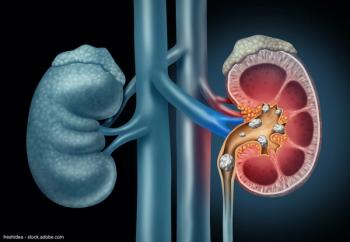
“The take home message would be that in patients with prior history of kidney stone episodes…receiving 24-hour urine testing prior to starting pharmacologic preventive therapy is associated with a lower probability of a subsequent stone-related event,” says Ryan Hsi, MD, FACS.

“[The prediction model] worked way better than we expected that it would work,” says Sevag Demirjian, MD.

The BLASST-1 study presented at the 2022 ASCO Genitourinary Cancers Symposium assessed the safety and efficacy of neoadjuvant nivolumab in combination with gemcitabine/cisplatin in patients with muscle-invasive bladder cancer .

“I think the audience would be encouraged to know that in the future, it seems like immunotherapy would become the standard of care,” says Shilpa Gupta, MD.
“The complete response rates were 49%, which is quite impressive compared to historical controls,” says Shilpa Gupta, MD.

Cleveland Clinic’s Petar Bajic, MD, details updated joint guidance from the AUA and SMSNA on the management of acute ischemic priapism.

In this installment of the Urology Times' 50th Anniversary Innovation Celebration, Howard Goldman, MD, discusses the development of the midurethral sling as a treatment for stress urinary incontinence.

"Introducing something that with a prefashioned sling, [something] we're able to utilize with the patient in an ideal situation just under some deep sedation and local, really opened this up the ability for many more women to be treated and allowed many more physicians to be trained and to utilize this technology," says Howard B. Goldman, MD, FACS.

On this episode of Cleveland Clinic’s Cancer Advances podcast, Sarah Vij, MD, discusses the different fertility-sparing techniques used for both pre-pubertal and post-pubertal male cancer patients.

On this episode of Cleveland Clinic’s Cancer Advances podcast, Eric Klein, MD, discusses the novel IsoPSA test and how it differs from conventional PSA testing.

Experts at the Cleveland Clinic are assessing standard surgical approaches in bladder cancer and identifying new ones.
These research and technology breakthroughs are designed to improve outcomes and the patient experience.

On this episode of Cleveland Clinic’s Cancer Advances podcast, urologic surgeon Steven Campbell, MD, PhD, discusses the longstanding controversy between partial nephrectomy and radical nephrectomy for patients with localized kidney cancer.

Researchers uncover how diet, lifestyle modifications may lower risk of lethal disease.

“There's been a lot of evidence over the past few years that there's certainly a…correlation between dietary intake and risk of prostate cancer, [but] there's really not a whole lot of data on risk of development of lethal prostate cancer,” says Nima Sharifi, MD.