
The trial is assessing the safety and tolerability of adaptive radiation therapy with concurrent sacituzumab govitecan in patients with MIBC.
The trial is assessing the safety and tolerability of adaptive radiation therapy with concurrent sacituzumab govitecan in patients with MIBC.
“[We’re working on] being able to apply the same mechanism and testing and thought that we put into this into stool to give people a precision signature of how they're going to respond or experience toxicity from EV based on their stool microbiome,” says Laura Bukavina, MD, MPH.

“While I would hesitate to say that reversal is truly better in terms of efficacy, I think this data suggests that it's at least as good,” says Scott D. Lundy, MD, PhD, HCLD.

“While sperm cryopreservation is very safe, there might be hidden costs that patients aren't aware of, both [in] the upfront costs of preserving the sperm and then the annual cost of maintaining it at a facility,” says Bradley Roth, MS4.

"The idea here is to determine, from an epidemiologic perspective, whether freezing sperm for many men before their vasectomy is cost-effective compared to whether we should simply avoid this routine practice and allow men to proceed with their vasectomy and then restore their fertility in the future," says Scott D. Lundy, MD, PhD, HCLD.
"My biggest hope for people reading this review is to understand that there are some golden opportunities for research," says Laura Bukavina, MD, MPH, MSc.

"I think integrating microbiome surveillance into clinical trials can bridge the gap between research and also therapeutic applications," says Ilaha Isali, MD, MSc.

"Studying the microbiome overall is challenging because it's dirty science. You have to be incredibly careful with contamination," says Ilaha Isali, MD, MSc, and Laura Bukavina, MD, MPH, MSc.

"The interplay between the microbiome and bladder cancer is very complex," says Ilaha Isali, MD, MSc.
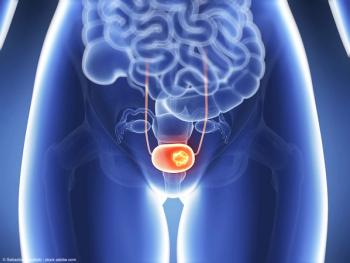
"We...tried to summarize all the findings that could potentially be helpful for future research in terms of bladder cancer," says Ilaha Isali, MD, MSc.

"Over a third of Americans actually use some kind of what we term complementary or alternative medicine approach," says Raevti Bole, MD.

Raevti Bole, MD, recently presented a talk at the SMSNA Fall Scientific Meeting on nonsurgical BPH management.
Bajic summarizes his 2024 Sexual Medicine Society of North America Fall Scientific Meeting talk “Penile Prosthesis Biofilms: Friend or Foe?”

"I think patient preference is going to be the most important thing here," says Raevti Bole, MD.

“We saw in the survey that men are concerned with how the health decisions they make now will affect them in the future,” says Petar Bajic, MD.

“Even if they're postmenopausal, we remove the ovaries, which puts them at a higher risk for other complications such as osteopenia,” says Laura Bukavina, MD, MPH, MSc.

“So, while the natural epidemiological prevalence of disease is only 20% to 30%, we really should aim for studies where we can oversample the females to make sure that that medication truly is doing what it's doing in both males and females,” says Laura Bukavina, MD, MPH, MS.

“Unlike a lot of the societies within oncology, including ASCO or even NCCN, urology really does not do a good job at recommending mental health to our patients,” says Laura Bukavina, MD, MPH, MSc.

“While the medications might be covered, while the surgical treatment might be covered, we all know that mental health and dental care are one of those things where people have large copays, long delays to care, and it is very clear to see that from our study,” says Laura Bukavina, MD, MPH, MSc.

The panel offers key takeaways on the evolving landscape for imaging and biopsy in prostate cancer, highlighting the role for fusion-guided biopsy in the diagnosis and management of prostate cancer.
Prostate cancer specialists provide insights on the integration of fusion biopsy into clinical practice and how it has impacted treatment paradigms.
The panel discusses how fusion-guided biopsy can inform patient eligibility for focal therapy in prostate cancer.
A panel of experts on prostate cancer discuss the role for fusion-guided biopsies in active surveillance for patients with prostate cancer.
Focusing on the role of systematic biopsy, the panel provides clinical insights on biopsy practice patterns after encountering suspicious-looking areas on MRI.
Experts on prostate cancer focus on the differences between fusion-guided technologies, highlighting cognitive-based and software-based fusions.
"It's really interesting to see how potentially these differentially expressed genes could suggest a different biology based on the zone that they arose from," says Zeyad Schwen, MD.
The panel discusses data on the accuracy of MRI-targeted or fusion-based biopsy procedures compared with systemic biopsy or MRI alone.
Firas F. Abdollah, MD, provides insights on how MRI- or fusion-guided technologies are used with transrectal and transperineal biopsy procedures and how they improve traditional biopsy procedures.
Focusing on prostate cancer diagnosis, the panel discusses transrectal and transperineal biopsies and limitations associated with them.
A panel of experts on prostate cancer introduce themselves and begin the discussion with clinical insights on diagnostic practices and the importance of biopsy and imaging in guiding treatment decisions.