

"I think [these are] important data to [give to] your patients," says Laura Bukavina, MD, MPH.
"I think [these are] important data to [give to] your patients," says Laura Bukavina, MD, MPH.

Glenn T. Werneburg, MD, PhD, discusses 2 abstracts from the 2024 SUFU Winter Meeting.

"Our first question is, in patients who were on the GLP1R agonists for a prolonged period of time, were those patients at increased or decreased risk of developing the most common GU malignancies?" says Laura Bukavina, MD, MPH.

"Within this paper, we discussed the importance of conservative management and lifestyle modifications as initial steps in managing BPH," says Eiftu S. Haile, MD.

"Alpha-blockers are often, for patients, the first line of treatment because they help quickly relax the smooth muscles in the bladder and the prostate," says Eiftu S. Haile, MD.

"We're very much looking forward to being able to clinically implement these algorithms, both on the OAB side and the antibiotic resistance side," says Glenn T. Werneburg, MD, PhD.

"We're really enthusiastic on the overactive bladder end and on the antibiotic resistance end, but much more broadly, [AI is] set up to help us counsel our patients better and help us to improve outcomes for our patients as well," says Glenn T. Werneburg, MD, PhD.

"What we found was that we were able to identify patients who responded vs didn't respond to the treatment with a high degree of accuracy," says Glenn T. Werneburg, MD, PhD.

"The key end points were observed response rate in the overall cohort, progression-free and overall survival from EV start in the overall cohort, and as an exploratory end point, overall survival from platinum-based chemotherapy start in the overall cohort," says Amanda Nizam, MD.
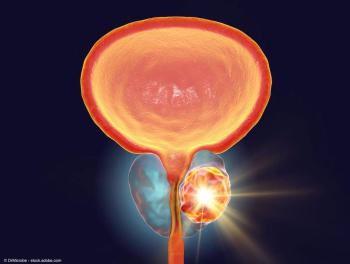
Zeyad Schwen, MD, a urologic oncologist at Cleveland Clinic, discusses how patient factors and cancer characteristics are key to deciding between focal therapies and whole gland treatment for prostate cancer.
Data from the EV-302 trial showed a doubling of progression-free survival and overall survival with the ADC/checkpoint combination versus standard chemotherapy.

The expert panel concludes its discussion by providing key takeaways on the evolving bladder cancer treatment landscape following ESMO 2023.
The panel discusses the Large Urology Group Practice Association and provides insights on collaborative care approaches in bladder cancer.
Bladder cancer specialists discuss enfortumab vedotin and the role of antibody-drug conjugates in the treatment landscape.
The expert panel reviews highlights from ESMO 2023 and discusses ongoing developments in the treatment landscape for bladder cancer.
Comprehensive insights on treatment considerations and managing immunotherapy-related adverse effects for patients with bladder cancer.
The panel discusses strategies for monitoring patients with non–muscle invasive bladder cancer and the potential role of biomarkers.
Expert perspectives on treatment options available for patients with bladder cancer and the role of trimodal therapy.
A panel of experts on bladder cancer provide an overview of the stratification, natural history, and treatment of bladder cancer.

"Using the model of 100 implants per year, and assuming that we can reduce teaching visits by 1 during that 90-day global period, that translates into an estimated additional 3000 minutes of outpatient time that you have available to assist other patients," says Bradley Gill, MD.

Novel research to evaluate noninvasive treatments in erectile dysfunction and chronic pelvic pain

Correlation found between the biomarker HSD3B1 and resistance to combined hormone therapy and radiotherapy

Hadley Wood, MD, shares her vision as the new editor-in-chief of Urology.

"The viability and survivability of practices is in jeopardy," says Bradley Gill, MD.
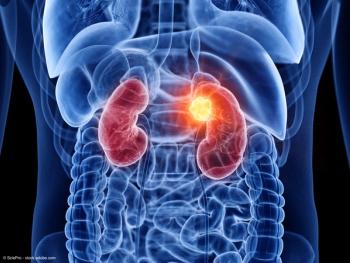
"I think the take-home message is that surgery is safe, even for these challenging surgical cases after this therapy," says Jason Scovell, MD.

"We need improved efficiency. Part of that is being as optimal in our settings and in our techniques that we can," says Smita De, MD, PhD.

"I think there have been a lot of what I would consider incremental improvements over the past few years," Smita De, MD, PhD.

Podcast
On an episode of Cleveland Clinic’s Cancer Advances podcast, host Dale Shepard, MD, PhD, talks with Omar Mian, MD, PhD, about emerging molecular biomarkers for genitourinary cancers.

"I think that overall, one should do what one is comfortable with, within the scope of your practice and your resources," says Smita De, MD, PhD.

"[The findings] certainly made me a lot less anxious for those patients who do need to continue their aspirin," says Smita De, MD, PhD.