
Lee discusses findings from a study presented at the 2024 American Urological Association Annual Meeting.
Lee discusses findings from a study presented at the 2024 American Urological Association Annual Meeting.

"I think pelvic pain is 1 of the areas that really needs more attention," says Gamal M. Ghoniem, MD, FACS, ABU/FPMRS.

"We really need better options with the least side [amount of] effects for these patients," says Zhina Sadeghi, MD.

"My hope is that from the KL2 data that I'll generate, hopefully in the next 6 to 12 months, we can apply for an RO1 to push this one step further so that we can benefit other people with brain tumors, other people with strokes, and other peoples with other neurological disorders with bladder symptoms," says Olivia H. Chang, MD, MPH, FACOG.

The panel discusses how fusion-guided biopsy can inform patient eligibility for focal therapy in prostate cancer.
A panel of experts on prostate cancer discuss the role for fusion-guided biopsies in active surveillance for patients with prostate cancer.
“We've been developing different techniques in HoLEP, but there is a steep learning curve,” says Akhil Das, MD.

"Our data showed that the patient regret scores were very, very low in looking at the patients that went home the same day," says David I. Lee, MD, FACS.
"I think having success with that in humans will make [radiofrequency ablation] very, very valuable for the practicing urologist that can be done in the clinic without much training or anything like that," says Gamal M. Ghoniem, MD, FACS, ABU/FPMRS.
"Glean technology is a very brilliant technology that has been developed for basically portable urodynamics," says Zhina Sadeghi, MD.
Focusing on the role of systematic biopsy, the panel provides clinical insights on biopsy practice patterns after encountering suspicious-looking areas on MRI.
Experts on prostate cancer focus on the differences between fusion-guided technologies, highlighting cognitive-based and software-based fusions.
The panel discusses data on the accuracy of MRI-targeted or fusion-based biopsy procedures compared with systemic biopsy or MRI alone.
Firas F. Abdollah, MD, provides insights on how MRI- or fusion-guided technologies are used with transrectal and transperineal biopsy procedures and how they improve traditional biopsy procedures.

"The challenge of treating men with high-risk disease and potential micro metastatic disease with this type of targeted therapy is really exciting," says David I. Lee, MD, FACS.
Focusing on prostate cancer diagnosis, the panel discusses transrectal and transperineal biopsies and limitations associated with them.
A panel of experts on prostate cancer introduce themselves and begin the discussion with clinical insights on diagnostic practices and the importance of biopsy and imaging in guiding treatment decisions.

"Results from these trials show that giving physicians an alert informing them of their patient’s actual risk for antibiotic resistance can help them choose the best antibiotic and reduce extended-spectrum antibiotic use,” says Shruti Gohil, MD, MPH.

“Medical oncologists, including academic and in the community, tend to order more genomic testing than urologic oncologists,” says Dalia Kaakour, MD, MS, MPH.

"While alkaline water products have a higher pH than regular water, they have a negligible alkali content–which suggests that they can't raise urine pH enough to affect the development of kidney and other urinary stones," says Roshan M. Patel, MD.

"Looking at the effect of the darolutamide on docetaxel, we didn't see much of a difference in dose reduction, dose modification, or dose hold for docetaxel, telling you that darolutamide didn't really affect the dosing of docetaxel," says Arash Rezazadah Kalebasty, MD.

The patient was treated as part of a clinical study of the novel MONARCH platform at UCI Health in California.

Press Release
The National Cancer Institute has again recognized the UCI Chao Family Comprehensive Cancer Center as one of the nation’s top cancer centers, renewing its “comprehensive” designation
“Any kind of complicated cancer surgery requires an experienced team from beginning to end,” says David Lee, MD.
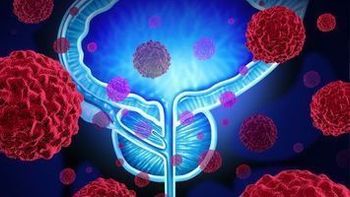
Early findings from the phase 2 CORE1 trial showed that the combination of the novel oncolytic immunotherapy CG0070 and the immune checkpoint inhibitor pembrolizumab was safe and active in patients with BGG-unresponsive NMIBC.
“We would have monthly multidisciplinary meetings to pick each other’s brains for tips we can use to get patients home more safely and quickly after surgery,” says Lee.
“Your vision is better, your instruments are better, and so we can do an excellent cancer operation while maintaining really good rates of continence and potency recovery,” says David Lee, MD.