
Sanoj Punnen, MD, highlights the importance of assessing and managing cardiovascular risk when initiating androgen deprivation therapy for patients with prostate cancer.
Sanoj Punnen, MD, highlights the importance of assessing and managing cardiovascular risk when initiating androgen deprivation therapy for patients with prostate cancer.
Archan Khandekar, MD, highlights key findings from a study evaluating LLM architectures for answering patient-facing urologic questions.
In this episode, Amy Pearlman, MD, sits down with Alan J. Wein, MD, PhD (hon), FACS, to discuss how the field of urology has evolved and how clinicians can thoughtfully evolve alongside it.
Kiera Liblik, MD, MSc, shares the background and key findings from the study, “Sex and Gender in Urological Research.”
Jonathan Yu, MD, highlights a study on early repair of vesicourethral anastomotic leak, which was presented at the 2026 Desai Sethi Urology Institute Urology on the Beach meeting in Miami Florida.
In this episode, host Amy Pearlman, MD, sits down with Bruce R. Kava, MD, for a a discussion on his career path from oncologic surgery to sexual medicine, revision penile prosthetics, and cancer survivorship.
Savannah Grandy, DO, highlights key takeaways from a MUSIC-KIDNEY study comparing single port vs. multiport robotic partial nephrectomy.
A major focus of the episode is reconstructive urology, particularly the unpredictable and long-term effects of pelvic radiation.
Francisco Ramos, MD, highlights a study examining the impact of socioeconomic hardship on cancer presentation and survival in testicular cancer.
In this episode, host Amy Pearlman, MD, sits down with Emad Ibrahim, MD, HCLD, to discuss sexual and reproductive health in patients with spinal cord injury.
The conversation explores the growing role of at-home semen testing kits as screening tools, their advantages in accessibility and privacy, and their limitations compared with in-lab testing.
Amy Pearlman, MD, sits down with Katherine A. Amin, MD, to discuss the evolving landscape of female pelvic medicine, overactive bladder management, and fellowship training.
The conversation highlights the steady pace of innovation in urogynecology.
Pedro F.S. Freitas, MD, recaps his talk at the 2026 Desai Sethi Urology Institute Urology on the Beach meeting.
Gonzalgo explores how prostate cancer diagnosis and management continue to evolve.
Sudha Jayaraman, MD, MSc, FACS, recaps a session from the 2026 Urology on the Beach meeting focused on AI in health care.

Lina Posada Calderon, MD, discusses the background and key takeaways from her team’s study examining germline BAP1-associated renal cell carcinoma.
In this episode of Pearls and Perspectives, host Amy Pearlman, MD, sits down with Ariana L. Smith, MD, to explore how clinicians navigate evidence gaps, evolving guidelines, and emerging innovation in overactive bladder care.
Iman Sadri, MD, CM, discusses a somatic-autonomic nerve grafting technique for patients with persistent erectile dysfunction after radical prostatectomy.
The session emphasized how rapidly evolving AI technologies are addressing long-standing inefficiencies in urologic care.
Walter R. Hsiang, MD, MBA, highlights a study looking at access to care, insurance acceptance, wait times, and costs for stone disease management.
One of the most notable changes is a new thematic structure within urologic oncology.
Raveen Syan, MD, FPMRS, shares her excitement about the Rising Star Program, now entering its second year.
Beyond the new features, attendees can expect a focused, high-yield scientific program covering both benign and oncologic disease.
Ibrahim explains the unique challenges men face after spinal cord injury, including neurogenic erectile dysfunction, ejaculatory dysfunction, and particularly the distinctive sperm abnormalities seen in this population.
The Desai Sethi Urology Institute (DSUI) has released its 2025 Annual Report.
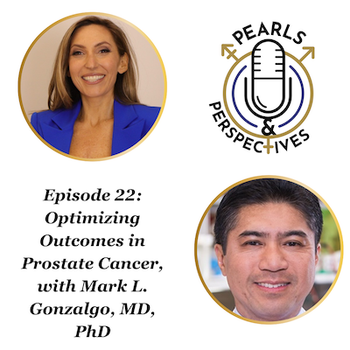
The conversation tackles testosterone therapy in men with prostate cancer, a complex and sometimes controversial issue.
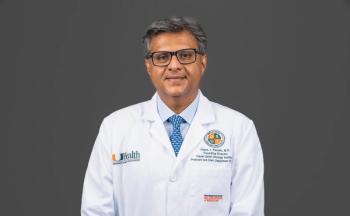
Award-winning COO of UHealth, renowned surgeon scientist, and director of the Desai Sethi Urology Institute elevated to lead patient-focused care, biomedical research, and medical education
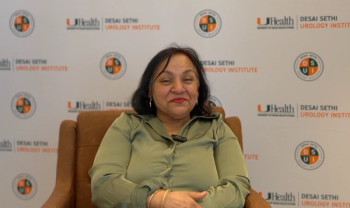
"I would say, talk to each other. Talk to other men about it. You are not the only one leaking," says Vanita Gaglani, RPT.