

The panel reviews the similarities and differences between the FDA-approved PSMA-PET tracer options for prostate cancer imaging.
The panel reviews the similarities and differences between the FDA-approved PSMA-PET tracer options for prostate cancer imaging.
Phillip Koo, MD, defines prostate-specific membrane antigen (PSMA) and explains the rationale for use as a target in PET-based prostate cancer imaging.

"In this trial, and in all the major IO/TKI trials, the checkpoint inhibitor stopped at 2 years. In this trial it was about 25% of patients who made it to that time point," says Brian I. Rini, MD.
"Unfortunately, I don't think that the triplet of cabo/nivo/ipi is ready as the current dosing for use in RCC with variant histology," says Bradley McGregor, MD.
"All the patients said that they were pleased with the acupuncture that they received, and about 75% said that they would refer other people going through BCG to acupuncture," says Sarah P. Psutka, MD, MS.
"There was a striking decreased survival for patients who had sarcomatoid histology compared to the ones who had the classic variant urothelial histology," says Rohan Garje, MD.
David Olmos, MBBS, MSc, PhD, discusses research presented at the ASCO 2023 Annual Meeting assessing outcomes with first-line novel hormonal therapy or taxane therapy in metastatic castration-resistant prostate cancer based on patients' BRCA/HRR status.
"The overall survival, Kaplan Meier curves, are maintained with a hazard ratio of 0.79 for the intent-to-treat patient population of lenvatinib/pembrolizumab versus sunitinib," said Thomas E. Hutson, DO, PharmD, FACP.
"Our research focused on the outcomes at 6 months, [and we] were looking at disease recurrence and hernia occurrence," says Jennifer Nguyen.
"About 80% of the patients who underwent treatment showed a very strong reduction in tryptase levels," says Praveen Thumbikat, DVM, PhD.

“There are a lot of social determinants of health as it relates to urge urinary incontinence,” says Joseph Kim, MD.

"Here, we've lowered the age to initiate screening to 45 to 50 years," says Badrinath R. Konety, MD, MBA.

Scott Sellinger, MD, FACS, shares a historical perspective on use of conventional imaging modalities in prostate cancer.
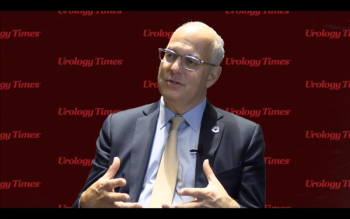
"Even though most urologists who do retroperitoneal surgery do it for posterior tumors, you actually can do it equally well with as equally good success for an anterior tumor," says Michael D. Stifelman, MD.
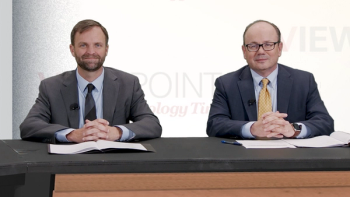
Michael Cookson, MD, MMHC, explains the NCCN criteria used to stratify patients with clinically localized prostate cancer into risk groups.

"Our main finding was that participants who experienced food insecurity in the past year were at 55% increased odds of reporting at least 1 episode of urge urinary incontinence in the past month, compared with those who have not experienced food insecurity," says Joseph Kim, MD.

"We found out the using IRIS intraoperatively during partial nephrectomy does help us with preserving renal parenchyma," says Teona Iarajuli.
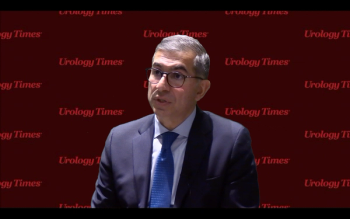
"I think there's a lot of interest now on intraoperative navigation," says Jihad Kaouk, MD.

“The take-home message is that as a practicing urologist, you should be treating genitourinary syndrome of menopause and giving any woman over 45 vaginal hormones, whether in the form of vaginal estrogen or vaginal DHEA,” says Rachel S. Rubin, MD.
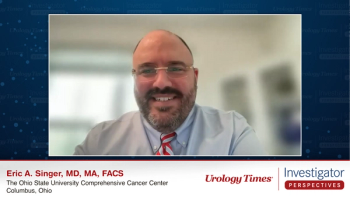
Eric A. Singer, MD, MA, FACS, looks to the future of bladder cancer treatment and offers advice for community urologists and urologic oncologists treating patients with the disease.
An expert on non-muscle-invasive bladder cancer discusses how data on Cohort B of KEYNOTE-057 presented at the AUA 2023 meeting might impact treatment strategies.

“We really wanted to give the general urologist the tools to go back to the clinic the next day and say, "I know how to prescribe this. I know where to prescribe it. I know the cheapest options. I know the best deals around and I know how to talk to patients about the risks and the benefits,” says Rachel S. Rubin, MD.
The data were presented at the 2023 American Urological Association Annual Meeting in Chicago, Illinois.
Anthony V. D’Amico, MD, PhD, discusses key factors that determine his radiotherapy treatment selection in the management of patients following radical prostatectomy.

“PSMA-PET technology is helping urologists think about how to individualize a treatment plan for a patient based on what's discovered with this sensitive imaging modality,” says Christopher W. Ryan, MD.

“The purpose of health care is to provide health care. And...the more we can focus on that, the more we can leverage the hope that I do think that we have,” says Colin P. West, MD, PhD.
Closing out his discussion on prostate cancer, Michael S. Leapman, MD, MHS, highlights practical advice and shares hope for future improvements in the treatment landscape.
Focused discussion on the Decipher Prostate Genomic Classifier and real-world data from the American Urological Association (AUA) Annual Meeting in the setting of prostate cancer management.
Expert urologist Michael S. Leapman, MD, MHS, provides comprehensive insight to the classification of prostate cancer and current treatment modalities available to patients.

"The improvement is sustained, but over time it does tend to decrease and we're currently trying to figure out why," says David Sheyn, MD.