

"We found that only about 8% of people in this national survey of over 500 participants had heard of asymptomatic bacteriuria," says Megan S. Bradley, MD.
"We found that only about 8% of people in this national survey of over 500 participants had heard of asymptomatic bacteriuria," says Megan S. Bradley, MD.

“In the preclinical space, we continue to be interested in trying to understand the mechanistic underpinnings of these combination therapies,” says Kent W. Mouw, MD, PhD.

"There have been some pivotal clinical trials that have reported out, and they've really showed us that there is limited to maybe no role for adjuvant treatment after prostatectomy, and there is a huge role for early salvage treatment," says Todd M. Morgan, MD.

"We found that in order to reach racial and ethnic parity in the urology residency graduates, there needs to be an increase of these graduates by 0.845% per year," says Ashley Appleton.
"I think the main takeaway from this study is that prostate cancer is not as rare in trans women as we think it is, and that we really need to be giving this population the time that they deserve, and that they should be screened equally to their cis male counterparts," says Matthew Loria.

"At Northwestern Medicine, we have very extensive and very deep experience with PET-PSMA-based imaging," says Edward M. Schaeffer, MD, PhD.

Drs Smith and Helfand look ahead and provide their thoughts on future directions in the treatment of patients with prostate cancer.
Focusing on metastatic prostate cancer, 2 experts have a comprehensive discussion on treatment options for patients with metastatic prostate cancer.

Dr. Heidenberg discusses the recent Urology paper, “The Impact of Standard vs Early Apical Release HoLEP Technique on Postoperative Incontinence and Quality of Life.”

"We concluded based on our 36-month evaluation that nadofaragene was an option for patients who had BCG-unresponsive disease," says Colin P.N. Dinney, MD.

“The main takeaway is that we want to be working with [transgender and gender-diverse patients] the same way that we are working with cisgender folks,” says Matthew Loria.

"In the moment, I think it's important to take a deep breath and try not to just be reactive," says Anne M. Suskind, MD, MS, FACS, FPMRS.

“The actions taken by those matched over 80% of the time. It seemed like what they saw, knowing the history, was a reasonable approximation of what an in-person urologist would do,” says Tracey L. Krupski, MD.

"We ultimately found that trans women from between the ages of 50 and 65 who were on hormone therapy had a 2.5-fold decreased risk of prostate cancer compared with cis men," says Matthew Loria.

“I think in actuality it's going to have to be one of our trained APPs going to these sites on a scheduled day, like the third Wednesday of every month,” says Tracey L. Krupski, MD.

"Like any test, it's really a very powerful tool. It's just how you deploy the tool," says Edward M. Schaeffer, MD, PhD.
“The hope is that we can collaborate with folks who might be interested in trying nadofaragene plus something else, something that compliments the mechanism of action, so that we can build upon what we have now,” says Vikram M. Narayan, MD.

"We hope that this paper encourages urologists to rethink non definitive treatment/active surveillance for prostate cancer and consider definitive treatment options earlier in the treatment pathway based on evidence that has accumulated," says Mital Patel, MD.
Matthew Smith, MD, PhD, and Brian T. Helfand, MD, discuss the treatment of patients with nonmetastatic castration-resistant prostate cancer.
Experts on prostate cancer discuss how treatment has evolved over the years, focusing on doublet and triplet therapy and their utility.
“I think 1 size doesn't fit all. We can't make a blanket statement that 1 of those types of therapy is better for all patients than another,” says Suzette E. Sutherland, MD, MS, FPMRS.

"We know that surgical intervention for ureteroscopy for both renal and ureteral stones does result in a relatively rapid and also quite substantial improvement in quality of life that does exceed preoperative baseline," says Justin B. Ziemba, MD, MSEd.

Panelists conclude their discussion by reflecting on key learnings and sharing advice for patient-centric management in overactive bladder (OAB) treatment, specifically focusing on effective communication and overlooked aspects of patient care. They offer guidance to other providers on enhancing patient experiences, particularly with procedures like Botox. The episode wraps up with each expert sharing their final thoughts and anticipations for advancements in OAB treatment in 2024, highlighting their commitment to addressing patient needs in this evolving field.

“I would just say that urologists should be focusing much more on the total amount of pattern 4, if they have that information available, than on the ratio of pattern 3 and 4, and therefore the grade group,” says Andrew J. Vickers, PhD.
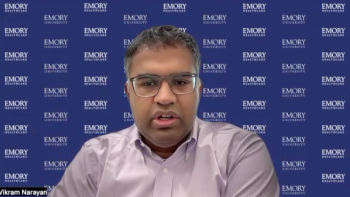
"Because it takes advantage of a viral vector and is delivered as a gene therapy product, what it can do is it can have sustained release of IFNα2b in the bladder," says Vikram M. Narayan, MD.

"The point is healthy, adaptive changes that are sustainable, that you can keep off, because we don't want that rebound/regain," says Jill M. Hamilton-Reeves, PhD, RD, CSO.
"PSMA PET imaging is used in the initial diagnostic staging and then in subsequent cases where there can be a recurrence after primary treatment.," says Edward M. Schaeffer, MD, PhD.

“The 1 tweak that's different for our model is that the trained urologist is watching the cysto at the same time as the nurse practitioner is doing it,” says Tracey L. Krupski, MD.

"As most of us know, 1 in 8 couples undergo issues pertaining to fertility, and in about half of those cases, there is a male factor involved, resulting in infertility," says Akash Kapadia, MD.